The term “Systemic Jurisprudence” (Fiqh al-Nizam) is ambiguous; “Religious Systems” is a more appropriate term; such systems definitely exist in religion.
“These gentlemen say that in confronting these sciences and subjects born of modern technology and civilization, we react passively; meaning they construct the problems within the framework they have established themselves, and we must passively respond to these problems. We must emerge from this passivity. We must produce problems ourselves, based on the needs of the ideal human and the human in whom other dimensions have been taken into account. This is a general statement raised since ancient times, and some of them, by system-building, meant that we must even change the direction of the science of economics.”
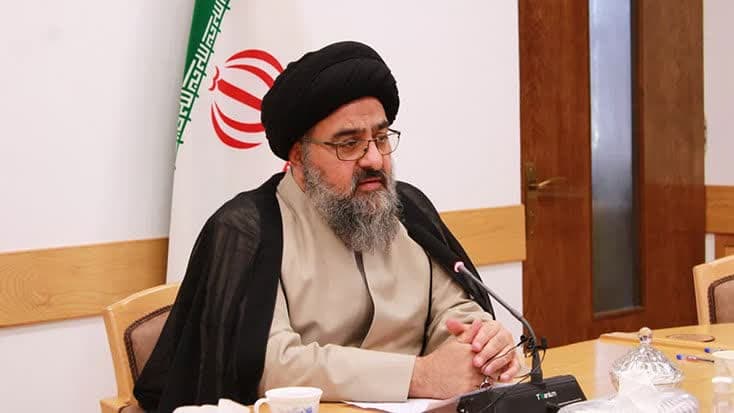
Exclusive to Ijtihad Network: The debate over Systemic Jurisprudence (Fiqh al-Nizamat) has become one of the highly controversial discussions of these days. The remarks of Hujjat al-Islam Fazel Lankarani also fueled this debate, reigniting an ember that was about to die out. In this regard, we conducted an interview with Ayatullah Sayyid Mujtaba Nur Mufidi. He strove to stand in the middle of this conflict and adopt a balanced position. His explanations regarding his foundation, however, are worthy of attention.
Ijtihad: What is meant by Systemic Jurisprudence (Fiqh al-Nizam)?
Ayatullah Nur Mufidi: Fiqh al-Nizam is an inadequate formulation because different understandings have been derived from this combination—ranging from superficial and political understandings to those that are deeper and more correct; yet at the same time, it may not reflect reality either. Instead of the expression “the jurisprudence of the system” (Fiqh al-Nizam), I believe we should raise the discussion of whether we fundamentally have systems in Islam or not, and if we do, how are these systems extractable?
Therefore, the discussion is broader than jurisprudence in its conventional sense. In my view, those who use the term “the jurisprudence of systems” (Fiqh al-Nizamat) do not share a common intention. For example, some believe that we must discover the various systems from the greater jurisprudence (al-Fiqh al-Akbar). Al-Fiqh al-Akbar encompasses contemporary conventional jurisprudence, ethics, beliefs, and theology; meaning we must discover these systems from the collection of religion.
Some say: we must discover these systems from this very conventional jurisprudence. What I believe is that we definitely have systems in Islam, and there is no doubt about this, and systems are extractable from the collection of religion, which encompasses the three domains of ethics, beliefs, and rulings; but the issue that exists is that those who have emphasized Fiqh al-Nizamat—and who have been the source of these recent debates—have a specific intention. The basis of this perspective and the origin of this statement was innovated years ago by the Academy of Islamic Sciences (Farhangestan-e Olum-e Eslami).
They believe that generally in recent centuries, after the Renaissance, the process of transformation and development of sciences in the general sense, and particularly the humanities, took shape based on humanism. That is, when the Renaissance occurred and the collective of scholars and scientists replaced God with man and made the resolution of human needs the axis, all sciences took shape in this path.
For example, what we recognize as the manifestations of modern civilization, such as this urban life, the process of development and progress of sciences in the general sense, has taken shape based on human desires without paying attention to metaphysical and moral aspects, and without paying attention to human salvation and spirituality.
For instance, consider the buses used for public transportation. If the seats of this bus are placed facing one another, the boundary between men and women is not observed here. Or even the phenomenon of apartment-living or the facilities and comfort amenities that enter human life as manifestations of modern civilization and technology, all have developed in that direction.
In the domain of the humanities, this issue becomes more prominent; therefore, economics, sociology, and so forth have grown in this path. This process also encompasses the natural sciences. Now, these gentlemen say that in confronting these sciences and subjects born of modern technology and civilization, we react passively; meaning they construct the problems within the framework they have established themselves, and we must passively respond to these problems. In their view, we must emerge from this passivity and produce problems ourselves, based on the needs of the ideal human and the human in whom other dimensions have been taken into account.
This is a general statement raised since ancient times. Some of them, by system-building, meant that we must even change the direction of the science of economics; because the science of economics with existing formulas took shape based on humanism. This statement itself has ambiguities and problems, and we are not currently in a position to critique and analyze it. I only wanted to say that a portion of the system-building that is proposed has such a wide scope that it leaves much room for discussion as to whether system-building in this form is possible at all, and whether we can establish such a system or not?
In my view, what must be discussed more—whether it is an illusion or a reality—is this aspect of system-building jurisprudence. Some of the writings written and published in this regard are incomprehensible. The most obvious adverse consequence of this theory is that based on it, we must experience a complete severance from the world, and it is not clear at all whether we can continue to live with this method.
Ijtihad: Do you mean that if we pursue the perfect human, a period of stagnation will certainly be created and we must undergo a transition period? However, if we have systemic jurisprudence, in the validation stage it might be slightly difficult, but in any case, this transition period must be traversed. What is your view?
Ayatullah Nur Mufidi: I have not yet entered into the theoretical critique of this theory. This theory has serious theoretical problems. The core of this theory—whether we have an Islamic science of economics or not—is rejected even by Martyr Sadr himself, who says we have nothing called the science of economics in Islam. This science fundamentally does not have a religious or non-religious character. Some say mathematics, physics, and chemistry also have Islamic and non-Islamic versions.
Based on what I have said, it requires another opportunity to analyze this theory. The late Martyr Sadr also believed in a type of system-building. He states: we have an economic system, doctrine, or school of thought (madhhab iqtisadi). He proposed these in the book Iqtisaduna (Our Economy). He says the difference between our economic system and other economic systems is that they proceed from the infrastructure to the superstructure, whereas we must begin this system from the superstructure (rubina) and discover the infrastructures (zirbina); however, what the infrastructure and superstructure are, and how they must be discovered, is a subject of debate.
He states: we have a collection of principles and obligations that are the component factors of that system, and a portion of them may relate to ethics. We have a series of moral principles and a series of rules that we must discover from the texts (nusus) in the chapter of transactions. For example, we have private ownership, but this private ownership is not absolute. Alongside this private ownership, we have justice, emotions, and feelings. We must discover this from the texts. Of course, this system is coherent and exists in the real world; but because we must discover it through the texts and evidences, we are compelled to discover that system from the superstructure with the help of rulings recognized as civil law.
Then he states a remarkable point that is open to discussion: he says if there is disagreement among jurists in the rulings related to civil law, we must turn to the decrees (fatawa) that enjoy greater coherence and harmony in this direction, and discover the systems from them. Now, if these decrees are not accepted, what will you do with the issue of binding authority (hujjiyyah)? Some of his students have said that hujjiyyah is not required here.
In short, there is no debate that the core of systems exists in Islam. Some also say we have various systems such as the political system, cultural system, and so forth, which consist of the rulings that must be executed in society, such as the rulings of penal laws (hudud) and blood money (diyyat). We have systems in these domains, and these systems can be discovered from this conventional jurisprudence.
What appears to me is that, considering the preliminary notes, we cannot but commit to the existence of systems in Islam. If we believe that religion, in its general sense, is the program for the salvation of human life and the roadmap of man to reach the supreme destination of creation with the help of intellect and innate nature (fitrah), it cannot exist without a system; meaning the roadmap is in reality an external proof that encompasses the revelation of scriptures, the sending of messengers, and the collection of religious programs in the three domains of ethics, belief, and action, which, with the help of internal proofs (namely intellect and innate nature), certainly pursue a goal for man to reach the destination.
The components of this program must be harmonious with that goal. We cannot even claim a lack of connection between these rulings, even if we are unable to discover that connection; but this connection and harmony between the rulings and the details of the program of human salvation certainly exist. If this were not the case, it would be a defect in Islam and contrary to wisdom. Now, how the discovery of these systems is achieved, and whether we can reach that real system, requires, in my view, an extensive and collective effort to discover these systems, and the claim that we do not have systems in Islam, or that there is no necessity for the existence of these systems, provides an opening for objections and criticisms that is unacceptable.
Ijtihad: Some scholars state that the jurists of Fiqh al-Nizam wish to establish sources other than those of conventional jurisprudence. In terms of validation, if we are to reach that systemic jurisprudence, must the same path traversed in traditional jurisprudence be pursued, or is there another path ahead?
Ayatullah Nur Mufidi: What the concept of Fiqh al-Nizamat is contains ambiguities that are not few and are very serious. Some establish a connection between their own theory and the theory of Martyr Sadr, whereas a clear and serious difference exists between these two theories, which became somewhat clear from my explanations. Therefore, the reason this discussion was recently fueled, and some weak and incorrect objections were directed toward this theory, is due to these very ambiguities.
Mr. Fazel Lankarani, who raised this discussion, had his main focus directed toward that first interpretation of Fiqh al-Nizamat presented by the Academy. For example, the jurists of systemic jurisprudence say we have another view regarding governmental jurisprudence (fiqh-e hukumati). Others say rulings are either legislated in the form of legal addresses (al-khitabat al-qanuniyyah)—which is the view of the late Imam and has also been attributed to Al-Akhund al-Khurasani—or in the form of real propositions (al-qadaya al-haqiqiyyah), where the address dissolves into the number of individuals of the subject.
However, the jurists of the system say: in our view, rulings are not divided into constant and variable. In fact, this is not the case at all, because whether based on legal addresses or based on real propositions, we have both constant rulings and variable rulings. These individuals themselves have spoken on five axes:
-
The mukallaf is a system and a collective.
-
The nature of the obligation is different from collective obligation (al-taklif al-kifa’i).
-
Punishment and reward are undivided/shared (musha’).
-
Compliance (imtithal) occurs collectively and harmoniously.
-
The application of the system is to the whole rather than general titles onto individuals and instances.
This method pursues another methodology and approach, while this statement itself is ambiguous and incomprehensible. It appears that serious questions and objections exist in this statement. For example, to illustrate that obligation is systemic and its compliance is also systemic, they compare it to the work of an army: if an army acts correctly, what is the result, and if a corner of the army performs a deficient action, what is the result? Meaning, serious confusions have occurred in this theory between system-building and the stage of action, which must be discussed.
We believe that independent reasoning (ijtihad) and deduction, just as they have evolved from the past to the present, are certainly capable of further evolution; meaning the evolution of ijtihad from the beginning of the Occultation of Hazrat Hujjah (may Allah hasten his return) until now is completely visible, and is capable of evolution from now on as well.
In my view, the capacity exists to make both jurisprudence and its principles more perfect. For example, in the domain of the rules of jurisprudence (qawa’id al-fiqhiyyah), we can propose certain rules as the rules of political jurisprudence, which have not been looked at from this perspective until now.
Once, I was investigating and saw that we have close to fifty jurisprudential rules that can have application in the domain of political jurisprudence. Therefore, the path of bringing these rules into the arena of political jurisprudence and utilizing them in many relevant issues, and even establishing new jurisprudential rules, is open; but that the methodology and sources of deduction should change, and we wish to deduct and build systems with another method and sources other than this method and sources, and by creating new sources, it is not certain that this will have a good outcome; rather, it might lead to the destruction of jurisprudence altogether—unless their meaning is al-Fiqh al-Akbar, which is excluded from the discussion.
In any case, in this issue of system-building, utilizing the element of space and time, which the Imam stated, is highly important. If you say that utilizing the element of time and space in deduction is a new methodology other than the famous methodology of jurists for deduction, in this case, the dispute will be verbal. We do not have disputes over terminology.
In any case, with this very existing jurisprudence and considering the element of time and space, one can respond to the needs of the time, and our traditional jurisprudence, in case the element of space and time is considered within it, will entail desirable results. This very jurisprudence with this very methodology, without considering the element of time and space, may not be responsive. Therefore, the intervention of these two elements does not mean that the methodology of deduction changes. Of course, what the meaning of the intervention of the two elements of time and space in the method of deduction is, leaves room for its own discussion