The Theory of Legal Addresses was a divine spark upon the late Imam’s heart. This theory is based on a paradigm that can introduce a fundamental transformation in the science of principles.
Ijtihad: In light of the Theory of Legal Addresses, does the structure of the science of principles (ilm al-usul) also undergo change?
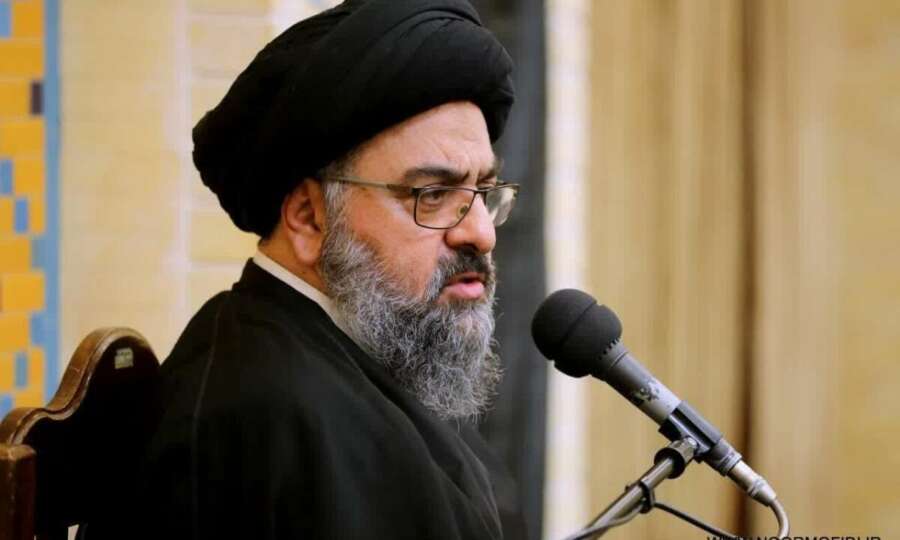
Professor Nur Mufidi: The Theory of Legal Addresses (al-Khitabat al-Qanuniyyah), which is among the innovations of the late Imam, is in truth based upon a paradigm whose requirement is changing the structure of the science of principles. By stating that this theory is based upon a paradigm, I mean that the perspective on the relationship between God and human beings undergoes a fundamental change. Paradigms usually constitute the understructures of a theory. This theory establishes an understructure for the science of principles that naturally results in a complete transformation.
According to the current structure of the science of principles, which has existed throughout history since the inception of this science, the relationship between human beings and God is defined as the relationship between servant and master (abd wa mawla). Why such a perspective has emerged in this relationship is a long story. In any case, a portion of it may return to the geographical environment of the Hejaz, and a portion may return to the temporal conditions of that era; specifically, that the relationship of the chiefs of a clan toward other individuals residing in that clan or tribe was a relationship similar to servant and master, and indeed linguistic limitations and constraints might have brought about such a state. Regardless, the relationship is defined as one between servant and master.
Naturally, if this theory dominates the various discussions of the science of jurisprudence and its principles, it will exert its specific influence; however, based on the foundation of the Theory of Legal Addresses, this structure is transformed—meaning the issue is no longer an issue of servant and master, but rather that the Lawgiver and God is the legislator, and the people and the legally bound individuals (mukallafin) must adhere to this law.
On this basis, in my view, such a perspective can introduce a fundamental transformation in the structure of the science of principles. By stating that this theory has taken shape based on the perspective of the legislator and the adherent of the law, I do not mean that the late Imam applied this perspective and stance across all domains of the science of principles and jurisprudence. This discussion was raised by him in two places: first, in the discussion of the condition of being a subject of trial/involvement (ibtila’) in the binding force (tanjuz) of systematic knowledge (al-ilm al-ijmali); and second, in the discussion of the obligation of disbelievers to branch rulings (furu’) and the issue of their opposition and disobedience.
This theory has had its specific effects in certain cases, some of which were expressed by the late Imam, while others have been enumerated by other scholars. However, the basis of this issue is that this perspective exists. The late Imam himself, who was the innovator of this theory, did not systematically apply it to all discussions of the science of principles simply because it was based upon that paradigm, model, or exemplar; yet the capacity exists for this to occur.
Of course, among modern scholars of principles, we can mention the late Martyr Sadr. He also paid attention to the mentioned paradigm—meaning, that the system of relationship between God the Almighty and human beings should fundamentally not be a system of servant and master—and therefore, in some instances, the late Martyr Sadr interprets law and ruling as conventional formulation (i’tibar), even though in the Theory of the Right of Obedience (Haqq al-Ta’ah), he explains that theory based on the very same servant and master structure.
In short, this theory is established upon a highly important and key foundation and possesses the capacity to influence the science of principles to the extent of changing its structure and establishing a novel perspective in explaining the discussions of the science of principles, though this has not been fully put into practice. That is, we occasionally see some scholars proposing a theory at a certain point, but they themselves did not find the opportunity to distribute this foundation across all domains and chapters, and thus did not practice it.
An example of this is the late Martyr Sadr, who, in the chapter of the reality of ruling and obligation, emphasizes that it is of the nature of i’tibar (conventional formulation), and the expression of command and prohibition falls within the framework of the servant and master relationship; yet in the Theory of the Right of Obedience, he proceeds to explain this issue based on that very same servant and master relationship. Therefore, the foundation of legal addresses is highly effective in the structure of the science of principles.
Another direction through which this theory can establish the structure of the science of principles as a preparatory science for independent reasoning (ijtihad) is that it extends the domain of the addressees of Sharia addresses from the domain of individual action to the domain of collective, social, and political action. If, for example, according to the Theory of Dissolution (al-inhilal), we believe in the dissolution of Sharia addresses, the individual mukallafin are the addressees and those obligated. Therefore, the proponents of dissolution argue that every Sharia address dissolves in proportion to the number of mukallafin, and every mukallaf, in accordance with the various states and conditions that occur to him, can have a different address; meaning, according to the Theory of Dissolution, we possess countless independent addresses in relation to a single individual, let alone different individuals.
However, according to the Theory of Legal Addresses, since the addresses belong to the public and individuals are not addressed independently and separately, this provides the possibility that when the address is directed to the public, it both encompasses individuals and targets that action which possesses a social identity. Therefore, among the matters less addressed regarding the Theory of Legal Addresses is the impact it can exert in that collective dimension. Naturally, if the tool of deduction and the science of deduction is a science that pays attention to this point, it will certainly acquire a different structure; meaning, in the issue of command and prohibition, disobedience, and the binding authority (hujjiyyah), changes must occur in this field.
We can truly state that this theory is a novel, important, influential, and structural-transforming theory in the science of principles, and as the late Haj Seyyed Mustafa Khomeini stated regarding this theory of his late father, it was a divine spark that took shape in the mind of the Imam. Especially considering that in an era when the dominant environment in the seminaries and the ancient, deeply rooted thousand-year-old structure of this science had taken shape in another environment, this issue naturally testifies to the precision, reflection, and deep-sightedness of the late Imam.
Ijtihad: Considering that obligation (taklif) is always conditional upon capacity/power (qudrah), does the Theory of Legal Addresses yield any practical jurisprudential fruits?
Professor Nur Mufidi: According to the Theory of Legal Addresses, obligation (taklif) is fundamentally not conditional upon capacity (qudrah). Indeed, one of the points of difference between this theory and the famous theory is that the famous view considers taklif to be conditional upon capacity, whereas the late Imam does not consider taklif to be conditional upon capacity; ultimately, the lack of capacity establishes an excuse (udhr) for the mukallaf, otherwise the taklif is directed to everyone, whether capable or incapable, knowledgeable or ignorant, forgetful or disobedient.
According to this view, the address is directed to all people, regardless of whether they are capable or incapable. The important point is that the late Imam states that among the general public, if there is even a small group for whom the execution of the taklif is possible, it is sufficient for the correctness of the address and the prevention of its absurdity (istihjan).
In individual addresses (al-khitabat al-shakhsiyyah), since individuals are targeted and individuals are those obligated, naturally if the individual lacks capacity, the address is absurd; however, in legal addresses, individuals are not the addressees. Rather, the title and essence (tabi’ah) are addressed, and to prevent this address from being absurd, the existence of some individuals who possess the capacity to perform the taklif is sufficient for the correctness and non-absurdity of the address.
According to the Theory of Legal Addresses, if the addressee is a title whose individuals have no capacity to perform the taklif whatsoever, the absurdity returns. Therefore, when the late Imam stated that taklif is not conditional upon capacity, his meaning was not that in legal addresses, the addressee can be an essence none of whose individuals is capable of performing the taklif. Here, the problem of absurdity returns.
The important point in this theory is that the address is general and encompasses everyone. Now, if in the meantime a number of them do not possess the capacity to perform the taklif, the address encompasses them as well.
You may ask: what benefit is there in directing the address to the incapable, the ignorant, and the forgetful? The important impact of directing this address lies in the social and political domains.
If an address is directed publicly to the general public, we say that ignorance and incapacity are excuses for those who do not know and do not possess capacity; but that the taklif is active (fi’li) for them as well, and incapacity and ignorance merely prevent the binding force (tanjuz) of the taklif for them, has an important benefit: that the motivation to become informed of the ruling, the taklif, and the law, and to exit the circle of ignorance, and perhaps the effort to acquire the capacity to perform the taklif, is created within the mukallaf.
In other words, according to this theory, if we say that taklif is active even for the incapable, the active nature of the taklif can serve as a mobilizer and motivator for those residing in that society to become informed of that law and ruling. This benefit is highly important.
At other times, we say that taklif fundamentally does not encompass the incapable, and therefore, it creates no motivation in the ignorant and the incapable. This theory, particularly in more public domains compared to individual and personal domains, has a greater impact; whereas according to the Theory of Dissolution, taklif fundamentally cannot be directed to the ignorant and the incapable.
We see in numerous instances in jurisprudence, which the late Imam himself mentioned, that the taklif is directed even toward the one who does not possess capacity and is incapable, and occasionally has practical effects as well.
Ijtihad: Given that the late Imam applied the Theory of Legal Addresses primarily to generalities (umumat), can it be said that the entirety of jurisprudence will be influenced by this theory?
Professor Nur Mufidi: Although this theory has been raised more regarding generalities (umumat), there is no reason to restrict this theory to generalities, and it also encompasses absolute rulings (itlaqat).
In Sharia addresses, we have two matters: first is the addressee of these addresses, and second is the object of the ruling and address. These two must be separated from one another. Sometimes we ask: to whom is this address “Establish prayer” (aqimu al-salah) directed, and who are the addressees? Are they specific individuals or the general body of believers? To what is this address directed?
Individuals differ from the collective, and in dissolution and non-dissolution, its fruit becomes clear. The late Imam, who believes in legal addresses, says the address is directed to the general public, and the ruling in these addresses is directed toward the nature (tabi’ah); meaning, the nature becomes the object of the ruling, but because this nature possesses existential unity with individuals, the ruling naturally applies to individuals as well, and individuals must perform this taklif.
Some of the objections raised against this theory stem from a lack of attention to this very point, as they assumed that this address has nothing to do with individuals, and consequently objected: how do the discussions of binding authority, obedience, disobedience, and so forth—which concern individuals—operate?
The response to this objection is that the Imam states in this theory: this nature is existentially united with the external world, and therefore, by virtue of the individuals who possess existential unity with this nature, both binding authority and obedience and disobedience are meaningful in their regard. If we do not establish this connection between the address and the individuals, neither does a ruling acquire meaning, nor are reward and punishment realized here.
Therefore, according to the Theory of Legal Addresses, the address deals with individuals, but not in the manner of dissolution such that we say the address dissolves into the number of individuals. Rather, according to the late Imam, the nature is the addressee of this address, and because the nature possesses existential unity with its individuals, the addresses naturally possess the effects of exculpation (ma’dhiriyyah), inculpation (munajjiziyyah), and other effects. Thus, the differences between these two theories are highly significant.
If we say that individuals themselves are the subject of the address, dissolution acquires meaning; but if we say the public is the addressee of the addresses, dissolution no longer acquires meaning. Al-Muhaqqiq al-Naini, regarding real propositions (al-qadaya al-haqiqiyyah), believes that the ruling is directed toward the nature, and the nature is a mirror (mir’at) for individuals. Here, the individuals are brought into focus again.
However, the Imam fundamentally does not view the nature as a mirror for individuals. In truth, the Imam states that the nature, without being restricted to individuals, is the subject of the addresses; whereas in real propositions, the nature restricted to individuals is the subject of the address. Of course, where we say that the address is directed to the nature without being restricted to individuals, it is certainly related to individuals as well, otherwise those same objections mentioned above would return.
In any case, we have accepted the Theory of Legal Addresses, and in the book we have authored, we have explained in detail the proofs to establish this theory. We have stated in that book that it appears that the type of objections raised against this theory stems from a lack of correct understanding of the late Imam’s words. For example, some prominent scholars have explicitly stated that the Imam did not oppose dissolution; whereas the late Imam explicitly states that dissolution is unacceptable. Or the late Seyyed Mustafa Khomeini stated that this theory, although rejecting thematic dissolution (al-inhilal al-mawdu’i), does not contradict ruling dissolution (al-inhilal al-hukmi). In our view, this statement is also open to dispute.
In any case, in our view, this theory is compatible with common understanding (urf), and indeed the urf operates in this manner. With this theory, we can resolve many of the complex difficulties of the science of principles. In other words, apart from the impact this theory has generally on the structure of the science of principles, even within the existing structure, some of the problems that scholars have striven with difficulty to resolve are resolvable with this theory.
In our view, the framework and structure of the science of principles must be redesigned from the beginning with this perspective, which of course requires a collective and extensive effort, and perhaps requires some new sciences and new paradigms.
Ijtihad: Can a jurist be named whose jurisprudential opinions are completely aligned with the structural framework based on the Theory of Legal Addresses?
Professor Nur Mufidi: No. Even the late Imam himself, who innovated this theory, did not seek to deduce issues everywhere with this theory, neither in principles nor in jurisprudence. Therefore, this theory possesses the capacity for exceptionally vast and extensive work, and the Imam himself did not enter into the investigation of issues everywhere with this perspective; rather, in many instances, the late Imam discussed issues within the framework of servant and master.
Of course, attention to this issue is necessary: we have a theory, and we have a paradigm, foundation, and basis. The paradigms of any science exert general influences on that science and establish a perspective in the entirety of the science. The theory is based upon that paradigm within a specific scope.
This Theory of Legal Addresses is responsible for explaining a portion of the issues of the science of principles. Of course, the Imam did not explicitly state that paradigm there; meaning he proposed this theory, strengthened it, and stated its fruits, but the Imam did not establish his principles on the basis of that theory, nor has that paradigm upon which this theory is based been paid attention to in most issues of the science of principles, and in many cases they proceeded according to the famous view.
In any case, if this occurs in the seminary, and we proceed based on this perspective both in the science of principles and in the science of jurisprudence, highly novel events will take place. Usually, the degree of acceptability of a science depends on the foundations and paradigms of that science. Perhaps many of the objections directed toward this path are due to the instability of the paradigms; meaning, at the very least, they do not enjoy the necessary acceptability in the contemporary world.
Of course, we do not wish to destroy the foundations and replace them with the acceptable foundations of the contemporary world; rather, we say that within this very religious cognitive domain, strong foundations exist that are also acceptable to today’s world, and these foundations must be built one by one, and structures established upon them. Many of the objections directed toward religious and seminary sciences are due to the wide distance between the paradigms of religious sciences preserved from the past and the paradigms of the disciplines that some academics hold today.
Therefore, in my view, one of the highly important works of Martyr Mutahhari was that he established religious sciences based on the acceptable paradigms of today’s world. Consequently, his words found a place and were influential. The difference in perspective on foundational issues in the domain of paradigms has established a high wall between our scientists. Striving for a shared understanding of these matters requires heavy and collective work, and is not the work of a single generation; subsequent generations must come and establish this transformation.