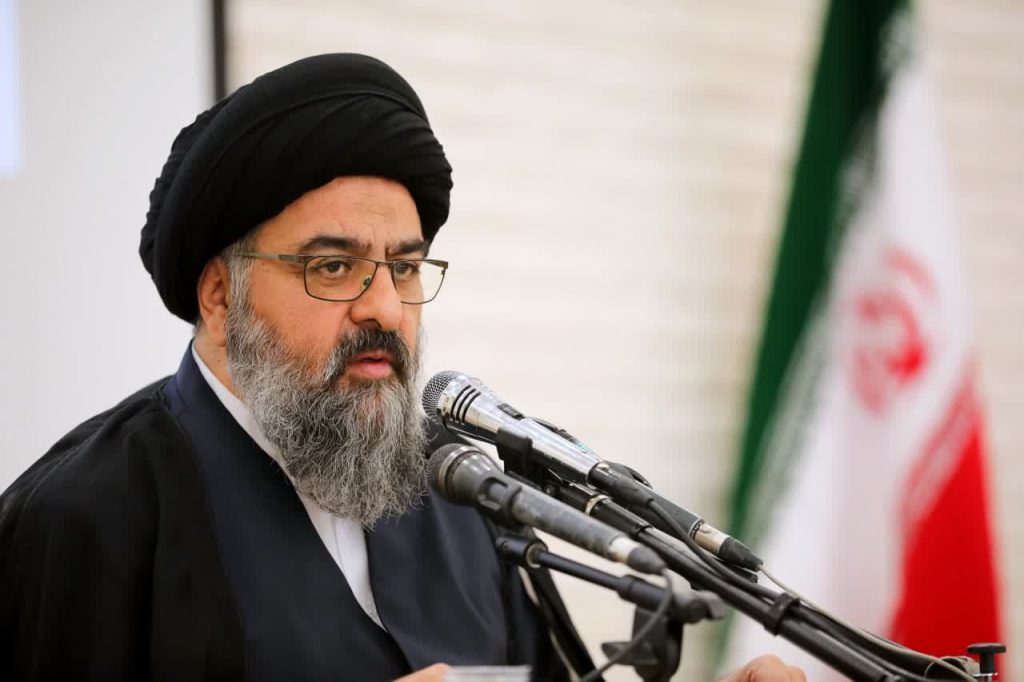
Editor’s Note: One requirement of emerging branches of jurisprudence for better resolving their issues is creating jurisprudential rules specific to these chapters. Jurisprudential rules (qawa’id al-fiqhiyyah)—whether we accept them or not—help bring discipline and rule-based structure to jurisprudential chapters. In the jurisprudence of media as well, by virtue of its emerging nature, not many jurisprudential rules have been presented. However, Ayatullah Sayyid Mujtaba Nur Mufidi believes that media jurisprudence issues today are completely different from its past issues, thus requiring new jurisprudential rules. According to this professor of Advanced Jurisprudence and Principles at the Islamic Seminary of Qom, certain matters that were considered media concomitants in the past have transformed into its essential qualities today. In this exclusive interview, the President of the Research Institute for Contemporary Jurisprudence explores contemporary jurisprudence and its jurisprudential rules.
Fiqh-e Mo’aser: What is media jurisprudence (Fiqh-e Rasaneh), and what matters does it encompass?
Ayatullah Nur Mufidi: Media jurisprudence is among the applied-branch jurisprudences (fiqh-ha-ye mudhaf) that have received greater attention these days. Naturally, the subject and definition of jurisprudence are clear. If jurisprudence consists of the law of worldly livelihood and spiritual return (qanun-e ma’ash wa ma’ad)—as some have stated—or the set of laws established to regulate human life, it naturally encompasses the realm of human communication with others, because media means communication tools. Fundamentally, media means the means through which communication is established with others. The subject of communication itself is a very important subject with certain preliminaries. Communication itself is vital, and naturally communication tools are also very vital and carry requisites. Therefore, when communication or communications constitute one of the most vital affairs of human life, jurisprudence cannot lack a stance toward this dimension of life, and paying attention to this dimension of human life is certainly of immense importance in line with the objectives pursued by jurisprudence.
When we say media and view it as a means of communication, the scope of its communication is so vast that today, in a sense, it even includes the telephone, as that too is a communication instrument! Although a specific perception of media may exist, this word, in the true sense of the term, encompasses these tools as well.
On the other hand, jurisprudence has undergone developments, and media has likewise undergone transformations. Therefore, we must see whether the developments and transformations that emerged in jurisprudence correspond to the transformations that occurred in the field of media or not.
Today, media is not discussed in isolation; rather, we have what is known as multimedia. This is a phenomenon that, in the view of some, relates to the postmodern world. Consequently, moving hand-in-hand and advancing step-by-step with this category is of paramount importance for jurisprudence. Today, media outlets have acquired doubled importance not only from the dimension of being a tool and instrument of communication, but also in terms of the significant functions they serve. Therefore, from two aspects, the subject of media is extremely important:
One is the very nature of media as a tool and instrument of communication, which itself is important per se. The other factor multiplying the importance of media is the functions defined for media in this era. It can truly be said that media is impactful to a miraculous degree. Well, such a category and phenomenon in this temporal context naturally makes it imperative that all its dimensions, affairs, and actions related to this field be weighed on the scales of Shari’ah, and that religious proofs clarify our perspective and conduct toward such an immensely grand phenomenon.
Fiqh-e Mo’aser: What do you consider to be the most applied rules in media jurisprudence?
Ayatullah Nur Mufidi: Before arriving at examining the rules of media jurisprudence, we must pay attention to a point here, which is the necessity of distinguishing media ethics from media jurisprudence. That is, ultimately we have a set of ethical rules or propositions regarding media, and a set of jurisprudential rules.
Media ethics and media jurisprudence are very close to one another; they might even overlap in certain places. Therefore, we must possess a criterion and standard for media ethics and media jurisprudence, and consequently for the rules pertaining to these two domains.
Certain matters are raised both in proofs, Quranic verses, and narrations, and some have even been examined in jurisprudential books; yet it is not clear whether these are counted among the rules of media jurisprudence or fall under media ethics. Examples include the prohibition of publishing falsehoods (hurmat-e nashr-e akadhib)—which is certainly a widely applied ruling in the media realm—or the prohibition of rumor-mongering (hurmat-e shay’ah-sazi). Rumor-mongering is one of the things frequently raised and highlighted regarding modern media, creating various problems that also existed in distant past regarding traditional media. In the Quran, explicit reference is made to it: the work of hypocrites (munafiqin) was spreading rumors, and a Quranic verse was revealed in this connection. Almighty God threatens that if they continue this behavior, harsh measures will be taken against them.
Today, we see that rumor-mongering is a major mission of media outlets lacking legal, ethical, and regulatory commitments. Considering this, we can utilize the prohibition of rumor-mongering as a jurisprudential rule (qa’idah-ye fiqhiyyah). Although its predominant or greatest application lies in the media realm—or perhaps one could say it is its sole application—rumor-mongering means using communication instruments to spread false or incorrect information to achieve a specific goal, which is possible in virtually all visual and auditory media tools. Globally, major media outlets and international media giants affiliated with espionage services or specific governments ignite major wars through this method, overthrow governments, or incite populations to rebel. Therefore, in my view, it possesses the capacity to be a jurisprudential rule, even though such a rule has not been explicitly listed among our jurisprudential rules thus far.
Right here, someone might say that this is not a purely jurisprudential rule, but also carries an ethical dimension—that is, in media ethics, rumor-mongering might be counted by some as an ethical matter.
I wish to state a point: certain matters in the past were perhaps concomitants (muqarinat) of media, but today have transformed into essentials (dhatiyyat) of media. Here, we must see how jurisprudence intends to address this issue. For instance, I read in writings by some media practitioners that Oriana Fallaci—a very famous Italian journalist who primarily interviewed world leaders—would, when sitting with a head of state or political figure, deliberately try to make them angry to strip them of their calm outward exterior and reveal their inner character. For example, she mentioned interviewing the Shah a year or two before the Revolution; the Shah had recently quit smoking, so right as she sat down, she placed her cigarettes and lighter on the table in front of him, seeing that this unsettled him.
Now the question is: Is a media professional permitted to use this method or not, given that it is considered among professional media techniques? Human nature seeks to present itself favorably in public. In our supplications it is recited: “O Allah, do not disgrace me through the hidden secrets You know of me.” On the one hand, religious recommendations advise us not to commit acts causing the degradation of personality. On the other hand, media instruments—in person in the past and virtually today—act to provoke individuals, such as falsely attributing statements to them on social media. Is this religiously permissible?
Today, media-related issues have become so complex that they go far beyond the prohibition of mockery, backbiting, rumor-mongering, and the like; new subjects such as whistleblowing/exposure (ifshagari) are raised. Regarding exposure: Is exposure permissible or not? Currently, media outlets consider themselves the fourth or fifth estate of society, believing that based on the principle of oversight over governance—or in religious terms, Enjoining Good and Forbidding Evil (Amr bi al-Ma’ruf wa Nahy ‘an al-Munkar)—it is necessary to expose oppressions, corruptions, and deviations. To what extent is exposure permissible? How far may it proceed? Is it strictly within professional domains or does it encompass private spheres (harim-e khosusi) as well? For example, to prove an individual lacks competence for a role, does a media outlet have the right to invade their private sphere and reveal personal matters?
Another issue is flattery and sycophancy (tamalluq wa chaplusi), which is very important. When media work involves magnifying some and diminishing others, flattery becomes part of its function. Media today has assumed extraordinary missions. Today, we must enumerate media jurisprudence issues and no longer confine ourselves to simple past topics. Extremely complex issues have entered media—such as image-making/personage-building (chehreh-sazi). Currently, some media outlets receive funds to build images, presenting someone as larger than they are. Is this permissible? These can be proposed as rules of media jurisprudence