Key Highlights
-
Ayatullah Nur Mufidi: The views of the martyred Leader regarding contemporary jurisprudence must transform into the academic discourse of the seminary and university.
-
Ayatullah Nur Mufidi: The role of the martyred Leader in the flourishing of contemporary jurisprudence must be scientifically explained.
-
Ayatullah Shahriyari: Contemporary jurisprudence must respond to the questions of today’s world.
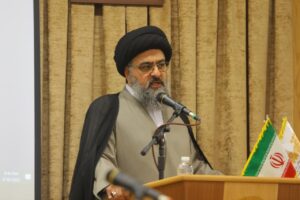
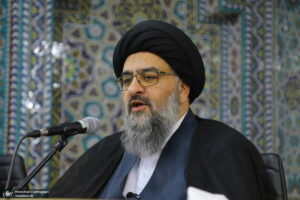
During the ceremony signing a Memorandum of Understanding (MoU) for cooperation with the Organization for Researching and Composing University Textbooks in the Humanities (SAMT), Ayatullah Sayyid Mujtaba Nur Mufidi, President of the Research Institute for Contemporary Jurisprudence, emphasizing the Institute’s adherence to scholarly and revolutionary commitment, stated: Since the inception of its activities, this Research Institute has pursued the mission of responding to emerging issues and contemporary societal needs across the twin domains of foundational and applied research, and cooperation with SAMT Organization can pave the ground for producing enduring academic sources and strengthening academic literature in contemporary jurisprudence.
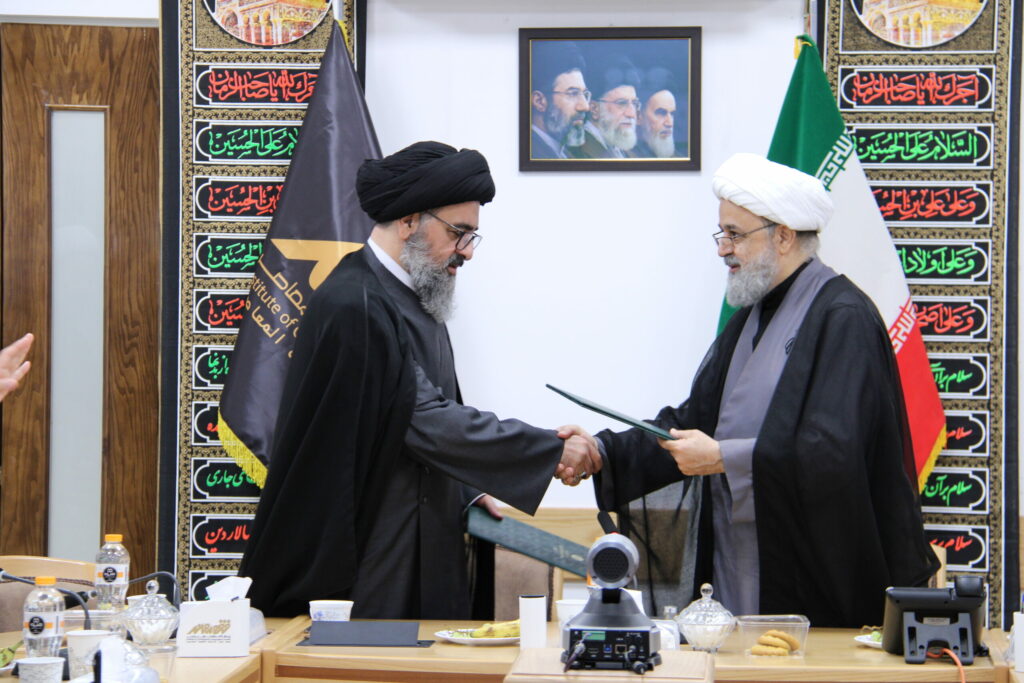
According to the news portal of the Research Institute for Contemporary Jurisprudence, the ceremony signing the MoU for cooperation between the Research Institute for Contemporary Jurisprudence and the Organization for Researching and Composing University Textbooks in the Humanities (SAMT) was held in the presence of Ayatullah Sayyid Mujtaba Nur Mufidi, President of the Institute; Ayatullah Dr. Hamid Shahriyari, President of SAMT Organization; and a gathering of directors and officials from both organizations.
This memorandum was signed with the objective of expanding academic and research collaborations, producing scientific and university resources in contemporary jurisprudence, developing joint research, and utilizing the scientific capacities of both institutions in responding to emerging issues and modern societal needs.
The Research Institute for Contemporary Jurisprudence Remains Committed to Its Scholarly and Revolutionary Duty
In this ceremony, referring to the governing approaches of the Institute’s activities, Ayatullah Sayyid Mujtaba Nur Mufidi emphasized: Since the start of its activities, this organization rested upon specific principles and frameworks, consistently striving to realize these bases in practical practice.
The Professor of Advanced Classes in Jurisprudence at the Islamic Seminary of Qom, stating that the Institute’s activities are organized in two domains—”Foundational Research” and “Applied Research”—added: “A vast ensemble of scientific dossiers, specialized journals, academic seminars, and other research outputs of this center were shaped upon this foundation, and the trajectory of the Institute’s activities will continue accordingly in the future.”
The President of the Research Institute for Contemporary Jurisprudence, pointing to the presence of researchers holding diverse perspectives within this organization, stated: “Diversity of scientific views has never constituted an obstacle to preserving the core identity and primary commitment of the Institute, and all activities have been pursued within the framework of defined objectives and missions.”
Explaining Foundations of Contemporary Jurisprudence and Defending Islamic Revolution Values Are Among the Institute’s Approaches
Pointing to the Institute’s academic plans in recent months, Ayatullah Nur Mufidi noted: “In line with explaining the thoughts, positions, and measures of the martyred Leader of the Islamic Revolution in contemporary jurisprudence, this organization prioritized holding a series of academic seminars and compiling a specialized issue to scientifically explain his role in the flourishing and development of contemporary jurisprudence.”
Emphasizing that the Research Institute for Contemporary Jurisprudence considers itself committed to the ideals of the Islamic Revolution, the system of the Islamic Republic, and the Guardianship of the Islamic Jurist (Wilayat al-Faqih), he stated: “Defending these foundations is not merely a political position, but springs from doctrinal beliefs and the scientific and social responsibility of Islamic seminaries.” According to him, preserving Islamic identity, safeguarding achievements of the Islamic Revolution, and continuing this path in the future necessitates reinforcing these foundations and explaining them scientifically.
Cooperation with SAMT Organization: An Opportunity for Academic Foundation-Building in Contemporary Jurisprudence
The President of the Research Institute for Contemporary Jurisprudence described signing the MoU with SAMT Organization as initiating a fresh phase of academic cooperation between the seminary and university, clarifying: “This cooperation will prove enduring and impactful when it results in reinforcing the scientific foundations of contemporary jurisprudence and provides the ground for producing joint, enduring academic works.”
Expressing appreciation for the scientific approach of SAMT Organization officials, the Professor of Advanced Classes at the Islamic Seminary of Qom expressed hope that this memorandum can pave the ground for generating new academic movements, producing joint works, and developing problem-oriented research in contemporary jurisprudence, reinforcing the scientific foundations of this field more than ever.
Ayatullah Shahriyari: Contemporary Jurisprudence Must Respond to the Questions of Today’s World
Continuing the ceremony, Ayatullah Dr. Hamid Shahriyari, President of the Organization for Researching and Composing University Textbooks in the Humanities (SAMT), pointing to rapid transformations in the contemporary world, emphasized the necessity of academic and seminary centers playing an active role in explaining intellectual foundations and responding to emerging issues.
Stating that current global conditions place new questions before Islamic thinkers, he noted: “Today more than ever we require producing research capable of answering real societal issues and needs, opening fresh horizons before Islamic thought. According to him, Islamic seminaries and research centers must employ their scientific capacity toward solving daily problems and producing scientific literature tailored to contemporary needs.”
The President of SAMT Organization, emphasizing the necessity of directing seminary research toward required societal issues, added: “Today, addressing topics bearing no impact on resolving contemporary issues and challenges no longer fulfills the mission of Islamic seminaries; rather, research must be organized observant of real questions and daily needs of Islamic society.”
Referring to the role of academic centers in supporting the Islamic system, he noted: Just as reputable global think tanks operate in service of reinforcing their countries’ intellectual and strategic foundations, academic centers of the Islamic Republic must likewise, while preserving scientific identity, play a role in reinforcing the intellectual, cultural, and civilizational foundations of the Islamic system.
Establishing a Specialized Contemporary Jurisprudence Department in Qom: A Step Toward Deeper Linkage Between Seminary and University
Under the terms of this memorandum, the two organizations will cooperate regarding establishing a specialized department of “Jurisprudence and Foundations of Islamic Law,” executing joint research projects, producing scientific and university sources, authoring and translating academic works, and expanding educational cooperation. Within the framework of this cooperation, launching a specialized department of Jurisprudence and Foundations of Islamic Law in Qom, utilizing the capacity of seminary professors and researchers, has been prioritized to take an effective step toward reinforcing scientific bases and developing contemporary jurisprudence literature through producing scientific content and educational resources required by universities.
Producing Foundational and University Books Prioritized in Joint Cooperation
Referring to the terms of the memorandum, the Vice President of SAMT Organization stated: Designing and implementing joint research plans, authoring and formulating foundational books, producing university textbooks, translating academic works, and developing research cooperation form the primary axes of this memorandum.
He noted: Under this agreement, scientific literature and theoretical foundations of emerging contemporary jurisprudence topics will first be produced, followed by formulating and publishing textbooks tailored to university needs relying upon this scientific support. Furthermore, translating selected works into Arabic and English has been prioritized to present Iran’s contemporary jurisprudence scientific capacities at the international level.
Utilizing the Scientific Capacity of the Research Institute for Contemporary Jurisprudence
Dr. Khademi described the Research Institute for Contemporary Jurisprudence as an influential scientific center of the Islamic Seminary of Qom, stating: This Institute benefits from valuable capacity of professors, researchers, and extensive scientific production, and SAMT Organization hopes that by drawing upon this scientific power, effective steps will be taken in producing university resources and providing scholarly responses to emerging modern issues (masā’il-e mustahdasah).
Referring to the presence of Hujjat al-Islam wa al-Muslimin Mostafa Dorri, Vice President and Research Deputy of the Institute, within the jurisprudence department of SAMT Organization, he expressed hope that this cooperation can provide the ground for transferring the Institute’s scientific capacities to SAMT and developing academic interactions between seminary and university centers.