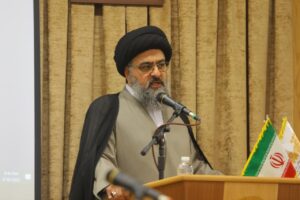
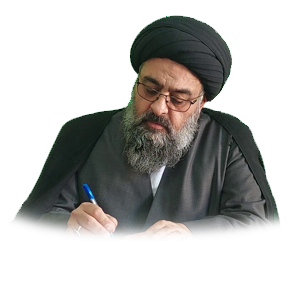
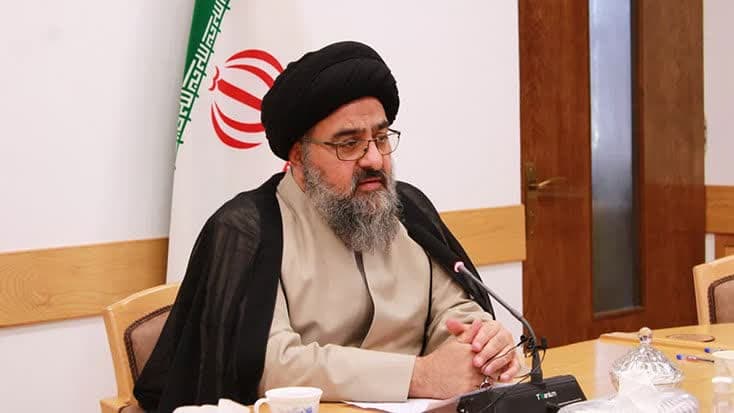
Professor of Advanced Jurisprudence (Dars-e Kharij-e Fiqh) and Principles (Usul) at the Islamic Seminary of Qom and President of the Research Institute for Contemporary Jurisprudence stated: It seems the social atmosphere within the circle of traditional believers is not quite ready for women’s religious authority (Marja’iyyah). Non-acceptance among this spectrum has roots and reasons that seem to a degree natural. However, we are in a transition phase, and changing mindsets—especially at certain junctures—takes time and requires work.
IQNA: One of the issues that must be addressed today is whether the issue of women’s religious authority (Marja’iyyah) is among emerging modern issues (masā’il-e mustahdasah) or has been raised in the past, and to what era does the precedent of this subject trace back?
Women’s Marja’iyyah can be examined across several stages; from the past when this concept was simple to today when it has become concomitant with specific functions, it has undergone various developments. Ultimately, the principle that women throughout the history of Islam and Shiism served as reference points for consultation in various formats has always existed and is provable with solid historical evidence. For example, in early Islam and during the time of the Prophet (PBUH) and the Infallible Imams (peace be upon them), we had women engaged in propagating and explaining religion and Shari’ah, to whom people referred and who answered questions. We had women who were traditionists (muhaddithah) and narrators (rawi). Among traditionists, we see the names of many prominent women who narrated numerous traditions.
Moving forward through history, the role of women in explaining religious teachings and stating religious rulings and doctrines increased in proportion to their emerging needs and capabilities. In an era following the first period—where some women acted as traditionists, narrators, or explainers of rulings—some reached the level of ijtihad and personally developed the capability to deduce religious rulings from religious sources; these also constitute a significant number. For example, the daughter of the First Martyr (Shahid-e Awwal) attained this rank and became an authority issuing fatwas (sahib-e fatwa), standing at such a stature according to historical reports. Examples and instances in this regard are abundant.
Nor did anyone ever prohibit women from narrating traditions, stating rulings and doctrines, or exercising ijtihad, nor did anyone hold the non-permissibility of these matters. Of course, whether the audience was exclusively women or not has been subject to discussions.
Subsequently, the issue of the permissibility of issuing fatwas (ifta’) and the permissibility of emulation (taqlid) was raised. Hence, Marja’iyyah in the sense of ifta’ and emulation of a fatwa-issuing authority has perhaps been debated over the past few centuries. Furthermore, in recent centuries, Marja’iyyah became concomitant and associated with leadership (za’amah); thus, we must differentiate between the two. Sometimes Marja’iyyah refers to ifta’ (issuing fatwas), following which the issue of taqlid arises; another time Marja’iyyah means the aforementioned sense plus taking charge of Shia affairs and general affairs (tasaddi-ye umur-e ‘ammah)—which in a sense might not possess a very long historical precedent, but emerged in recent centuries. Of course, alongside these, we have another issue, which is the guardianship (wilayah) of women—meaning, for instance, a woman being proposed as Guardian Jurist (Wali-ye Faqih). Therefore, several issues must be separated here: sometimes Marja’iyyah means ifta’; sometimes Marja’iyyah is used in a broader sense that includes taking charge of Shia affairs and related general public affairs, expressed otherwise as leadership (za’amah); and of course, a separate stature from Marja’iyyah may be considered for guardianship (wilayah).
Now, if the intent is Marja’iyyah in the sense of ifta’ followed by taqlid, this is not a new subject and possesses a very long history. If Marja’iyyah means leadership, guardianship, and taking charge of Shia affairs, although not entirely modern, it is newer than the former case; yet even so, we cannot look upon it as an emerging modern issue (mas’alah-ye mustahdasah). Ultimately, this topic was raised in the past; the Second Martyr (Shahid-e Thani) around the 10th century AH explicitly stated the condition of masculinity (rajuliyyah) for Marja’iyyah, which is well-known.
Of course, even if an issue is not new, if we re-examine, review, and re-read it due to the conditions, requirements, and complexities that today’s world has acquired, this approach can, in a sense, yield a different result.
IQNA: Why were some people surprised when this discussion was raised by the Supreme Leader, whereas according to your explanations it appears this discussion existed in the past as well?
I deem it necessary to express my appreciation for the Supreme Leader’s special attention to this subject. Under conditions where, unfortunately, the enemy’s propaganda apparatus and global arrogant media attempt to accuse Islam, Shiism, and Iran in particular based on baseless claims—including allegations regarding women and the ignoring of women’s rights, merits, and capabilities—in my view, raising this topic under such conditions was very astute and provided a firm, solid response to these provocations.
In any case, perhaps the reason for some people’s surprise is that they lack accurate knowledge of the history of this topic, or perhaps they did not hold a correct understanding of the Supreme Leader’s remarks; because as I stated, we must examine this subject at different levels. Firstly, he raised the issue of the permissibility of emulation (jawaz-e taqlid). The permissibility of emulation follows the permissibility of issuing fatwas (ifta’); ifta’ is based upon ijtihad, and the door of ijtihad for women was never closed. No one has claimed that a woman cannot become a mujtahidah. What was subject to debate was the permissibility of ifta’ and subsequently the permissibility of taqlid. What might be somewhat more unexpected for some and remains open to debate is taking charge of Shia affairs, general public affairs, and leadership (za’amah). What the Supreme Leader referred to was the permissibility of emulation.
Their surprise may stem from assuming he stated this regarding the third level as well, whereas his remarks were silent regarding that aspect. The discussion on the permissibility of emulation can coexist with leadership (za’amah) or exist independently of it; this can even be pointed out to opponents—that leadership is not currently under discussion. What is under discussion now is Marja’iyyah in the sense of the permissibility of ifta’ and taqlid. This in no way conflicts with the spirit of the Lawgiver (madhaq-e shari’), nor with concerns regarding concealment, modesty, and privacy; these are combinable. Yes, their concerns might carry some relevance regarding general leadership (za’amah), which is also answerable and must be discussed in its proper time.
IQNA: Given your explanations, what is the ruling on women’s Marja’iyyah for men? If permissible for women, is it confined only to women’s issues or applicable generally?
If we hold the permissibility of women’s ifta’ and the permissibility of emulating them based on firm, solid proofs, it makes no difference whether ifta’ is conducted by a woman or a man. Ultimately, the primary proofs for the permissibility of ifta’ are a set of Quranic verses and narrations whose absolute scope (itlaq) encompasses women as well, or for instance the practice of rational people (sirah-ye ‘uqala’) regarding the unlearned referring to the learned (ruju’-e jahil bi ‘alim). If we accept these absolute proofs and no qualifying proof (muqayyad) exists, or if there is no deterrent (radi’) regarding rational practice specifically for women (which seemingly does not exist), then there is no distinction between whether ifta’ is for women or for men.
Therefore, according to the requirements of the proofs for the permissibility of ifta’, we cannot place a restriction on emulation by men—especially if we assume a woman emerges who is the most learned (a’lam) and we hold the obligation of emulating the most learned (wujub-e taqlid-e a’lam). Yes, regarding women’s issues, we might consider one aspect: from the perspective of subject-identification (mawdu’-shenasi)—which plays a crucial role in deduction and without which deduction strays—women naturally stand at a higher level and might possess preference (rujhan) for emulation in certain respects. Otherwise, in the principle of Marja’iyyah in the sense of the permissibility of ifta’, there is no difference between man and woman, nor is it restricted to women’s issues. That is, in non-women-related issues as well, the permissibility of emulation is established. If, for instance, an erudite female jurist emerges whose power of deduction surpasses men, there is no reason for us to restrict this to men.
That the Supreme Leader referred to women’s issues in fact designated emulation (ta’ayyun-e taqlid). His expression was that in many women’s issues, men do not possess good and accurate diagnosis; hence, women must emulate female jurists (mujtahidat). The discussion concerns the obligation/designation of emulation, not that outside this scope such competence does not exist.
IQNA: Examining from another angle, given the specialization and complexity of jurisprudential issues, can it be said that women’s Marja’iyyah is a social necessity, or is this issue raised to elevate the status of learned women?
In my opinion, both aspects can be influential: it is both a social necessity and prepares the ground for elevating their status. When we say social necessity, it is because issues have become so vast and complex that in the future we will have no choice but to specialize even the institution of Marja’iyyah, ifta’, and taqlid. A single jurist certainly lacks sufficient time to address all issues; hence, we must move toward greater specialization—meaning having multiple individuals across different chapters, each being the most learned (a’lam) in a specific chapter and serving as the reference point for people’s inquiries and fatwas.
Therefore, considering that we live in a world where women’s issues have become very vast and complex, this might indeed be a necessity—especially considering that women themselves possess greater familiarity and better diagnosis in these matters. Thus, this is a social necessity and will simultaneously elevate the status of women.
IQNA: Given the points you mentioned, to what extent is the social atmosphere receptive to a female source of emulation (Marja’-e Taqlid), and does the capacity exist in women’s seminaries to introduce female jurists (mujtahidat) to the public or at least to women?
Regarding the first part of the question, it seems the social atmosphere is not uniform; the social atmosphere within the circle of traditional believers is not quite ready. Non-acceptance among this spectrum has roots and reasons that seem to a degree natural. However, we are in a transition phase, and changing mindsets—especially at certain junctures—takes time and requires work. This can also be carried out by jurists and senior scholars through academic and promotional movements; it is feasible and by no means impossible.
Among the non-traditional religious spectrum, this readiness is higher and the ground for acceptance is more receptive. In terms of the general public atmosphere as well, greater readiness might exist. As I mentioned, to make this issue acceptable, we must currently separate the position of ifta’ from the position of leadership (za’amah). Even if we hold the permissibility of leadership, it is naturally time-consuming and must happen step by step. Attention must also be paid to the fact that currently what is under discussion—as I noted at the beginning and as appeared in the Leader’s remarks—is the permissibility of ifta’; this is an important step forward. But the issue of leadership, taking charge of general public affairs, or guardianship (wilayah) requires a separate discussion.
As for women’s seminaries, I have stated on various occasions that women’s Islamic seminaries under current conditions and with their current programs have unfortunately diminished this capacity. Although this setting might be better prepared in Qom, women’s seminaries in provincial towns suffer from some weakness in this regard given their designated curricula. I have repeatedly recommended to administrators of women’s seminaries that alongside programs for Levels Two, Three, and Four—which provide a set of general awareness to women—they keep open the conventional path of seminary studies practiced in men’s seminaries for sisters wishing to traverse the path of ijtihad, so that we can attain the desired outcome.
IQNA: If you have a concluding point to summarize the discussion, please share.
My request is that on issues of this nature involving sensitivities, writing and expressing opinions be conducted with precision, ensuring the subject under discussion is clearly defined. We must be careful about which exact point we focus upon in affirmation or rejection; it is vital that the boundaries of the topic be completely clear and distinct, without conflating these discussions with peripheral and side issues.