According to the AhlulBayt International News Agency (ABNA), the magnificent, historical funeral procession of the Ummah for Grand Ayatullah Sayyid Ali Khamenei, the martyred Leader of the Islamic Revolution, was not merely a farewell ritual for a leader, but a re-manifestation of the Ummah’s bond with the discourse of honor, independence, and resistance—a discourse he explained and pursued over decades of leadership based on the teachings of the Holy Quran, the conduct of the Noble Prophet (PBUH), the school of the Ahl al-Bayt (peace be upon them), and the foundations of Shia jurisprudence.
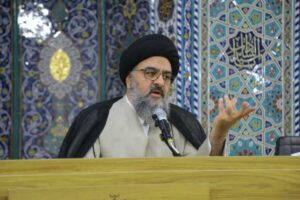
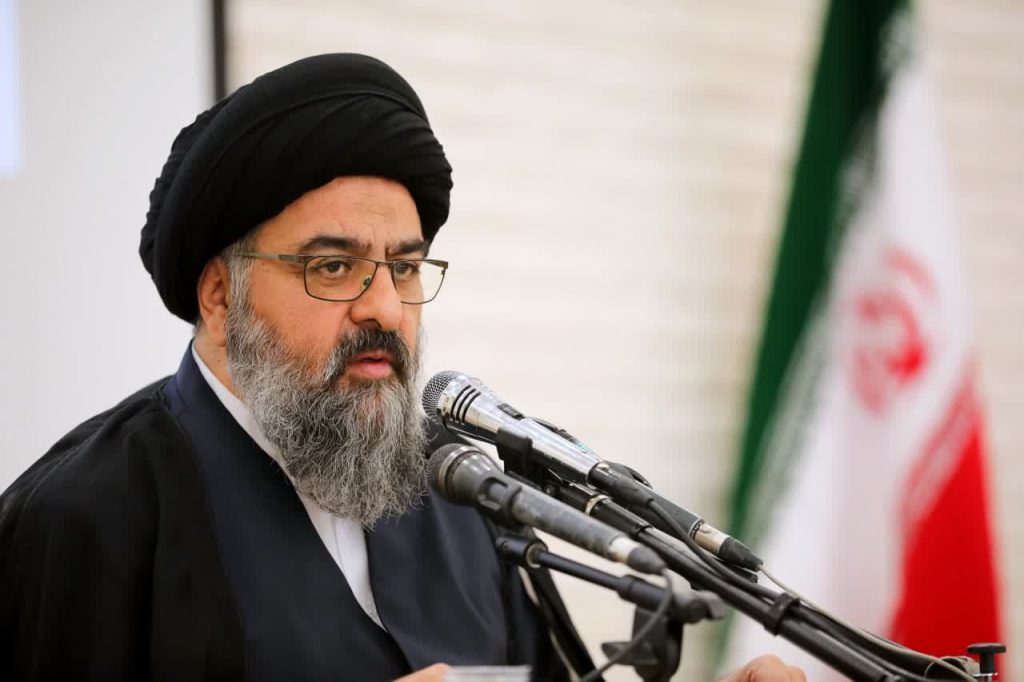
In such an atmosphere, re-reading the jurisprudential and epistemological foundations of the thought of resistance has acquired importance more than ever. The correspondent of the AhlulBayt News Agency (ABNA) examined various dimensions of this thought in an interview with Ayatullah Sayyid Mujtaba Nur Mufidi, President of the Research Institute for Contemporary Jurisprudence, Director of the Dar al-Ma’rifah Institute of Qom, and Professor of Advanced Classes at the Islamic Seminary of Qom. Citing Quranic verses, Ahl al-Bayt (peace be upon them) narrations, the conduct of the Noble Prophet (PBUH), the Ashura uprising, and the thought of Imam Khomeini (may his soul be sanctified), he explains in this interview that resistance against dominance and arrogance is not a purely political strategy, but a deeply rooted principle in Islamic jurisprudence and the practical translation of the eternal slogan “Far be it from us to accept humiliation” (Hayhat minna al-dhillah)—a principle that, in his view, manifested in the most complete form in the conduct and thought of the martyred Leader.
Question: Considering the holding of the magnificent funeral procession for the martyred Imam, Ayatullah Sayyid Ali Khamenei, what do you regard as the most important characteristic of his jihadi thought?
Ayatullah Sayyid Mujtaba Nur Mufidi: In these days when the pure body of the martyred Imam, Ayatullah Sayyid Ali Khamenei, is escorted with the unprecedented presence of the Iranian people and a gathering of Muslim nations, a clear manifestation of the bond between the Ummah and the Imam has been displayed. In such an atmosphere, re-reading various dimensions of his personality and thought carries redoubled necessity. One of the most prominent components of the martyred Leader’s thought is the principle of honor (‘izzah), rejection of subjugation, and resistance against Taghut and arrogance. This principle is not merely a political slogan, but is rooted in the Holy Quran, the Sunnah of the Noble Prophet (PBUH), the conduct of the Ahl al-Bayt (peace be upon them), and the firm foundations of Shia jurisprudence. The eternal slogan “Far be it from us to accept humiliation” (Hayhat minna al-dhillah) in reality expresses this exact jurisprudential foundation; for this reason, Imam Khomeini (may his soul be sanctified) and the martyred Imam, Ayatullah Khamenei, placed it at the axis of their political and social behavior and decision-making.
Question: What are the paramount Quranic and Hadith proofs for this jurisprudential perspective on resistance?
Ayatullah Sayyid Mujtaba Nur Mufidi: The Holy Quran clearly articulates the bases of this thought. The verse “And never will Allah grant to the disbelievers over the believers a way [to overcome them]” [Quran 4:141] forms the foundation of the jurisprudential rule “Negation of Dominance” (Nafy al-Sabil)—meaning no political, economic, cultural, or military dominance of foreigners over Islamic society possesses legitimacy. Furthermore, the verse “And to Allah belongs all honor, and to His Messenger, and to the believers” [Quran 63:8] presents honor as an indispensable characteristic of the community of believers; and the verse “So do not weaken and do not grieve” [Quran 3:139] summons Muslims to endurance and self-belief. In narrations as well, this exact meaning is observed: as Imam al-Sadiq (peace be upon him) states, God entrusted all affairs to the believer, but did not permit him to humiliate himself. The climax of this logic is manifested in the eternal statement of Imam al-Husayn (peace be upon him) who declared: “Far be it from us to accept humiliation!”—a sentence expressing a religious and doctrinal obligation facing oppression and dominance.
Question: Does the conduct of the Noble Prophet (PBUH) and the Ahl al-Bayt (peace be upon them) also corroborate these foundations?
Ayatullah Sayyid Mujtaba Nur Mufidi: Undoubtedly it is so. From the beginning of Islamic summons, facing pressures and proposals from polytheists, the Noble Prophet (PBUH) never retreated from his mission, stating that if they placed the sun in his right hand and the moon in his left hand, he would not abandon this path. The resistance of Muslims in She’b Abi Talib, standing firm in the Battle of Ahzab, and ultimately the Conquest of Mecca all demonstrate that resistance is the prelude to victory. At the pinnacle of this conduct stands the Ashura uprising of Imam al-Husayn (peace be upon him)—a movement that, by refusing allegiance (bay’ah) to oppressive rule, established the principle negating oppressors’ dominance forever in Islamic history, transforming the slogan “Far be it from us to accept humiliation” into the charter of seeking honor for the Islamic Ummah.
Question: How did these foundations manifest in the thought of Imam Khomeini (may his soul be sanctified) and the martyred Imam, Ayatullah Khamenei?
Ayatullah Sayyid Mujtaba Nur Mufidi: Imam Khomeini (may his soul be sanctified) converted resistance into one of the fundamental principles of the Islamic movement, rejecting submission to bullies by relying upon divine promises. This exact trajectory continued powerfully in the thought and conduct of the martyred Imam, Ayatullah Khamenei. He repeatedly emphasized that the cost of resistance is less than the cost of submission, and the remedy for the country’s problems is not retreating before the enemy. In his view, national honor, political independence, scientific progress, Resistance Economy, self-sufficiency, and supporting oppressed nations—especially Palestine—all count as manifestations of the Jurisprudence of Resistance (Fiqh al-Muqawamah) and executing religious duty against the system of dominance.
Question: What is your conclusion regarding this jurisprudential perspective on resistance?
Ayatullah Sayyid Mujtaba Nur Mufidi: Examining Quranic verses, Ahl al-Bayt (peace be upon them) narrations, Prophetic conduct, historical Islamic experience, and the thought of Imam Khomeini (may his soul be sanctified) and the martyred Imam Ayatullah Khamenei, one can clearly perceive that resistance against arrogance is not a temporary tactic or purely political choice, but a deeply rooted ruling in Islamic jurisprudence. The slogan “Far be it from us to accept humiliation” is the translation of this exact foundation, forbidding a Muslim from accepting any dominance and forced humiliation. Under this attitude, the honor of the Islamic Ummah depends upon preserving independence, standing against oppression, patience over hardships, and hope in the fulfillment of divine promises—a path upon which the martyred Leader remained steadfast until the end of his life.