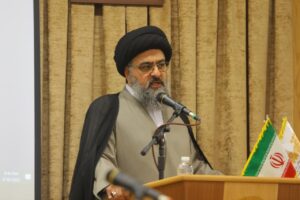
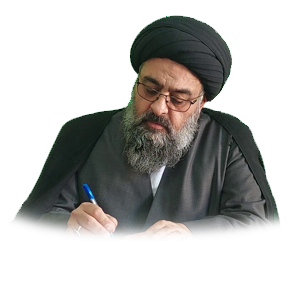
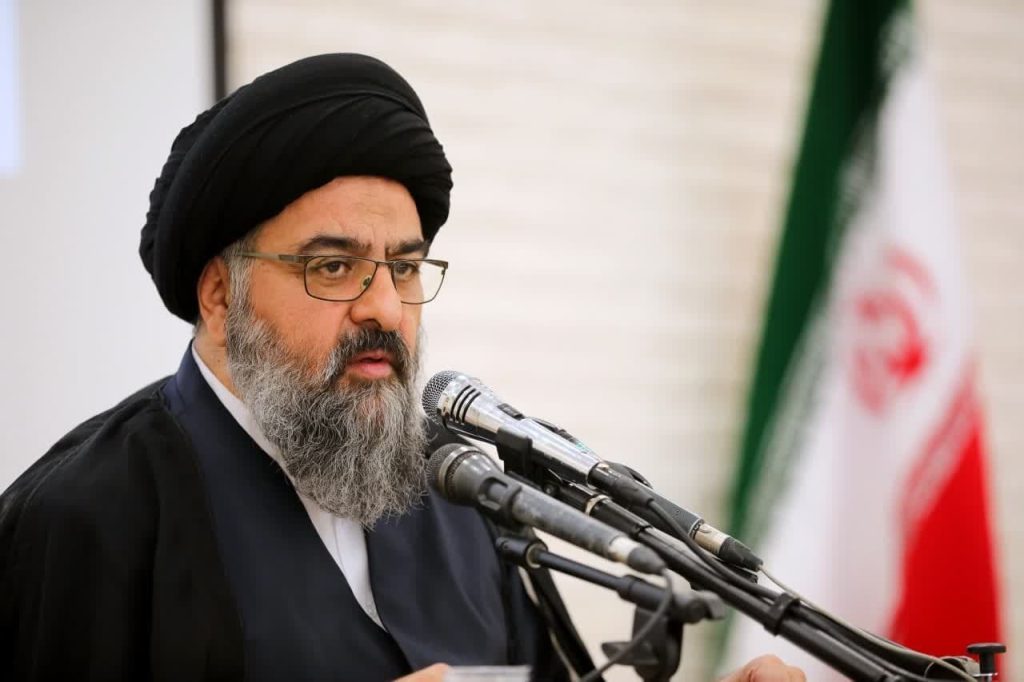
Ayatullah Sayyid Mujtaba Nur Mufidi in an Interview with IRNA News Agency
Qom, IRNA – Pointing to the deplorable incident of book-burning, a professor of the Islamic Seminary of Qom stated: “From whichever angle we look at this subject, it is a condemnable, ugly, indefensible act, and in a way, a service to the enemies of Islam and Shiism.”
Hujjat al-Islam wa al-Muslimin Sayyid Mujtaba Nur Mufidi, speaking to the IRNA reporter on Tuesday, while referring to the offensive act of burning a book, added: “The logic of book-burning has had, and will continue to have, highly unfavorable consequences in religious teachings and based on historical experiences.”
He added: “If the door to these methods is opened, especially by claimants of religion and in the name of religion, we must expect reactions of this kind on a large scale toward religious works.”
He emphasized: “Obviously, if some individual clad in the clerical attire wishes to declare their opposition to a book or an ideology by resorting to these methods, not only does it fail to assist in negating and rejecting the contents of the book, but it also creates a feeling of hatred and disgust in the audience.”
Professor Nur Mufidi asserted: “In light of the behavioral and verbal practices of Salafis and Takfiris, such as Daesh (ISIS), fear of Islam and religiosity has spread among a segment of the global population alongside the propaganda of media Zionism, and actions of this kind fuel this wave and tarnish the luminous face of Islam, the school of the Ahl al-Bayt (peace be upon them), and the proud Shiite clergy (ruhaniyyat).”
He stated: “The notion of the incompatibility between science and religion, or the contradiction between them, was formed centuries ago by the Church authorities in the West, and was subsequently used continuously by some Western philosophers as a weapon to strike at religion.”
He added: “The adverse effects and the backlash of the Church’s conduct in the Middle Ages were so severe that even in the contemporary era, many problems stem from that very policy and inappropriate behavior.”
The seminary professor noted: “In such an environment, the recent book-burning is like a valuable gift for those who beat the drum of religion’s opposition to human sciences and experience.”
He said: “On the other hand, it is highly regrettable that an individual clad in the Shiite clerical attire has resorted to medieval methods, and even more regrettable that his proposed alternative is presented in the name of the Ahl al-Bayt (peace be upon them) and the Shiite clergy.”
He added: “Fortunately, the stance of the religious authority (marja’iyyah), the Shiite clergy, and the Islamic seminaries (hawzahs) against this anti-religious, irrational, and unreasonable act over these past few days cleansed the seminary and the clergy from this ugly deed, even though the propaganda apparatus of global arrogance pays less attention to these reactions.”
Professor Nur Mufidi emphasized: “The statements of the late Imam and the Supreme Leader are replete with the necessity of utilizing specialists in every field and applying expertise in its proper place; indeed, in the practical biography (sirah) of the Imam and the Leadership, many instances can be found where they submitted to and respected the opinions of specialists after expert discussions.”
The burning of one of the key textbooks of medicine—Harrison’s Manual of Medicine—by one of the famous promoters of traditional medicine (or “Islamic medicine” as he himself claims), who has been highly active in recent years, prompted widespread reactions in the academic community and the Islamic seminaries. Abbas Tabrizian, who is among the opponents of modern medicine, once again introduced the misconception (shubhah) of the confrontation between religion and modern sciences into the focus of contemporary news debates