Poor Rich Men, Wealthy Poor Men
Why is it that sometimes, despite the accumulation of wealth, a deep sense of poverty and destitution does not release us? This question is a concern that many of us confront in modern life—an inner vacuum that no material asset can fill.
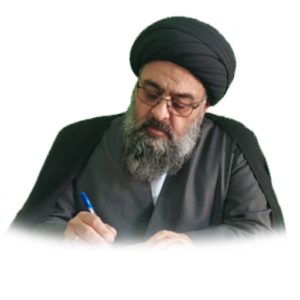
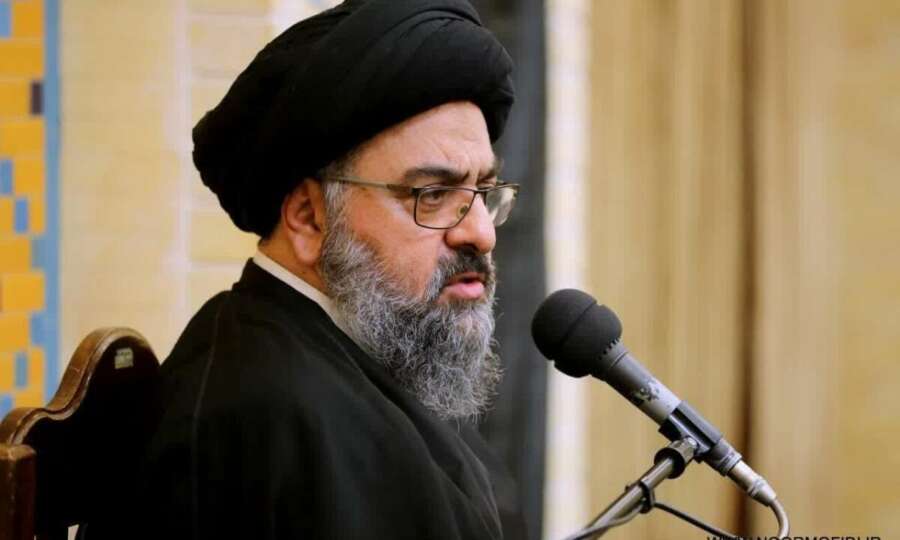
In response to this concern, Ayatullah Sayyid Mujtaba Nur Mufidi identifies the key to resolving this enigma within the treasure trove of the teachings of the Ahl al-Bayt (peace be upon them). Pointing to a stirring bequest from Imam al-Baqir (peace be upon him) to his distinguished disciple, Jabir ibn Yazid al-Ju’fi, he states: In the precious book Tuhaf al-‘Uqul, there is a statement from Imam Muhammad al-Baqir (peace be upon him) that deserves to serve as the blueprint for our modern life. He stated: “لَا فَقْرَ کَفَقْرِ الْقَلْبِ وَ لَا غِنَی کَغِنَی النَّفْسِ”—“There is no poverty like the poverty of the heart, and no wealth like the richness of the soul.” This statement delivers a complete redefinition of our value system. Undoubtedly, financial poverty and indigence constitute a censured and damaging phenomenon whose negative effects have been highlighted in numerous narrations; yet from the profound perspective of the Ahl al-Bayt (peace be upon them), true poverty is the heart’s emptiness of virtues, and true wealth is the inner self-sufficiency that elevates man to the height of dignity.
He adds: In today’s world, we confront a phenomenon that this noble Hadith beautifully depicts. How many individuals are overflowing with material wealth yet possess impoverished hearts—captive to greed, envy, malice, and constant anxiety to accumulate more! These individuals never taste the flavor of tranquility. Conversely, how many human beings experience material hardship yet possess hearts so rich and souls so self-sufficient that the entire world, with all its alluring manifestations, appears small and insignificant before their spiritual grandeur!
Poor Rich Men, Wealthy Poor Men
Why is it that sometimes, despite the accumulation of wealth, a deep sense of poverty and destitution does not release us? This question is a concern that many of us confront in modern life—an inner vacuum that no material asset can fill.
In response to this concern, Ayatullah Sayyid Mujtaba Nur Mufidi identifies the key to resolving this enigma within the treasure trove of the teachings of the Ahl al-Bayt (peace be upon them). Pointing to a stirring bequest from Imam al-Baqir (peace be upon him) to his distinguished disciple, Jabir ibn Yazid al-Ju’fi, he states: In the precious book Tuhaf al-‘Uqul, there is a statement from Imam Muhammad al-Baqir (peace be upon him) that deserves to serve as the blueprint for our modern life. He stated: “لَا فَقْرَ کَفَقْرِ الْقَلْبِ وَ لَا غِنَی کَغِنَی النَّفْسِ”—“There is no poverty like the poverty of the heart, and no wealth like the richness of the soul.” This statement delivers a complete redefinition of our value system. Undoubtedly, financial poverty and indigence constitute a censured and damaging phenomenon whose negative effects have been highlighted in numerous narrations; yet from the profound perspective of the Ahl al-Bayt (peace be upon them), true poverty is the heart’s emptiness of virtues, and true wealth is the inner self-sufficiency that elevates man to the height of dignity.
He adds: In today’s world, we confront a phenomenon that this noble Hadith beautifully depicts. How many individuals are overflowing with material wealth yet possess impoverished hearts—captive to greed, envy, malice, and constant anxiety to accumulate more! These individuals never taste the flavor of tranquility. Conversely, how many human beings experience material hardship yet possess hearts so rich and souls so self-sufficient that the entire world, with all its alluring manifestations, appears small and insignificant before their spiritual grandeur!
The Most Destructive Type of Destitution
This profound perspective summons us to a vital prioritization. If we are to fear one poverty more than another, which is it? That which threatens our livelihood, or that which plunders our dignity and identity? Which leaves a deeper wound upon man’s eternal destiny?
In response to this question, Ayatullah Nur Mufidi emphasizes: The answer of the Ahl al-Bayt (peace be upon them) is completely clear: poverty of the heart is the most destructive and fatal type of poverty. The human heart is the epicenter of his identity and must be filled with love for God, sincere servitude, affection for creation, and liberation from the narrow prison of egocentrism. This is a precise spiritual equation: the less the volume of “selfishness” in man’s existence, the more prominent and tangible the manifestation and presence of “God” becomes in his being.
The Professor of Advanced Classes at the Islamic Seminary of Qom continues: Richness of the soul (ghinat al-nafs) is that monumental capital with which man can transact not only in this world, but also in the eternal abode, benefiting from it in the hardest turns of life. This is the very honor (‘izzah) that forbids man from bowing before other than God or selling his dignity to acquire the meager goods of the world. We must ask Almighty God to bestow upon all of us this true wealth—richness of soul—and protect us from the destructive poverty of the heart.
To explain this topic more deeply, Ayatullah Nur Mufidi references another statement from the Commander of the Faithful (peace be upon him), stating: The Master of the Pious, ‘Ali (peace be upon him), in Ghurar al-Hikam wa Durar al-Kalim expresses this concept with a more decisive phrase: “فَقْرُ النَّفْسِ شَرُّ الْفَقْرِ”—“Poverty of the soul is the worst kind of poverty.” Poverty literally means need and desire. Sometimes this need is financial and material, sometimes scientific, and sometimes spiritual and ethical. What is common in societal usage refers mostly to financial poverty, which is undoubtedly an unpleasant phenomenon paving the way for many deviations; yet spiritual poverty is more dangerous and foundational than all of these.
The Balance Sheet of the Day of Reckoning: The Manifestation of Eternal Capital
The President of the Research Institute for Contemporary Jurisprudence explains: Suppose a person is scientifically impoverished yet possesses a rich and dignified soul; this is a flaw, but does not necessarily culminate in disaster. However, if an individual is a scientist and expert yet spiritually and morally impoverished, his harm to himself and society is far greater, because he commands powerful tools without possessing the ethics and divine orientation for their proper use. Here, financial and scientific capital, if coupled with poverty of the soul, transforms into the greatest obstacle to human growth and perfection. It must not be forgotten that man’s paramount true asset is his soul.
This distinction brings us to a key question regarding destiny: If this world is the stage of appearances, where and when does the final curtain rise upon the ultimate truth of our poverty and wealth?
In response to this question, he states: In certain narrations it is indicated that the truth of poverty and wealth will be completely unveiled on the Day of Resurrection. In this world, the outward appearance of individuals may mislead us: we view one person as rich and another as poor, yet this is merely the outer shell. On Resurrection Day, when curtains are drawn back, the truth becomes clear. How many who possessed a rich outward appearance in the world will be resurrected in the Hereafter empty-handed with impoverished hearts; and conversely, how many who lacked worldly wealth will be among the richest individuals on Resurrection Day by virtue of the richness of their soul and righteous deeds!
Ayatullah Nur Mufidi adds in conclusion: Our duty is to prepare the ground for our true and eternal wealth in this very world. Acquiring knowledge, studying, and engaging in economic activity are commendable matters emphasized by Islam, yet these must not transform into a veil or obstacle to the soul’s growth. We must always watch that our soul is cultivated with virtue, honor, and dignity—a soul that resists sin and baseness and calls us sincerely toward servitude to God. I hope Almighty God grants this great success (tawfiq) to all of us and places us among the truly wealthy in His presence.