According to Tasnim News Agency from Qom, in an era where the frontiers of knowledge are shifting at a dizzying speed due to technological innovations—particularly Artificial Intelligence—silence or indifference in the face of this monumental wave of transformation is regarded as retreating from the current of intellectual and social life. Modern technologies are no longer a secondary choice or merely an auxiliary tool; rather, they have transformed the core infrastructure of global interactions, content production, and even methods of deduction and argumentation across various domains. Hence, a scholarly and systematic engagement by the Islamic Seminary with this unprecedented momentum is a vital necessity rather than a purely academic option.
These developments have placed seminary students and scholars at a historical crossroads: either equip themselves with new tools to play an active role in the arena of global intellectual transformations and respond to emerging doubts, or remain passive spectators to changes that, in the absence of their active presence, will take shape in undesirable forms.
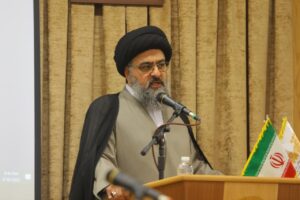
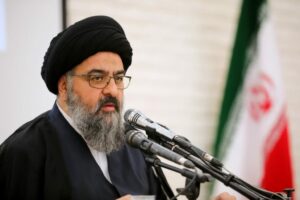
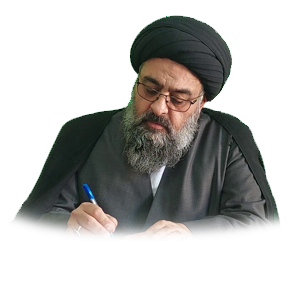
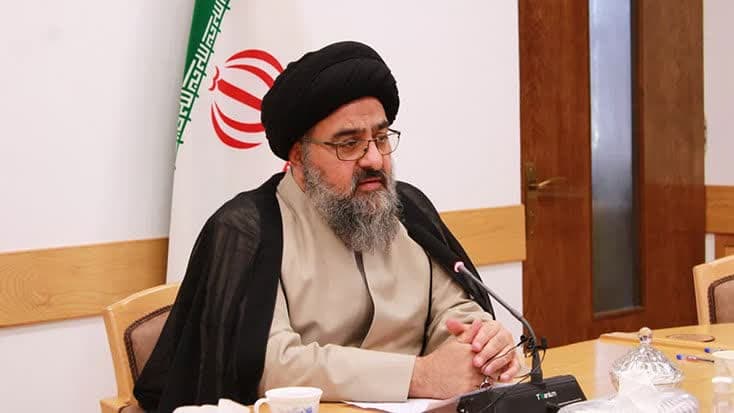
In this detailed interview, relying upon the profound and incisive perspective of one of the prominent professors of the seminary, Ayatullah Sayyid Mujtaba Nur Mufidi, Professor of Advanced Classes (Dars-e Kharij) at the Islamic Seminary of Qom, we examine various dimensions of this phenomenon—from upcoming opportunities for religious research to methodological challenges and equipping the seminary body as rapidly as possible with these modern disciplines.
Tasnim: Considering the pace of Artificial Intelligence (AI) advancements, how do you evaluate the macro-approach of the Islamic Seminary toward this technology? Should the seminary adopt a passive stance before this wave, or take an active and proactive position against its challenges?
Ayatullah Sayyid Mujtaba Nur Mufidi: An active, pioneering, and strategic approach. Adopting a passive or purely reactive stance not only drags the seminary behind the civilizational caravan, but leaves it vulnerable and disarmed facing future challenges of this technology. An active approach does not mean ignoring risks, but means deep understanding, intelligent management, and maximum utilization of opportunities while proactively preventing threats.
Tasnim: Why do you say a passive approach is a strategic error?
Ayatullah Sayyid Mujtaba Nur Mufidi: Because AI is fundamentally altering concepts such as “cognition,” “will,” “ethics,” and even “existence.” If the seminary, as the primary custodian of Islamic rational and transmitted sciences, lacks an active presence in these discussions, it will gradually lose its intellectual authority in answering contemporary questions.
Passivity causes the seminary and religious society to become mere consumers of products designed with different cultural and value foundations. This can lead to weakening Islamic values and involuntarily imposing Western lifestyles. AI is a powerful tool for generating and disseminating religious doubts at an unprecedented speed and scale. Without counter-tools and adequate knowledge, defending doctrinal foundations in the new sphere will prove exceedingly difficult.
Passivity means overlooking an extraordinarily powerful instrument for realizing sublime religious goals—such as spreading justice, guiding humanity, and deepening Islamic teachings. Accordingly, the seminary’s active approach must be defined and implemented across 3 main layers: Cognition, Production, and Governance. The Islamic Seminary must view AI as an “epistemological subject,” prioritizing foundational research on concepts such as artificial consciousness, free will in machines, rights and duties of robots, and comparing them with foundations of Transcendent Philosophy (Hikmat Muta’aliyah) and Islamic philosophy concerning the soul (nafs), knowledge (‘ilm), and will (iradah).
Tasnim: Responding to emerging theological doubts raised by AI is one mission of the seminary. For example, if an AI claims to receive revelation, what is our theological response? How is the relation between AI’s vast data knowledge and Divine Knowledge explained?
Ayatullah Sayyid Mujtaba Nur Mufidi: The jurisprudence of AI must expand rapidly to address emerging issues—topics such as intellectual property: To whom do AI-generated algorithms and data belong? Or if an autonomous vehicle crashes or a medical diagnostic system commits an error, where does liability rest (programmer, owner, or the AI itself)? Formulating ethical principles and frameworks for designing and utilizing AI based on Islamic foundations such as justice, human dignity, equity (qist), trustworthiness, and Negation of Dominance (Nafy al-Sabil). This domain can serve as a global competitive advantage for the seminary.
Furthermore, the seminary must not confine itself to description and analysis, but must enter the field of “production”—for instance, producing intelligent jurisprudential and Hadith search engines. Training specialized human resources is among the most vital tasks. Establishing interdisciplinary fields such as “AI and Islamic Sciences” or “Philosophy and Ethics of Technology” at advanced seminary levels is another critical task to pursue.
Organizing educational courses for seminary students and professors to gain familiarity with AI foundations and applications is also decisive. Dispatching talented students to top global technical universities to study AI and return to serve seminary goals. The seminary, as an influential social institution connected to governance, must play a role in policy-making and regulation—actively participating in drafting the “National AI Document” and related laws to ensure ethical and Shari’ah considerations are observed at a macro level.
Specialized seminary scholars can serve as ethical advisors alongside technical teams in major AI companies, ensuring products are designed from inception upon sound principles. The seminary must raise public awareness regarding AI opportunities and threats, leading a healthy public discourse demanding movement toward “responsible and ethical AI.” The seminary’s standing evolves from a defensive posture to an architect and leader playing a key role in shaping this technology’s future and aligning it with divine and human values. The seminary possesses the capacity not only to answer domestic needs, but to emerge as a global hub in “digital ethics and wisdom,” offering the world a model of wise engagement between religion and technology.
In any case, passivity is the path of weakening and isolation. An active, proactive approach is the path of growth, impact, and fulfilling the seminary’s historical mission in the modern era. Today, addressing AI for the seminary is not a luxury choice, but an individual and urgent obligation (wajib-e ‘ayni) for survival and evolution in the future world. Just as jurists throughout history courageously welcomed emerging issues, today jurists, philosophers, and theologians of the seminary must enter this novel, decisive arena with equal courage and scholarly depth.
Tasnim: Given the importance of this field, what proportion of professors and scholars should engage specializedly in AI topics—including data ethics, intellectual property in AI, and legal issues? What is your proposal for introducing these topics into the syllabi of Advanced Classes (Dars-e Kharij)?
Ayatullah Sayyid Mujtaba Nur Mufidi: It is not a fixed number, but a dynamic, strategic proportion. One cannot say, for example, 20% of professors must enter. The correct approach is creating a “specialized ecosystem” with various levels of skill and knowledge, proposed across 3 layers:
-
Layer One (Core Specialists – 5% to 10% of Elites): The main trailblazers and theorists who are truly “bilingual”—meaning they are mujtahids or authorities in Islamic foundations (Fiqh, Usul, Philosophy, Kalam) while possessing a deep grasp of AI’s technical, philosophical, and legal foundations. Their duties include generating foundational literature in “AI Jurisprudence,” “Islamic Philosophy of AI,” and “Islamic Technology Ethics,” mentoring the next generation, supervising macro research projects, and advising sources of emulation (Marja’s) and governance institutions.
-
Layer Two (Promoters and Experts – 15% to 25%): Serving as a bridge between the specialist core, the seminary body, and society. They do not require expertise in coding or advanced mathematics, but need strong conceptual knowledge of AI capabilities, limitations, and challenges—conducting workshops, acting as subject experts, and producing public content to raise religious literacy.
-
Layer Three (Informed General Body): All professors and students, as cultural and religious actors, must possess “basic AI literacy”—understanding what the technology is, its opportunities/threats, and how it impacts daily and religious life.
Regarding introducing these topics into “Advanced Classes” (Dars-e Kharij), this signifies recognizing them as serious jurisprudential issues requiring deduction (istinbat), implemented gradually and systematically:
-
Path 1 (Independent Advanced Class on Technology/AI Jurisprudence): The ideal scenario, where a prominent authority or professor initiates a dedicated course addressing questions such as: Can a judge cite smart system predictions as a legal indicator (amarah) or personal knowledge (‘ilm)? Can a robot/sensor report constitute clear proof (bayyinah)?
-
Path 2 (Integrating Topics into Traditional Advanced Classes): Introducing these as emerging issues within traditional chapters—e.g., in Dars-e Kharij-e Bay’ (Book of Sale) examining “data wealth-value” (maliyyat-e dadeh-ha); in Dars-e Kharij-e Diyat (Blood Money) analyzing “autonomous vehicle crashes” under the intersection of cause and direct agent; or in Dars-e Kharij-e Usul examining the “authoritativeness (hujjiyyah) of an AI-based Hadith validation system’s output” under speculative proofs (dhanun).
The optimal path is combining both models: pioneering one or two specialized Advanced Classes alongside encouraging other professors to integrate these issues into conventional classes.
Tasnim: Regarding AI’s role in assisting a mujtahid‘s deduction process, can AI tools (such as text summarization, Hadith categorization, or jurisprudential data analysis) be accepted as a “research assistant” for a mujtahid? Where is the boundary between an auxiliary tool and interference in the process of ijtihad?
Ayatullah Sayyid Mujtaba Nur Mufidi: Yes, AI tools can and must unequivocally be accepted as an “extraordinarily powerful research assistant” for a mujtahid. However, this acceptance is conditional upon understanding and observing strict, sensitive boundaries. AI can play an indispensable role in the “preliminary and preparatory” stages of ijtihad—encompassing information gathering, processing, and organizing—dramatically enhancing speed, precision, and comprehensiveness without interfering in the core element of ijtihad (deep comprehension and deduction).
Acceptable applications of AI as a research assistant include:
-
Natural Language Inquiries Across Texts: Listing all narrations and scholars’ views across eras on a specific topic alongside contextual indicators, saving vast time and providing relative assurance against overlooking an uncommon opinion (qawl shadh).
-
Precise Summarization of Dense Methodology Texts and Complex Jurisprudential Papers.
-
Analyzing Narration Chains (Isnad) in Seconds: Identifying all narrators in biographical evaluation sources (Kutub al-Rijal such as Najashi, Kashshi, Tusi’s Fihrist), listing reliability evaluations (tawthiq/tadh’if), displaying chain continuities/disconnections, and mapping historical evolution of opinions.
In all these cases, AI provides “processed raw material”—akin to employing expert research assistants delivering processed output in minutes.
The Boundary Between Auxiliary Tool and Interference in Ijtihad:
The precise boundary lies in the “stage of final deduction and deep comprehension” (maqam-e istintaj wa tafaqquh). Ijtihad is not a mechanical data-collection operation, but a complex cognitive process possessing elements AI lacks:
-
True Understanding vs. Statistical Pattern Recognition: A mujtahid intuitively grasps the spirit governing the Shari’ah, the context of the Infallible’s speech, and linguistic nuances. AI lacks this “understanding,” identifying solely statistical patterns. Entrusting the final understanding of an ayah or narration to AI crosses the boundary into interference in ijtihad.
-
Religious Authoritativeness (Hujjiyyah): In Usul al-Fiqh, authoritativeness rests on definitive textual or rational proofs. An AI output possesses no intrinsic hujjiyyah and cannot serve as an independent epistemological source alongside Quran, Sunnah, Intellect, and Consensus. AI output is at best a supportive indicator (mu’ayying) evaluated by the mujtahid.
-
Equilibrium and Preference (Ta’adul wa Tarajih): When conflicting proofs emerge, preferring one proof (tarjih) based on weight of criteria is an exclusively human act of the mujtahid. Asking AI to “judge” between conflicting narrations and propose a final ruling surrenders ijtihad to a machine.
-
Historical/Social Context and Purpose Alignment: AI lacks real-world understanding of historical contexts (asbab al-sudur) and sublime Shari’ah objectives. Delegating the application of rulings to novel instances or deducing underlying causes/criteria (‘illat wa malak) independently to AI crosses the red line.
The relationship between a mujtahid and AI resembles a neurosurgeon and advanced imaging tools: MRI equipment provides processed, multidimensional scans identifying tumor size and location, yet the surgeon decides whether surgery is required, the surgical approach, and distinguishing healthy from damaged tissue. No one expects an MRI machine to dictate “operate!”
In summary, accepting AI as a research assistant is a necessity for preserving jurisprudential efficiency in the information explosion age, by no means implying “machine ijtihad” or “replacing the mujtahid.” Everything related to “preparatory work” belongs to AI, while everything pertaining to “comprehension, judgment, preference, and final ruling deduction” remains the exclusive, non-transferable domain of the mujtahid.
Tasnim: Some believe algorithms can predict religious rulings or even issue “fatwas.” What is the religious/jurisprudential ruling regarding such algorithms (especially in practical everyday matters)? Does the output of a Large Language Model (LLM) possess the capability of constituting a religious ruling?
Ayatullah Sayyid Mujtaba Nur Mufidi: The output of a Large Language Model / AI algorithm, under no circumstances, possesses the capability of constituting a religious ruling in the sense of a “fatwa,” and acting upon it with the intention of complying with a religious command does not discharge the obligation (bara’at al-dhimmah) of the emulator and is not legally sufficient (mujzi). This ruling rests upon firm, unshakeable foundations:
-
Nature of Fatwa vs. Nature of Algorithm: A fatwa is not text-copying or reporting; it is the deduced opinion of a fully qualified mujtahid (mujtahid jam’i al-shara’it) resulting from a complex mental, spiritual, and scientific process termed the “faculty of deduction” (malakat al-istinbat). An LLM algorithm is merely a “statistical next-word prediction machine” producing probable word combinations based on patterns observed in billions of texts. It lacks comprehension, reflection, rationality, and faith. What AI performs is “generating text resembling a fatwa,” not “deducing a religious ruling.”
-
Absence of Qualifications for the Mufti: In jurisprudence, conditions specified for a mufti include puberty, sanity, faith, justice (intense piety), and legitimate birth. These demonstrate that the legal and actual personhood of the mufti is paramount. A mufti is a duty-bound, accountable human being, whereas an algorithm is an “object,” not a “person.” It is neither sane, adult, faithful, nor just; it holds no duty or accountability before God or people. Lacking basic competence (ahliyyah), any claim of ifta’ on its part is meaningless.
-
Absence of Religious Authoritativeness (Hujjiyyah): In Usul, reaching a ruling during the Occultation requires acting upon authoritative proof (hujjah). The output of an algorithm is neither Quranic text, Sunnah, Consensus, nor definitive intellect. Is it a valid specific speculation (zann khas mu’tabar)? No, for no religious or rational proof establishes the authoritativeness of a machine’s statistical prediction to discover God’s ruling. Algorithm output is at best absolute speculation (zann mutlaq), acting upon which is forbidden as an instance of “Indeed, speculation avails nothing against the truth” [Surah Yunus, 10:36]. Thus acting upon its output as a fatwa is acting upon non-proof, is forbidden (haram), and fails to discharge religious obligation.
It is obligatory upon scholars, professors, and students to clarify this danger to the public and decisively declare the non-authoritativeness of these tools to prevent a major deviation in religion.
In conclusion, the boundary between “narrating a fatwa” and “issuing a fatwa” is the line between truth and falsehood in this domain. Algorithms and Large Language Models, lacking intrinsic conditions of ijtihad, competence, and authoritativeness, can never replace a mujtahid. The religious duty is the prohibition of using them for issuing fatwas and the prohibition of acting upon their output as fatwas. The correct approach is utilizing this technology as an advanced informational and research tool conveying the fatwas of fully qualified mujtahids faster and more accessibly to the people, rather than sitting upon the sacred throne of ifta’.