Ayatullah Sayyid Mujtaba Nur Mufidi: The Era of Occultation Is the Era of Perplexity and the Test of Diagnosing Priorities
Key Highlights
-
Slipping in Diagnosing Priorities Is the Most Costly Error of the Elite
-
Avoiding “Perplexity in Diagnosis”: Ayatullah Nur Mufidi’s Keyword for Navigating the Era of Occultation
-
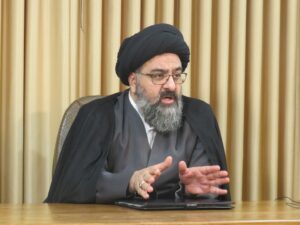
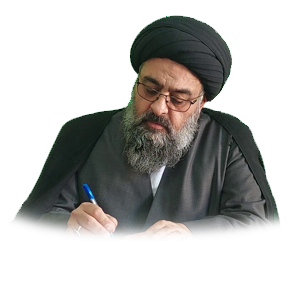
Ayatullah Sayyid Mujtaba Nur Mufidi, prominent Professor of Advanced Classes (Dars-e Kharij) in Jurisprudence and Principles at the Islamic Seminary of Qom and President of the Research Institute for Contemporary Jurisprudence, speaking on the eve of Mid-Sha’ban, described the era of the Occultation of the Imam of the Age (may Allah hasten his reappearance) as an era wherein the toughest divine test for the Islamic Ummah—especially the elite—lies in “diagnosing priorities.” He emphasized that perplexity (hayrat) arising from tribulations is the primary factor in distancing oneself from the path of awaiting (intizar) and failing to fulfill religious duties during this decisive era.
-
Role models such as Martyr Motahhari demonstrated that jurisprudential depth must always be accompanied by a correct understanding of temporal conditions
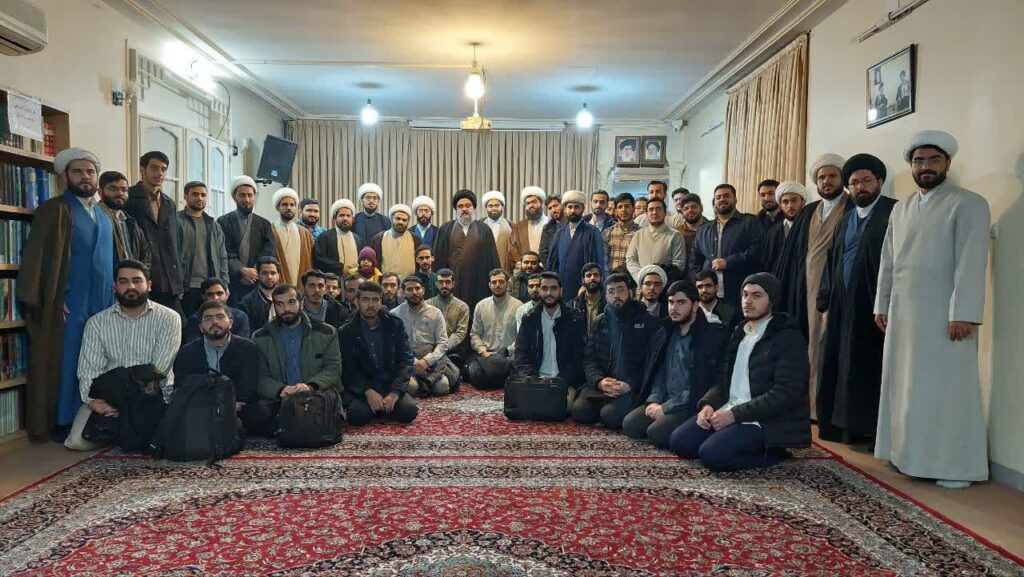
According to the news portal of the office of His Eminence Ayatullah Sayyid Mujtaba Nur Mufidi, this Professor of Advanced Classes at the Islamic Seminary of Qom and President of the Research Institute for Contemporary Jurisprudence addressed a gathering of distinguished seminary students and scholars on the occasion of Mid-Sha’ban, explaining the status of the Imam of the Age (may Allah hasten his reappearance), the culture of awaiting (intizar), and the perils of the era of Occultation.
At the beginning of his remarks, he expressed hope that gatherings commemorating the Ahl al-Bayt (peace be upon them), disseminating their teachings, and particularly attending to the sacred existence of Hazrat Baqiyyatullah al-A’zam (may Allah hasten his reappearance) during the Occultation serve as the headline of all religious and academic activities.
Pointed to the virtue of the night of Mid-Sha’ban, Ayatullah Nur Mufidi considered it among the most virtuous nights after the Night of Qadr, stating: “In narrations it is recorded that on the night of Mid-Sha’ban no supplicant remains unanswered; therefore, on this night we must pray for the resolution of the Islamic Ummah’s problems, people’s troubles, and repelling enemy threats—and at the head of all these petitions, request from Allah the satisfaction and favor of Hazrat Vali-e Asr (may Allah hasten his reappearance), for the essence of success (tawfiq) and guidance depends upon genuine connection with that sacred existence.”
The President of the Research Institute for Contemporary Jurisprudence described the outstanding feature of the era of Occultation as “perplexity” (hayrat), adding: “In the narrations of the Ahl al-Bayt (peace be upon them), from the Noble Prophet (PBUH) to Imam Hasan al-‘Askari (peace be upon him), warnings were repeatedly issued that the era of Occultation is an era of confusion and perplexity—an era wherein solely those covered by divine protection remain upon the path of truth.”
Emphasizing that this perplexity is not limited solely to the general societal level, he stated: “Some of the most dangerous lapses are the specific perplexities of the elite; if those considering themselves soldiers of the Imam of the Age (may Allah hasten his reappearance) slip in diagnosing priorities, this lapse will prove exceedingly costly for themselves and society.”
In an important section of his speech, citing a Prophetic narration, the Professor of Advanced Classes at the Islamic Seminary of Qom pointed to the similarity between the fate of the Islamic Ummah and the Children of Israel, stating: The Messenger of Allah (PBUH) states: “The exact events and troubles that befell the Children of Israel will recur within my Ummah.”
Emphasizing that this similarity encompasses diverse dimensions, Ayatullah Nur Mufidi added: “One of the most paramount aspects of this similarity is the issue of occultation and the phenomenon of perplexity. Just as the Children of Israel during the absence of Moses (peace be upon him)—when ten days were added to the initial appointment—fell into confusion because they lacked readiness, the Islamic Ummah during the era of Occultation confronts major tests of this nature.”
Referencing the account of Moses (peace be upon him) departing for Mount Sinai (Tur) to receive the Tablets of the Torah, he noted: “The absence of Moses (peace be upon him) during those ten days—for which the Children of Israel lacked readiness—paved the ground for their perplexity and wandering, leading people in waves into deviation: a perplexity serving as the optimal platform for deviation and exploitation by ill-wishers.”
Pointing to the story of Hasan al-Basri, the Professor of Advanced Classes noted: “Today as well, any attractive, deceptive speech blending truth and falsehood is the greatest bandit stealing the faith of nations.”
The President of the Research Institute for Contemporary Jurisprudence identified accurate explanation of the culture of awaiting (intizar) and Mahdaviat to society as the paramount mission of the seminary, deeming “seeking visions/meetings” (didar-gara’i) a severe harm during the Occultation, emphasizing: “In no narration are we commanded to pursue meeting the Imam of the Age (may Allah hasten his reappearance) during the Occultation; transforming this topic into a primary doctrinal pillar prepares the ground for false and deviant claims. Hence, narrations explicitly state that if anyone claims an audience with Hazrat Baqiyyatullah al-A’zam, he must be belied. Opening this door has deceived certain individuals and caused even a number of seminary students to slip.”
Ayatullah Nur Mufidi identified doubting the utility of studying religious sciences as a major sign of the elite’s perplexity, stating: “That a seminary student asks ‘what is the use of studying?’ is itself an instance of the specific perplexity of the Occultation era.” He added: “Slipping is not merely falling into overt sin; the slip of many students lies in these very nuances and losing sight of priorities. Diagnosing priorities must take place based on the interest (maslahah) of Islam and Muslims.”
Continuing with explicit wording, he identified one of the deepest instances of “perplexity of the elite” during the Occultation as the inability in religious self-knowledge, stating: “Some of us have neither recognized our place in the cosmic order, nor comprehended religion accurately, nor grasped the importance of religious scholarship, nor paid attention to people’s real needs, nor contemplated the ultimate destination of life’s trajectory. This condition is a form of perplexity grappling some of us during the Occultation.”
Emphasizing that these heedlessnesses are not merely individual, the Professor of Advanced Classes added: “When religion is not recognized accurately and its relationship with life, society, and people’s needs is not explained, even outwardly religious activities may distance themselves from their primary objective and lead to hidden slips.”
Pointing to the conduct (sirah) of Martyr Morteza Motahhari, the President of the Research Institute for Contemporary Jurisprudence stated: “Martyr Motahhari, despite his distinguished scientific stature, deemed entering the social and intellectual arena his duty, confronting deviations with knowledge, patience, and broad-mindedness—a path leading to enduring impact and ultimately martyrdom.”
Emphasizing the importance of enemy-recognition, he noted: “Enemy-recognition is no light matter; simplifying the enemy and neglecting conspiracies is a major instance of perplexity in the era of Occultation, providing grounds for enemy exploitation. One cannot say ‘I merely study and have no concern for social issues and people’s needs.'”
Concluding, Ayatullah Nur Mufidi considered the manner of scholars’ relationship with people vital, stating: “Our relationship with the people must be that of a father to a child, not factional alignment and rejection. People of any level of religiosity are the spiritual children of religious scholars, and addressing errors must be compassionate and caring.”
He expressed hope that through accurate recognition of duties and precise determination of priorities in the era of Occultation, the religious community moves away from perplexities and receives the special favors of Hazrat Vali-e Asr (may Allah hasten his reappearance).