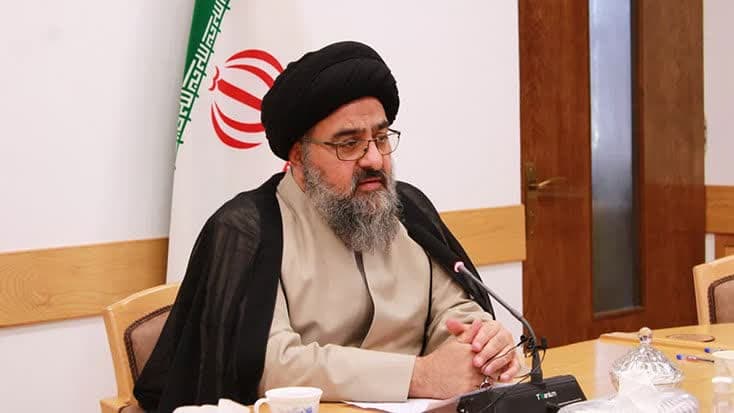
Ayatullah Sayyid Mujtaba Nur Mufidi: The 22nd of Bahman March as a Complement to the 22nd of Dey March Will Play a Fundamental Role in Neutralizing the Final Links of Enemy Actions and Deterring Them from Dangerous Measures
Key Highlights
-
Ayatullah Nur Mufidi: Evaluating the Islamic Revolution Must Not Be Reduced to Daily Problems
-
Ayatullah Nur Mufidi: Reviving Religion in the Public Sphere Is Among the Civilizational Achievements of the Islamic Revolution
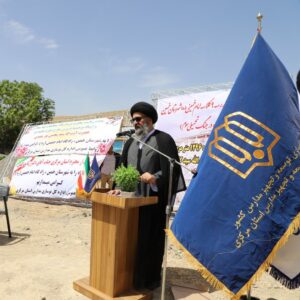
On the eve of half a century since the victory of the Islamic Revolution, Ayatullah Sayyid Mujtaba Nur Mufidi, Professor of Advanced Classes (Dars-e Kharij) in Jurisprudence at the Islamic Seminary of Qom and President of the Research Institute for Contemporary Jurisprudence, explained the paramount achievements of the Islamic Revolution during his Advanced Jurisprudence class, emphasizing: “The level of analyzing the Revolution must not be degraded down to certain side effects and problems of daily life, for that represents a distinct narrative.”
Stating that speaking of the Revolution’s achievements requires a strategic and historical vision, he noted: “If we wish to articulate the Revolution’s achievements with a strategic vision, we must address it considering the historical trajectory of Shia jurisprudence and the path traversed over centuries.”
1. Reviving Religion in the Public Sphere: A Civilizational Event
The President of the Research Institute for Contemporary Jurisprudence identified the primary and most vital achievement of the Islamic Revolution as reviving religion in public, social, and political spheres, noting: “No one can claim that the identity of religion is non-political. If anyone makes such a claim, it is clear that he comprehends neither religion nor politics.”
He added: In the world of that era, extensive efforts were made to eliminate religion from the public sphere. The Islamic Revolution extracted religion from individual margins and isolation of personal worship, transforming it into an active, dynamic element in society; and this counts as “a civilizational event.”
2. Political Independence and Rejection of Dominance
The second achievement of the Islamic Revolution, in the view of this prominent Professor of Advanced Classes at the Islamic Seminary of Qom, was rejecting dominance and realizing political independence. Referring to Iran’s pre-Revolution condition, he emphasized: “Macro decisions in this country were not adopted without permission from the Western bloc and America; the political independence of the country, despite all existing problems, is one of the great assets of the Revolution and a pillar of our national, religious, and revolutionary identity, and this is no small matter.”
3. Reviving Self-Belief and National Capabilities
Ayatullah Nur Mufidi listed the third achievement of the Islamic Revolution as reinvigorating the self-belief and capabilities of the nation, stating: “A nation that in those days deemed it impossible to pioneer in various scientific fields and modern technologies has today reached this stage.”
Referring to the growth of scientific production in Islamic Iran, he added: “Following the Islamic Revolution, the production of thought, science, knowledge, and ideas reached a remarkable level, although we still remain distant from those ideals.”
4. Institutionalizing the Thought of Resistance and Standing Against Oppression
According to Ayatullah Nur Mufidi, the thought of resistance and standing against oppression and tyranny is the fourth crucial achievement of the Islamic Revolution—a thought transformed today into a “robust tree” in the region. He emphasized: “Human, financial, military, or logistical blows may be delivered by enemies at certain junctures, yet this thinking and mentality is indestructible.”
Shortcomings: The Gap Between Ideals and Reality
Emphasizing the necessity of accepting shortcomings and striving harder to reach the sublime ideals of the Islamic Revolution with a realistic outlook, Ayatullah Nur Mufidi noted: “I do not wish to claim that everything sits in optimal conditions, but what matters is that this historical platform and capacity has been created.”
He emphasized: “If we fail to see wounds, these wounds provide a breeding ground causing wider infection and damage to people’s beliefs.”
Emphasis on the Leader’s Statements Regarding Alavid Justice
Explaining existing shortcomings, citing statements by the Supreme Leader of the Islamic Revolution, Ayatullah Nur Mufidi noted: “The Supreme Leader explicitly stated that we stand far distant from what is recognized as Alavid Justice (‘Adalat-e ‘Alawi) and Alavid Governance (Hukumat-e ‘Alawi); this statement aims at not forgetting the target and trajectory of movement. What is paramount is keeping that destination consistently in view and advancing along this path.”
Referring to continuing problems in social and economic justice, he noted: “Perceiving discrimination, rent-seeking (rant-khwari), abuse, and injustice are among damage that ‘harms the system, the people, people’s beliefs, and the capital of public trust,’ and must be countered fundamentally and radically.”
Emphasis on Reinforcing Efficiency and Resolving Livelihood Problems
Emphasizing the necessity of transcending weaknesses and elevating system efficiency, Ayatullah Sayyid Mujtaba Nur Mufidi noted: “We must resolve damages as far as possible, reinforce efficiency, convert weaknesses into strengths, solve chronic economic problems, and transform temporary, unstable policy-making into sustainable policy-making. We must attend to people’s livelihoods; and these demands do not rest merely at theoretical expression, but ‘in the practical arena must be pursued earnestly by state and government officials.'”
The Role of External Pressures and Enemy Conspiracies
While acknowledging internal weaknesses, he considered the role of external factors and arrogant enmity vital, adding: “Throughout all these years, sanctions, pressures, and restrictions existed that depleted the system’s energy. In recent events, we witnessed major intelligence organizations globally attempting for years with massive expenditure to overthrow the sacred Islamic system of Iran, yet by divine grace, the wisdom of the Supreme Leader, and public support, all of these were frustrated.”
Responsibility of the Clergy and Necessity of Updating Jurisprudence
In the final section, he considered the clergy’s role in preserving and safeguarding the Islamic system paramount—particularly in jurisprudential theorization—emphasizing: “We must make jurisprudence more efficient and update it in accordance with temporal needs.”
He emphasized the necessity of effective communication with the new generation and bridging generational gaps, adding: “By preserving Revolution principles and reforming certain methods, problems can be resolved.”
Homage to Imam Khomeini (may his soul be sanctified) and Emphasis on the Role of the 22nd of Bahman March in National Security
In the final section of his address, commemorating the memory of Imam Khomeini (may his soul be sanctified), Ayatullah Sayyid Mujtaba Nur Mufidi referred to him as an “exalted personality, jurist, gnostic (‘arif), philosopher, and peerless sage (hakim) in history,” stating: “I deem it necessary to seek assistance from that lofty soul, who undoubtedly holds concern for Iran, the Iranian nation, the Islamic Ummah, and followers of the school of the Ahl al-Bayt (peace be upon them).”
The President of the Research Institute for Contemporary Jurisprudence expressed hope that “the prayers of that grand figure from that realm encompass us,” just as “the pure prayers of Hazrat Vali-e Asr (may Allah hasten his reappearance) will, God willing, encompass Islamic society.”
He further described the 22nd of Bahman [February 11] march as possessing “exalted importance,” stating that this march serves as a complement to the January 12 [22 Dey] march, clarifying: “If the 22nd of Dey march played a fundamental role in neutralizing enemy plans, the 22nd of Bahman march will likewise play a fundamental role in neutralizing the final links of enemy actions.”
Referencing admissions by officials of certain regional countries, Ayatullah Nur Mufidi noted: “The effective and decisive factor in enemy decision-making and deterring them from dangerous actions was that very march of the 22nd of Dey.”
He added: Though in the view of some this presence might not appear so significant, “from the perspective of observers and enemies it holds supreme importance,” and this year’s 22nd of Bahman march “can undoubtedly frustrate many of the enemies’ sinister schemes.”
The President of the Research Institute for Contemporary Jurisprudence, emphasizing that the 22nd of Bahman march is “security-generating,” stated: “This presence generates and preserves security in the true sense of the word for Iran and its people, safeguarding the country and system from perils.”
Concluding, he emphasized the necessity of widespread public participation in this march, stating: “God willing, we will all participate extensively in this march.”