Ayatullah Sayyid Mujtaba Nur Mufidi: Seeking Blood Retribution and Revenge Is Both a Right and a Religious Obligation
Key Takeaways
-
This demand is not merely an emotional reaction, but springs from insight (basirah), awareness, and public will for continuing the school of the martyred Imam, preserving the honor of Islamic society, and securing national interests.
-
Martyring the Imam of society and the Islamic ruler is the greatest oppression and crime against Muslims and Islamic society; hence, demanding revenge is an action against enemies aimed at negating oppression and their dominance.
-
If the enemy sees that it can target the supreme authority of Muslims without significant sensitivity demonstrated toward it, it will grow bolder to repeat such actions; therefore, such a demand serves a deterrent role.
-
The Seminary Professor of Advanced Classes: Pursuing this demand must not be restricted to a single specific action, but pursued comprehensively across field, diplomatic, legal, international, and media arenas.
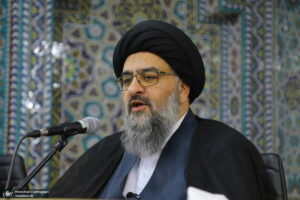
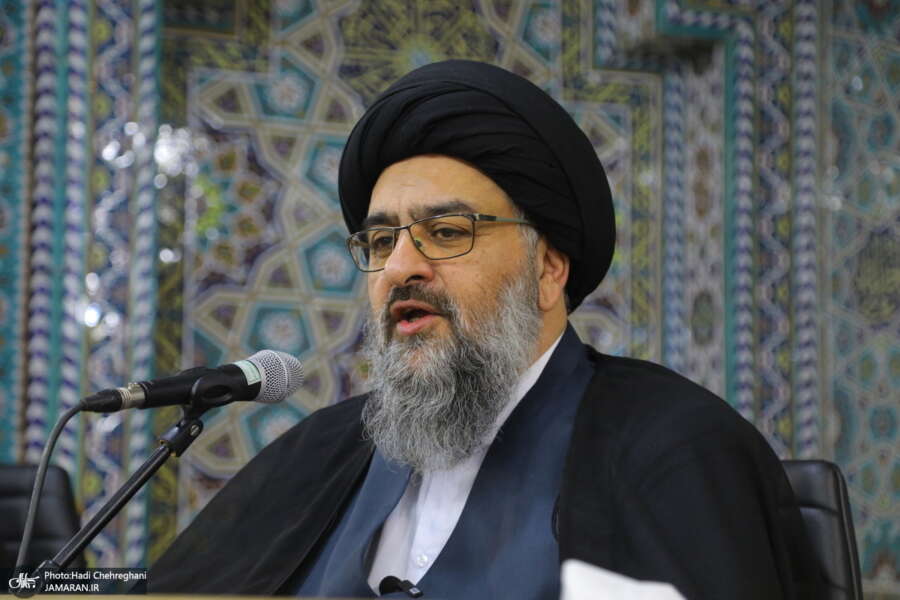
Explaining the jurisprudential, legal, political, and security dimensions of the demand for revenge raised by the people during the funeral procession of the Leader of the Islamic Revolution, Grand Ayatullah Martyred Imam Khamenei, Ayatullah Sayyid Mujtaba Nur Mufidi, Professor of Advanced Classes at the Islamic Seminary, emphasized in a conversation with the Seminary and University desk of Fars News Agency: This demand is not merely an emotional reaction, but springs from insight (basirah), awareness, and public will for continuing the school of the martyred Imam, preserving the honor of Islamic society, and securing national interests.
Referring to the fact that the demand for revenge was raised extensively in the funeral processions of the martyred Leader across Qom, Tehran, Mashhad, and even Najaf and Karbala, he stated: The reflection of this demand in the Supreme Leader’s message was in reality the reflection of a public demand, because the leader of society bears the duty of pursuing public demands.
The President of the Research Institute for Contemporary Jurisprudence added: That this demand formed among the people demonstrates that the subject is not merely an emotional reaction. Naturally, the people’s feelings were deeply wounded by enemy assault upon the government, the head of government, and the Imam of society, evoking public emotion; yet raising this demand broadly during funeral ceremonies transcends fleeting emotion, demonstrating insight, awareness, and people’s emphasis on continuing the school of the martyred Leader and the school of Sayyid al-Shuhada (peace be upon him).
He continued: To demonstrate the vitality of the school of Sayyid al-Shuhada (peace be upon him), various paths exist, one being seeking blood retribution (khun-khwahi)—the exact topic raised following the martyrdom of Imam al-Husayn (peace be upon him) whereupon uprisings formed. From this perspective, demanding revenge must be viewed as an emotional, revolutionary, and conscious reaction against the enemy’s criminal and brazen action.
Stating that the Supreme Leader’s emphasis on this topic contains vital points, Ayatullah Nur Mufidi said: The issue of revenge possesses jurisprudential, legal, and conventional foundations, alongside political and national security dimensions, carrying special importance from each of these angles.
Explaining the jurisprudential foundations of this demand, he stated: Martyring the Imam of society and the ruler of Islamic society is the greatest oppression against Islamic society and the greatest crime against it; hence, demanding revenge and retaliation (qisas) against the perpetrators and commanders of this crime constitutes an action against enemies aimed at negating their dominance.
The Professor of Advanced Classes at the Islamic Seminary added: When revenge is demanded against commanders and perpetrators, this demand is completely legitimate and acceptable based on the Rule of Negation of Dominance (Qa’idah Nafy al-Sabil) and negating enemy domination. Furthermore, the insult and humiliation embedded in this criminal act dictates that Islamic society pursue such a demand to preserve its honor; therefore, both negating oppression and negating humiliation—rules emphasized in Islamic jurisprudence—serve as backings for this demand.
Point to the standing of retaliation (qisas) in Islamic jurisprudence, he noted: In Islamic jurisprudence, qisas for an ordinary individual counts as a right for the guardian of the blood (wali al-dam), which the Holy Quran presents as the source of life for society. Now, if the oppressed martyred individual is the leader and Imam of society, and his guardian of the blood is in one sense the general Muslim public and in another sense the Imam of society himself, taking action for qisas and revenge will certainly contribute to the life of Islamic society, the continuation of resistance, and the endurance of the martyred Imam’s school—which itself indicates the living, dynamic nature of Islamic society.
The President of the Research Institute for Contemporary Jurisprudence noted: From a jurisprudential perspective, this matter is not only the right of the Iranian nation, but the right of all Muslims, and beyond that counts as a religious obligation (taklif-e shar’i)—meaning it is both a right and an obligation, regarding which no doubt or debate exists.
Addressing the legal dimensions of this issue, he stated: From the perspective of international law as well, this action breaches state responsibility, because commanders and perpetrators of this crime originated from a state and government. Therefore, this action constitutes a breach of international state responsibility and holds capability for legal pursuit in the international arena. Though methods of pursuit vary, the core right of demand is completely defensible and actionable.
In another section of his remarks, Ayatullah Nur Mufidi pointed to the deterrent aspect of demanding revenge, adding: If the enemy sees that it can target the supreme authority of a country while public sensitivity toward this crime remains low, it will grow bolder to repeat such actions; but when people demand revenge with enthusiasm, roaring, and full force, accompanied by necessary measures, the cost of such crimes for any enemy will escalate, playing a crucial deterrent role.
He emphasized: Demanding revenge and pursuing it is in reality necessary for preserving national interests as well.
Stating that the Iranian nation and Muslim nations have well understood this truth, the seminary professor noted: This demand exists not only among participants in the martyred Imam’s funeral procession, but in the deep hearts of the overwhelming majority of the Iranian nation—even among those who might harbor critiques regarding certain matters. Furthermore, among regional nations this expectation exists as a natural desire, even if in certain countries the possibility of expressing it openly is absent.
He added: From whatever angle this issue is viewed, its importance for the country’s future, preserving the position of the Islamic Republic, generating national pride, reinforcing public trust, and strengthening the foundations of religious governance is clear. For this reason, the Supreme Leader also reflected this public demand in his message and emphasized it, as this topic is multifaceted and cannot be overlooked or excused.
Concluding, emphasizing that the issue of revenge must not be reduced to a single limited action, Ayatullah Nur Mufidi noted: Revenge possesses mechanisms and operational forms; its field scope must be expanded and its depth carefully heeded.
He continued: This demand must be pursued simultaneously across various arenas—field, diplomacy, international courts and authorities, international organizations, media, and other available capacities—designing a comprehensive roadmap to utilize all capacities for realizing this public demand and imperative emphasized by the Supreme Leader.
The President of the Research Institute for Contemporary Jurisprudence concluded by emphasizing: This matter must not be restricted to specific spheres or actions; rather, with a comprehensive outlook, all existing capacities must be employed to pursue this public demand.