
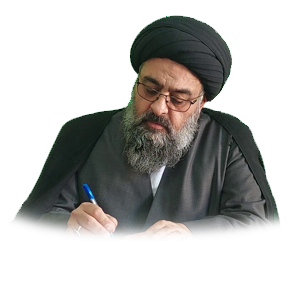
Session Eighty-Five
The Principle of Exemption (Bara’ah), The Proofs of Exemption, Second Proof: Narrations, First Narration: The Hadith of Lifting, Examination of the Indicative Value of the Hadith of Lifting, 2. The Relative Pronoun “ma”, Third Topic: Examination of the Exclusivity of the Hadith of Lifting to Positive Matters and Its Inclusion of Negative Matters, The Truth in Responding to Muhaqqiq Na’ini, The First Proof, The Second Proof, The Third Proof, The Conclusion of the Discussion on the Third Topic, The Most Important Duty of the Soldiers of Imam al-Mahdi (AJFS)
February 3, 2026
Summary of the Previous Session
The discussion was on the claim of the late Muhaqqiq Na’ini regarding the exclusivity of the Hadith of Lifting to positive matters. He argued that the Hadith of Lifting does not encompass negative matters; the summary of his speech is that “lifting” (raf’), by virtue of the clue of the meaning of “enactment” (wad’), consists of placing the existing in the position of the non-existent (tanzil al-wujud manzilat al-ma’dum), whereas omissions (taruk) fundamentally possess no existence so that they could be placed in the position of the non-existent. In the position of responding to this claim of Muhaqqiq Na’ini, two responses were mentioned, both of which were objected to.
The Truth in Responding to Muhaqqiq Na’ini
The truth in responding to Muhaqqiq Na’ini is that the Hadith of Lifting encompasses both positive and negative matters. To prove this claim and critique his statement, several proofs and evidences can be cited:
The First Proof
The interpretation he presented of the meaning of “lifting” (raf’), namely, “playing the existing in the position of the non-existent” (tanzil al-wujud manzilat al-ma’dum), is not free of objection even when considering the literal meaning of enactment (wad’). By taking enactment in the meaning of placing the non-existent in the position of the existing, he considered lifting to be in this very meaning as well, whereas lifting is not in the meaning of placing the existing in the position of the non-existent. Since lifting in the legislative world is claimed (iddi’a’i) (contrary to the view of Muhaqqiq Na’ini, who considered it literal and indeed in the meaning of daf’ [preventing]); lifting here is in the claimed meaning and in the domain of legislation; meaning the lifting of the ruling. Likewise, the attribution of lifting to these matters is not a literal attribution, but rather a figurative attribution, and the legitimizing factor (musahhih) for this attribution is the implication of all effects as omitted (taqdir jamy’ al-athar); meaning: “the lifting of all effects of the ruling” (rufi’a jamy’u athari al-hukm).
In other words, the effects of the ruling or the action are removed in the legislative world, assuming we consider this to be broader, encompassing both particular doubts (shubhat mawdu’iyyah) and ruling-directed doubts (shubhat hukmiyyah). The claimed lifting of a ruling means that a ruling which ought to be established for a deed is negated. For example, drinking wine has the ruling of a legal punishment (hadd) and prohibition; now, if someone is coerced into drinking wine, according to the Hadith of Lifting, the ruling of the legal punishment and prohibition is removed from this drinking of wine; therefore, here, whether that matter is positive or negative has no effect; whether it is an action or an omission does not matter. The meaning of the Hadith of Lifting is that all effects of the ruling or action are lifted in the legislative world; now, that ruling may relate to an action or relate to an omission. Therefore, his interpretation of lifting as placing the existing in the position of the non-existent is incorrect.
The Second Proof
In the sphere of the shari’ah, some rulings and effects result from omissions (taruk), which are considered negative matters. More precisely, we refute Muhaqqiq Na’ini’s statement by resorting to the resulting and attachment of the ruling to omissions, which are negative matters. If rulings cannot attach to omissions, why then, in the shari’ah, have omissions become the source of some effects and rulings—meaning the subject of some rulings and effects is omissions themselves? If omissions are negative matters and non-existence (‘adam) is not something to which a ruling can attach, why then have these effects and rulings resulted from them?
The main point of the late Na’ini’s statement was that “lifting must have a locus upon which it descends” (al-raf’u la budda lahu min mahallin yaridu ‘alayh); because its meaning is placing the existing in the position of the non-existent, and since negative matters and omissions are nothing, therefore lifting cannot attach to them. Because that locus upon which lifting must descend does not exist; since omission is a negative matter.
Now, if it is so that omissions are considered negative matters and, to use your expression, possess no locus, why then has the legislator placed them as the subject of some rulings? And why has reason resulted rulings and effects from them?
This point can be raised even regardless of the hypothesis of forgetfulness (nisyan) and necessity (idtirar). Suppose we also do not have forgetfulness and necessity; in the very collection of legislative and rational rulings, laws, and regulations, without the occurrence of coercion, necessity, error, and forgetfulness, omissions have been made the source of a series of rulings. For example, in the same example mentioned by Muhaqqiq Na’ini: a person has vowed to drink from the water of the Euphrates. Now, if he omits this deed and opposes the vow, he has committed a sin; it is both legislatively forbidden (haram) and expiation (kaffarah) is established. The discussion of necessity is fundamentally not at play; rather, he intentionally omits drinking the water of the Euphrates. In this case, he has both sinned and must pay expiation. Here, what has been placed as the subject for the prohibition and expiation is opposing the vowed object (mukhalafat al-mandhur) or omitting to act upon the vow. Therefore, one type of this opposition is these very non-existences. He intentionally abstained from drinking the water of the Euphrates, which was necessary according to the vow. This is a negative matter which, without doubt, has been placed as the subject of a legislative ruling. If negative matters and omissions, by virtue of being non-existent, were incapable of being the object of a legislative ruling, why then has the legislator placed them as the subject of the ruling here? This shows that lifting can also attach to omissions.
The Third Proof
In addition, in the domain of reason, the situation is identical. Reason itself rules on the desert of punishment (istihqaq al-‘iqab) in the event of opposition, and reward (thawab) in the event of compliance. This is the ruling of reason. Reason says that obedience (ta’at) causes the desert of reward, and disobedience (ma’siyat) necessitates the desert of punishment. However, obedience and disobedience are rational rulings. Obedience means the compliance of the performed object with the commanded object (muwafaqat al-ma’ti bih ma’ al-ma’mur bih); disobedience means the lack of correspondence of the performed object with the commanded object, or the omission of performing the commanded object (‘adam al-itiyan bi-al-ma’mur bih). Therefore, opposition or disobedience is itself a negative concept, an omission; yet, nonetheless, it is placed as the subject of a rational ruling named “punishment” or “desert of chastisement.”
If negative matters do not exist and possess no locus to which a ruling can attach, why then has reason placed them as the subject of some of its rulings? These are robust refutations of the statement of the late Na’ini.
The Conclusion of the Discussion on the Third Topic
Therefore, the conclusion of all we have mentioned (fa-tahassala mimma dhakarna kulluh) regarding the third topic—which relates to the exclusivity or inclusion of the Hadith of Lifting with respect to negative matters—is that the Hadith of Lifting is general in the sense that it encompasses both positive and negative matters, contrary to the view of Muhaqqiq Na’ini, who considers the Hadith of Lifting exclusive to positive matters.
While explaining this matter, on this occasion, we transmitted a statement from Muhaqqiq Na’ini and also stated a statement from Muhaqqiq Iraqi in response to Muhaqqiq Na’ini, which related to the “forgotten part” (al-juz’ al-mansi) of the prayer.
Muhaqqiq Na’ini stated that some, by relying on the Hadith of Lifting, have negated the part-nature (juz’iyyah) of the surah for prayer in the event of forgetfulness. Meaning some have resorted to the Hadith of Lifting to say that if someone forgets the surah, the surah no longer possesses juz’iyyah for the prayer. He opposed this view and stated: the Hadith of Lifting cannot remove the juz’iyyah of the forgotten part. In contrast, Muhaqqiq Iraqi stated: the Hadith of Lifting can negate the juz’iyyah of the forgotten part.
This matter must be examined as to whether, ultimately, the juz’iyyah of the forgotten part is removed by the Hadith of Lifting or not? What is the truth in this issue? Here, two scenarios are conceptualized for the issue. Please pay attention:
One scenario is that in the essence of juz’iyyah, forgetfulness or lack of knowledge is realized. Fundamentally, this issue of whether, for example, the surah possesses juz’iyyah or not, is unknown or forgotten.
Sometimes, also, forgetfulness does not address the essence of juz’iyyah, but rather relates to the part itself; meaning the essence of juz’iyyah was known and present in the person’s mind, but he forgot to perform it. These two scenarios must be discussed.
We can pursue this issue right here, although it likely requires two or three sessions. We can also raise this discussion after explaining the matters related to the hadith, and when addressing the other phrases, especially in the discussion of “the lifting of error and forgetfulness” (raf’ al-khata’ wa al-nisyan), and examine it there. Both paths are possible and make no great difference.
You must note that we still have several other topics here that must be examined.
We have explained three topics so far, some of which relate to the scope of the Hadith of Lifting.
First, is the Hadith of Lifting exclusive to particular doubts, or does it also encompass ruling-directed doubts?
Second, is the Hadith of Lifting exclusive to positive matters, or does it also encompass negative matters?
The third topic related to the attribution of lifting to ma. This topic, of course, does not relate to the scope.
However, currently, several other discussions remain that relate to the scope:
First, that the Hadith of Lifting only removes rulings introduced upon primary titles (al-‘anawin al-awwaliyyah) and has nothing to do with secondary titles (al-‘anawin al-thanawiyyah). This issue requires explanation.
Second, does the Hadith of Lifting encompass non-obligatory duties, such as recommendatory rulings (mustahabbat), or not?
Third, does the Hadith of Lifting encompass legislative rulings (al-ahkam al-taklifiyyah) and conventional rulings (al-ahkam al-wad’iyyah), or is it exclusive to legislative rulings?
These three topics are important and highly applicable discussions.
Fourth, it is said that the Hadith of Lifting was introduced in the position of imtinan (granting a favor); is what is meant a personal or a generic imtinan?
All of these cases are applicable for the jurist (mujtahid) so that he knows where he can rely on the Hadith of Lifting and remove a ruling. It is not the case that one can rely on the Hadith of Lifting anywhere.
These four topics all relate to the dimensions of the scope and indicative value of the Hadith of Lifting.
At any rate, we shall raise the discussion of the forgotten part after explaining these four topics.
The Most Important Duty of the Soldiers of Imam al-Mahdi (AJFS)
Imam al-Mahdi (PBUH), in a signed letter (tawqee’), states: “And the truth is with us, so we shall never be made desolate by those who hold back from us, and we are the creations (sana’i’) of our Lord, and the creation thereafter are our creations.” He says: “The truth is with us” (al-haqqu ma’ana); the truth is with us. We are the truth. He states with decisiveness: “The truth is with us.” And because it is so, “so we shall never be made desolate by those who hold back from us” (fa-lan yuhishana man qa’ada ‘anna); that some people withdraw from us, distance themselves from us, and do not accompany us, will never cause us desolation. This statement has many lessons.
“The truth is with us, so we shall never be made desolate by those who hold back from us”; why then should we fall into desolation? For what should we be desolate? Is the acceptance, respect, and… busyness around a person the criterion of truth? That some or a large crowd are not with us and do not accompany us does not cause desolation. Real desolation is when a human distances himself from the truth; but if he is on the path of truth, of what should he be desolate?
“And we are the creations of our Lord” (wa nahnu sana’i’u rabbina); we are the creations of our Lord. Chosen human beings whom Allah has trained.
It is transmitted from Imam al-Sadiq (PBUH) that: “Indeed, Allah disciplined Our Prophet…” (inna Allaha addaba nabiyyana…); Allah disciplined our Prophet beautifully. “Then, when He completed his discipline” (fa-lamma akmala lahu al-adaba), He said: “And indeed, you are of a great moral character.” After divine discipline, that noble Prophet attained this position of great character. Then he said that since it became so, He delegated the matter of religion and the servants to him. Meaning He made him a leader, Imam, and guide to assume the administration of the servants. The Imams of Guidance (peace be upon them) are the creations of the Lord; they are the creations of Allah in order to train and discipline the servants of Allah.
Therefore, it is as if he says: and the creation after that are the creations of our guardians. Meaning in the next stage, the people are also our creations. Allah disciplined, trained, and nurtured us, and we must also train the people beautifully. In other words, training the people is the most important duty of the prophets, guardians, and Infallible Imams (peace be upon them). They are “the creations of the Imams” (sana’i’ al-a’immah). Not in the sense that—God forbid—they are the creators of the people; the people are not the creations and creatures of the Imams. Rather, the character of the people is the creation of the Imams. The character of the people is the result of the training, guidance, and direction of the Imams.
The Imam of the Time (may Allah hasten his noble manifestation) states this. He says: “The truth is with us”; the truth is with us. And we have no desolation from those who withdraw from us. This is a principle and foundation. This very single short sentence has several axes and key points for us.
Of course, we must not perceive ourselves as absolute truth; no, we must not think in this manner, saying that whatever we say is truth and everyone contrary to it speaks falsehood. It is that general path of the school of the Household (Ahl al-Bayt, peace be upon them) that is the truth.
The human must be truth-oriented. He must persevere upon the truth. Fear and desolation from the distancing and withdrawal of others… must not exist. One must be firm and steadfast upon the truth and insist upon it.
If we want to take a step for the Imam of the Time (AJFS) that secures his satisfaction, first we must make ourselves the creations of the Imams. To what extent can we say our character is the creation of the Imams? Let us measure this: to what extent is it the creation of the Imams? To what extent is it made by the Imams? This becomes clear when a person measures himself by their scale. After that, we must see to what extent we can make the people the creations of the Imams? This is an important mission that we must now pursue as claimants to the status of being the soldiers of the Imam of the Time (AJFS).
How does the Imam of the Time (AJFS) want to guide the people now? His benefit for the people is like the benefit of the sun behind the cloud. However, one of its means and paths is these very individuals recognized as his soldiers. The best, most effective, and most important work upon our shoulders that can secure the satisfaction of that noble Imam is that first, we train ourselves in such a manner that we can say we are their creations and trained by them, and then we train the people in this path.