

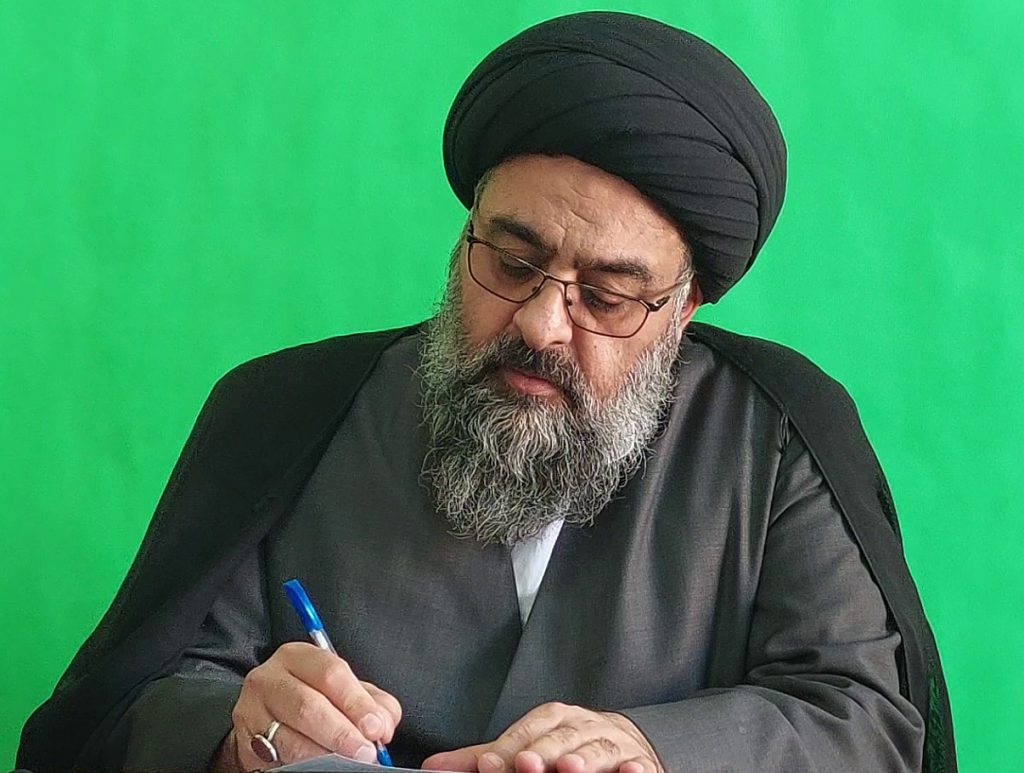
Ayatullah Sayyid Mujtaba Nur Mufidi: “The science of jurisprudence (fiqh) is the science of identifying the rulings (hukm), and the science of principles (usul) is the logic of deducing the rulings; therefore, the axis of the discussions must be established upon the ruling. Considering this matter, the current science of usul is very far from the ideal state. The discussion of the ruling must be incorporated in a logical system within a section of the science of usul.”
According to a report by the Ijtihad Network, Ayatullah Sayyid Mujtaba Nur Mufidi, the author of the book Hukm (Reality, Classifications, Scope), in a gathering of professors, scholars, and students of the Islamic seminary at the Fahim Cultural Institute, while introducing his book Hukm—which is organized in three volumes and eleven sections—stated: “The science of usul has passed through various epochs throughout its existence; at times it has faced stagnation, and at other times, a serious evolution and transformation has emerged within it. Since the era of Sheikh Ansari, a new structure has governed it, and under this new structure, the schools of Samarra, Najaf, and Qom have taken shape.”
This professor of the Islamic Seminary of Qom explained the formation of the Najaf school, stating: “The school of Samarra, founded by Mirza Shirazi, expanded to such an extent that the school of Najaf arose in opposition to it, seeking to refine it. The school of Najaf took shape under the leadership of the late Khurasani, and the school of usul of Qom emerged under the leadership of Ayatullah Borujerdi.”
Pointing to the necessity of the discussion on the ruling, Ayatullah Nur Mufidi recalled: “The science of jurisprudence (fiqh) is the science of identifying the rulings (hukm), and the science of principles (usul) is the logic of deducing the rulings; therefore, the axis of the discussions must be established upon the ruling. Considering this matter, the current science of usul is very far from the ideal state. The discussion of the ruling must be incorporated in a logical system within a section of the science of usul.”
The author of the book Hukm noted: “The new structure of the science of usul requires additions and omissions, and must be organized with the ruling as its central axis, because it gives direction to the thoughts of the students.”
Referring to the features of the new structure of the science of usul with the ruling as its central axis, he stated: “In the new structure, certain discussions—such as rational goodness and badness (al-hasan wa al-qubh al-aqliyyayn)—are not highly prominent and do not possess an independent chapter. This topic must either be transferred to the science of theology (kalam) and discussed independently, or it must be thoroughly refined within the science of usul; and the discussion of conflict of evidences (ta’arud) and conflict of duties (tazahum) must take shape within the new structure.”
The theorist of this seminar stated regarding the ideal structure of the science of usul: “In the ideal structure, two discussions must be taken into account: first, the reorganization of the science of usul around the axis of the ruling; and second, the independent presentation of certain matters such as the classifications of the ruling, the criteria of the ruling (milak al-hukm), the scope of the ruling, and so forth.”
The lecturer of advanced (Kharij) jurisprudence and principles at the Islamic Seminary of Qom, referring to the discussions of the ruling and the practical outcomes of the debate, noted: “One of the important discussions of the ruling is: what is the essence of the ruling? Some state that the reality of the ruling is the will of the Master and [His] love and hatred, while others argue that it is a legislated and conventional matter (amr ja’li wa i’tibari) that must be identified and realized through a specific process. Now, if we consider the ruling to be a real matter, expression and declaration no longer hold meaning here, and through whatever path knowledge is acquired, obedience to the command becomes necessary, and it will manifest its effects in discussions such as the Guardianship of the Jurist (Wilayat al-Faqih).”
In another part of his speech, Ayatullah Sayyid Mujtaba Nur Mufidi, referring to the weakness of the current structure of the science of usul, recalled: “Certain discussions are treated as indisputable and unchangeable postulates among students and scholars, such as the division of the ruling into real (waqi’i) and apparent (zahiri) rulings, regarding which no serious work has been done, and only Martyr Sadr has raised some discussions in his book Al-Halaqat.”
Concluding his remarks, and referring to the famous opinion, he stated: “In my view, the apparent ruling is not legislated alongside the real ruling, and in my opinion, Imam Khomeini (may his soul be sanctified) also held such a view.