
The anniversary of the passing of Hazrat Imam provides an appropriate opportunity to dissect one of the most important jurisprudential terms left behind by him: Jawahiri Jurisprudence (al-fiqh al-jawahiri). This is a term to which both religious reformists resort to pursue reform, and traditionalists hoist as a banner to oppose the current of religious reform.
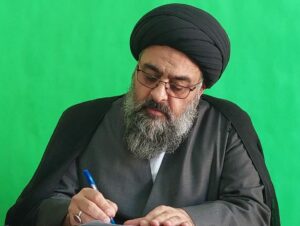
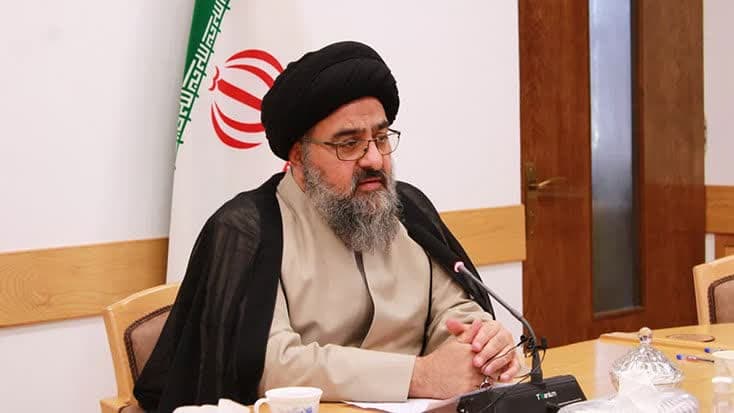
Ayatullah Sayyid Mujtaba Nur Mufidi, besides teaching advanced (Kharij) jurisprudence and principles of jurisprudence in the Islamic Seminary of Qom, is also among the devotees of the Imam’s jurisprudential school. The member of the Scientific Council of the Fiqh Center of A’immah al-Athar, in this interview, strives to present a precise picture of this rarely discussed term.
The details of this interview are as follows:
Ijtihad: Fundamentally, what is Jawahiri Jurisprudence?
Ayatullah Sayyid Mujtaba Nur Mufidi: Jawahiri Jurisprudence is a title and term that has become a proper noun (alam) for the methodology and approach of independent reasoning (ijtihad) of Sahib al-Jawahir (the author of the Jawahir) in the invaluable book Jawahir al-Kalam (The Jewels of Speech). This book, which was written over a period of thirty years, is one of the greatest jurisprudential works of Shiism, and indeed of the Islamic world. The late Imam Khomeini (may his soul be sanctified) stated regarding this book that if a hundred individuals wished to write it, they might not be able to accomplish it.
This book is a commentary on Shara’i’ al-Islam by Al-Muhaqqiq al-Hilli, which has served as a curricular text for hundreds of years and is peerless in terms of order, organization, and brevity, and rare in terms of precision, inclusion of secondary jurisprudential branches, methodology of raising issues, and robustness. Subsequently, Sahib al-Jawahir wrote a commentary on such a book of which Sheikh Agha Bozorg Tehrani states: “No fruit like it has been recorded among the treasures of the scholars.” Furthermore, Al-Sayyid Muhsin al-Amin stated: “I have not seen its equal in the Islamic world.”
In a single sentence, no jurist (faqih) can dispense with it because it is, in reality, the encyclopedia of Shiite jurisprudence, and rare, scarce secondary branches of jurisprudence, which might not be found in other jurisprudential books, are addressed within it.
The remarkable point regarding this book, which was written over a long period of time, is that the style and method governing it have remained constant from the beginning of the book to its end, and have not been departed from. The extensive research (tatabbu’) of Sahib al-Jawahir truly astounds a person; although in some cases he does not quote directly, which might have led to errors, his comprehension of and mastery over the views, opinions, and examination of their documentations and proofs is astonishing. This is not restricted to Shiite jurists, as he occasionally quotes the opinions of Sunni jurists and evaluates their proofs. In some cases, through more precise investigations, he proves that the attribution of certain opinions to some jurists is incorrect.
Although some claim that the Jawahir is in fact the spokesperson of the widely-held opinion (mashhur), this does not appear to be the case. It is true that he relies on consensus (ijma’) and the widely-held opinion, but in many instances he issued decrees contrary to the mashhur and severely criticized and objected to their proofs.
In any case, this term refers to a style and method in deduction and ijtihad; however, the important issue is that there is no single definition and understanding of Jawahiri Jurisprudence, such that the most rigorous of jurists and the most flexible of them praise the deductive method of Sahib al-Jawahir and accept it as a standard. Obviously, this broad spectrum of scholars each has a specific understanding of this title; therefore, presenting an interpretation that is comprehensive of all views in this field is difficult.
However, if we wish to define it briefly, we can say that Jawahiri Jurisprudence is a jurisprudence that, while preserving the ancient structures of deduction, possesses the capacity to keep pace with the needs of every era, and explains the method of resolving newly emerged dilemmas and difficulties.
Ijtihad: In your opinion, what characteristics exist within Jawahiri Jurisprudence?
Ayatullah Sayyid Mujtaba Nur Mufidi: If we wish to explain the characteristics of Jawahiri Jurisprudence, we can point to several features:
First, it pays special attention to the Quranic verses as one of the most important sources of deduction, and they are always considered in deducing a jurisprudential ruling prior to other evidences. The general and absolute implications of the Quran are the primary support of the jurist in ijtihad, and therefore must not be ignored in this position or sidelined.
Second, it pays special attention and commitment to the narrations, precisely evaluating them in terms of implication and chain of transmission. Sahib al-Jawahir, who himself enjoyed mastery over the chains of transmission, although he addresses individual narrators less in his investigations, the terminology he employs for narrations—such as authenticated (sahihah), trustworthy (muwaththaqah), or reliable (mu’tabarah)—indicates his mastery over the status of the narrators.
Regarding the implication of the narrations, he did not multiply unconventional possibilities, and what he explains in this regard consists primarily of conventional understandings compatible with the literal meaning of their words. Some, in facing narrations, multiply possibilities to such an extent that it fundamentally distances the narration from its meaning, and this occasionally results in inappropriate deductions.
Referring to consensus (ijma’) and intellect (aql) is also paid attention to in its proper place. Of course, in cases where consensus is claimed, some might easily submit, but Sahib al-Jawahir, in many instances, invalidates the consensus by objecting to its minor premise (sughra). Relying on intellect and rational reasoning also has its place in this methodology.
Another point is that the opinions and views of the jurists, along with their documentations and proofs, are precisely investigated. The views of the early jurists (mutaqaddimin) and their understanding of the narrations and verses, although not a binding proof (hujjah) for us, can provide significant assistance in deducing Sharia rulings due to their proximity to the era of the Infallibles.
Furthermore, paying attention to common understanding (urf) and its role in explaining the concepts and instances of the titles utilized in verbal evidences plays a highly important role in Jawahiri Jurisprudence. Sahib al-Jawahir has relied on this element in many instances, believing that in the subject and object of the Sharia ruling, reference is made to the urf. He has explicitly stated on numerous occasions that leaving these matters to the urf is better than entering into some minor issues which cannot be regularized due to differences of space and time.
Finally, perhaps one of the most important characteristics of Jawahiri Jurisprudence—which is perhaps less paid attention to, and only a small group has addressed, while the majority of the spectrum I mentioned earlier are oblivious of it—is that it pays special attention to the issue of governance (hukumah) during the Era of Occultation, the consideration of expediency (maslahat), the discretionary authorities of the Islamic ruler, and his general authority (wilayah). This perspective establishes a specific capacity in jurisprudence that increases the capability of jurisprudence to respond to new domains and social arenas. Sahib al-Jawahir has valuable statements regarding the nature of interaction and cooperation with tyrannical rulers that can be highly helpful.
Of course, it is necessary to mention that these characteristics are occasionally observed in the deductive methodology of jurists prior to him as well, but the point is that these elements were perfected and gathered in the jurisprudence attributed to Sahib al-Jawahir. Jurists after Sahib al-Jawahir also occasionally became aware of these elements.
On this basis, Jawahiri Jurisprudence is not the end and ultimate boundary of deductive methods; rather, the possibility of its further perfection still exists. Therefore, we must not consider the method of Sahib al-Jawahir as the ceiling of the jurisprudential method. This is because the late Imam’s emphasis on the influence of the element of time and space can in itself open a new chapter in jurisprudence; for if these two fundamental elements are ignored, one would inevitably have to resolve many dilemmas through secondary rulings (al-ahkam al-thanawiyyah), and this, in the long run, will create difficulties for the apparatus of jurisprudence.
Ijtihad: What was the reason for Imam Khomeini’s specific attention to Jawahiri Jurisprudence?
Ayatullah Sayyid Mujtaba Nur Mufidi: It appears that the cause of this specific attention is that very last characteristic I mentioned; meaning, the late Imam, in Jawahiri Jurisprudence—besides other characteristics that preserve and solidify the structure of deduction—saw an important indicator based on which the presence of jurisprudence can be manifested in various social arenas. The late Imam was himself a complete jurist and had been raised in the embrace of this very jurisprudence, but what distinguished him from other jurists was that he considered jurisprudence to be the real and complete theory for administering human life from the cradle to the grave.
He states in this regard: “A mujtahid must possess the sagacity, intelligence, and foresight to lead a large Islamic, and indeed non-Islamic, society, and besides the sincerity, piety, and asceticism appropriate to the station of a mujtahid, must truly be a manager and director. Governance in the view of a real mujtahid is the practical philosophy of the entirety of jurisprudence in all aspects of human life. Governance demonstrates the practical aspect of jurisprudence in confronting all social, political, military, and cultural dilemmas.”
Therefore, the late Imam (may his soul be sanctified) saw manifestations of this belief in the jurisprudence of Sahib al-Jawahir, and for this reason emphasized it. Of course, others also emphasize Jawahiri Jurisprudence, but there is a difference between the emphasis of the Imam and the emphasis of others. This direction in the view of the late Imam was highly critical.
When Sahib al-Jawahir, regarding one who denies the wilayah of the jurist, says: “It is as if he has not tasted any of the flavor of jurisprudence,” or does not restrict the authorities of the Islamic ruler to a specific matter and considers his authority to be identical to the general authority of the Infallible Imam, this is remarkable for a jurist like the Imam. Of course, as I said, the cause of the Imam’s attention was not only this issue, but this issue, alongside other characteristics, attracted the Imam’s attention.
Ijtihad: What did the Imam mean by “traditional jurisprudence” and “Jawahiri independent reasoning (ijtihad)”?
Ayatullah Sayyid Mujtaba Nur Mufidi: Generally, the late Imam expressed highly important points regarding jurisprudence. At one point, he states: “If Islam, God forbid, loses everything, but its jurisprudence remains in the method inherited from the grand jurists, it will continue on its path; but if it acquires everything, and its jurisprudence is lost in the method of the righteous predecessors (al-salaf al-salih), it will be unable to continue the path of truth and will fall into ruin.” This statement is so clear that it requires no explanation. Here, he emphasizes the method of the salaf (predecessors).
However, in another place, he states that conventional ijtihad in the seminaries is not sufficient, explaining its direction as follows: “What is important is the correct understanding of the government and society, based on which the Islamic system can plan for the benefit of Muslims, wherein unity of procedure and action is necessary. This is precisely where conventional ijtihad in the seminaries is not sufficient. Rather, even if an individual is the most knowledgeable (a’lam) in the conventional sciences of the seminaries, but cannot identify the interests of society, or cannot distinguish useful and righteous individuals from unrighteous individuals, and generally lacks correct insight and decision-making power in the social and political fields, this individual is not a mujtahid in social and governmental issues and cannot assume the leadership of society.”
These two statements do not contradict one another. On one hand, he emphasizes preserving the ancient and robust structures of deduction, and on the other hand, he insists on the necessity of enjoying correct insight toward the government and society. These are complementary to one another, not negating of one another. The evidence for this is that in another place, he stated: “This issue must not be forgotten: under no circumstances must the robust pillars of jurisprudence and principles current in the seminaries be departed from. Of course, while Jawahiri ijtihad is promoted in a robust and solid manner, the advantages of new methods and the sciences required by the Islamic seminaries must be utilized.”
In the view of the Imam, traditional jurisprudence and Jawahiri ijtihad are proposed as a principle and standard in deduction, but he emphasizes that this very method can respond to needs, and therefore he deems it dynamic. He states in this regard: “Regarding the courses, education, and research of the seminaries, I believe in traditional jurisprudence and Jawahiri ijtihad, and do not deem departure from it permissible. Ijtihad is in that very correct style, but this does not mean that Islamic jurisprudence is not dynamic. Time and space are two decisive elements in ijtihad. An issue that had a certain ruling in the past may find a new ruling in the relationships governing the politics, society, and economy of a system, in the sense that by precisely understanding the economic, social, and political relationships, that same primary subject—which outwardly has not changed from the past—has in reality become a new subject, which naturally demands a new ruling.”
These are highly critical points raised in the words of the Imam, and perfect compatibility exists between them. If we wish to summarize these points, we can say that in his view, jurisprudence plays a pivotal role in the preservation of Islam, but this role is played only if its frameworks and structures are preserved, and concurrently combined with correct insight toward society, the government, and new issues; otherwise, it will lose its ability to respond and will become isolated.
Ijtihad: What is the mission of seminary scholars toward Jawahiri Jurisprudence?
Ayatullah Sayyid Mujtaba Nur Mufidi: If we consider Jawahiri Jurisprudence as the late Imam explained it, naturally the primary duty of seminary scholars is preserving, promoting, and completing this method and style of deduction; meaning, while preserving the authentic sources of deduction, looking deeply into these sources, and paying attention to its capacity to respond to newly emerged issues, they must equip themselves with the required tools.
The most important pillar in this direction is familiarity with and recognition of the complex issues of the modern world and understanding the transformations of the contemporary world.
Currently, it appears we have difficulties in both directions; meaning, some shortcomings have occurred in preserving and promoting this method, which must be compensated, and we must even strive to complete it; and concurrently, there is no sufficient recognition of the transformations of the contemporary world and the complexities governing it. Therefore, we must take steps in these two directions with precise planning to resolve the problem so that we can play our role in the contemporary world.