-
The Islamic Revolution revived independence, a sense of identity, self-belief, and self-confidence in the Iranian nation.
-
The Imam (ra) founded the Revolution based on his historical duty and responsibility, and until the last moment of his life, despite all the problems, he never felt any regret or remorse.
-
Despite all the difficulties it faces, Iran is now an independent country; it is not subject to the will of foreigners and does not act according to their desires. How many countries with such characteristics can you find in the world?
-
The Supreme Leader of the Islamic Revolution used the most comprehensive expression regarding Martyr Soleimani, stating that he was an outstanding example of those raised by Islam and the school of Imam Khomeini.
-
Martyr Soleimani was both revolutionary and wise; he was both unassuming and courageous, yet flexible when necessary. He possessed both resoluteness and forbearance; he even maintained an ethical approach toward those who had distanced themselves from the Revolution. No one ever witnessed even a single instance of him being abusive. He was sincere and devoted, and for this reason, he captured hearts.
-
Today, the Revolution and the country need such forces to overcome problems and bring about the unity and cohesion of the nation.
-
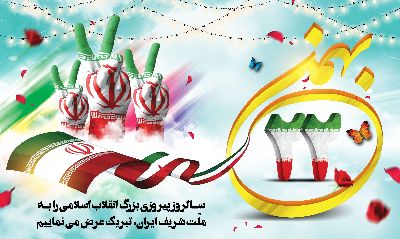
Participation in the marches of the 22nd of Bahman (February 11th) weakens the greed of the enemies and their vain hopes for the defeat of the Iranian nation.
-
Participation in the elections, despite all the problems and shortcomings, must also be prioritized. The expedience of the country and the Revolution requires everyone to block the pathways to harming the Iranian nation through enthusiastic participation in the elections.
This year’s 22nd of Bahman (February 11th) marks the beginning of the 41st year of the Islamic Revolution of Iran. There is no doubt that the Islamic Revolution of Iran has indeed, under certain conditions, yielded great achievements and impacts for humanity, religions, Islam, Shi’ism, and the people of Iran. The event that took place during those days and the effects that followed require hours of discussion and debate to be fully elucidated. I am not currently seeking to expound upon all the achievements of the Revolution; the reality is that the leadership of the Revolution—namely, the Imam (ra)—was a divine, gnostic, compassionate, and self-sacrificing man who placed his entire life on the altar of sincerity. Regardless of whether the movement he started would succeed or not, he entered the arena with all his might, and subsequently, the people accompanied him with unity and empathy, leaving behind monumental achievements. In conditions where religion was fading from the lives of the people, and while religion was being introduced as the opium of the masses, and at a time when both Communism and Western imperialism and capitalism were seeking in their own ways to eliminate religion, Islam, and piety, this Revolution ultimately brought about the revival of religion. This is a subject that warrants deep discussion.
However, the point I wish to make is that certain fallacies are sometimes put forward; some say that with all the problems we currently face, if the Imam had known these problems would arise, he would not have initiated the Revolution. Or some people say, “If we had known things would turn out like this, we would not have participated in the Revolution.” In my view, this statement is invalid. I believe that even today, despite all the current problems, if the Imam were asked whether he would have founded the Revolution or not, he would say with absolute certainty: Yes. In every era and period, we have a duty. The Imam acted according to his duty at that time. An Imam who was duty-oriented, not result-oriented, felt a sense of duty under certain conditions because he observed that Islam, the clergy, the people, and the independence of this country were being targeted, the people were being oppressed, and the identity and credibility of this country were being called into question; thus, he deemed it his duty to rise up against these injustices. Now, the fact that some problems arose later does not negate the necessity of participating in the arena during that era; these problems can never negate the duty that existed under those conditions. When the Prophet (peace be upon him and his family) began his call and so many people became Muslims, has everything gone well throughout history from the beginning until today? So many problems have arisen in the Islamic world. Can we say that if the Prophet (peace be upon him and his family) had foreseen these problems, he would not have called to Islam at all and would not have presented Islam? This is a fundamentally flawed logic. To say that the existing problems are all caused by the Revolution, and therefore the Revolution was not the right path, is entirely baseless. From whatever angle one wishes to examine it, various shortcomings exist today from different perspectives: some from the perspective of livelihoods, others from the perspective of the fading of certain religious standards. Anyone may have criticisms from any aspect, but even if all these criticisms are gathered together, they can never undermine the fundamental necessity of that Revolution and the duty that the Imam felt. Even today, if they were to ask the Imam whether he would still have revolted seeing these results, he would definitely say yes, I would have pursued the same duty I had.
However, the issue is that we must strive to reduce these problems and difficulties. Problems may have increased in some aspects, but the reality of the matter is that we must not view things in black and white. Ultimately, despite all the problems that exist, certain achievements were brought about by this Revolution that persist to this day and must be strengthened in the future. These did not exist in the past. Aside from the material, scientific, and progressive aspects, Iran is now, at any rate, an independent country; it is not subject to the will of foreigners, and it does not move according to their desires and demands. This is no small achievement. How many countries can you find in the world with these characteristics? Even among well-known and major countries of the world, many of them are subdued by the decisions and wills of the superpowers. Furthermore, a sense of identity, self-belief, and self-reliance are matters that must ultimately be taken into account within the context of the Revolution.
An important issue to which we must pay attention in this regard is that we should have strived more, and must continue to strive, to train forces who are at the level of the Revolution. Currently, it is the forty-day mark (Arba’een) of the martyrdom of Sardar Soleimani. The expression used by the Supreme Leader of the Islamic Revolution regarding him was: “He was an outstanding example of those raised by Islam and the school of Imam Khomeini.” In my opinion, this is the most comprehensive description used for Sardar Soleimani. If you look at his personality traits, you will realize the depth of this statement. While he was courageous and fearless, he lived ethically; he was genuinely compassionate toward the people, and he was subordinate to the Wilayah (guardianship), just as he himself used to say. Synthesizing these qualities was no small feat—meaning, maintaining the status of a commander and recognizing that, ultimately, the banner is held by one person who must be obeyed, while simultaneously not severing his ethical and emotional relationship with those who had differences or distance from the Revolution. If they did something positive, he appreciated it. It is highly important to be both revolutionary and ethical. Unfortunately, today some people seem to see a contradiction between these two aspects, imagining that someone who is revolutionary does not need to be very committed to ethics, and someone who is ethical is not very revolutionary. No, on the contrary, revolutionaries must be the most ethical individuals; both resolute against the enemy (“mighty against the disbelievers”) and merciful among themselves (“merciful among themselves”), dealing with all tastes and viewpoints, and despite all intellectual differences, with mercy and compassion. You see, sometimes details of Sardar Soleimani’s life are narrated that confirm this very point. At the same time that he stood against ISIS in Syria and Iraq without any pretension, and fought so courageously against Israel and organized the resistance groups, he maintained the most ethical behavior even toward those who were somehow outside of this framework and who perhaps criticized his work in the region. We lack this element. For this Revolution to succeed, to solve problems, and to reduce concerns, we need individuals of this caliber. The more such individuals increase, the greater our success will be. It is true that slogans are chanted like, “What is the enemy thinking? Iran is full of Soleimanis.” I accept this; this slogan must be given to the enemy so they do not think the path is closed. But the reality is: no, I believe Iran is not full of Soleimanis. We are short of pure, committed, and compassionate individuals who would give up their entire lives for the sake of religion, the Revolution, the people, and this country without expecting anything in return. To reduce problems and for this Revolution to achieve its goals, we must live this way as much as possible, and also try to build such forces—someone who, as much as he harbors anger against the Zionist enemy, is equally pained by, for example, a girl who does not wear the hijab or a youth who is being led astray, while at the same time saying, “These too are our children, we must extend a hand of affection to them.”
This is the path that the clergy must traverse, which they have traversed throughout history, and we too must place ourselves on this path. Now, God willing, despite all the shortcomings that anyone may have, this Revolution must be preserved and strengthened. As the Supreme Leader of the Islamic Revolution stated, participating in the marches of the 22nd of Bahman (February 11th) is, in fact, before being a support for individuals, a support for a path, a school of thought, and a methodology. Today, under conditions where the enemy has surrounded us from every side, we must demonstrate this unity together, despite the difficulties the people are facing. Regarding the elections, which will be held in less than two weeks, the same logic applies. Ultimately, what disappoints our enemies and makes their conspiracies ineffective is high participation; we must call for a broad and enthusiastic turnout in the elections, even if the current candidates may not be the ideal choices for some. However, the principle of participating in the elections—an enthusiastic participation—must be taken seriously, especially under these conditions. If this fades, openings will be created to strike a blow against the Revolution and this country, which, God forbid, would be irreparable.