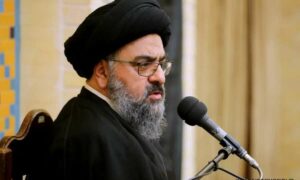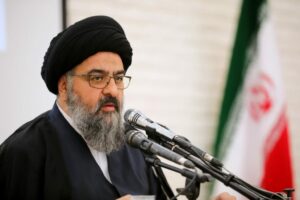
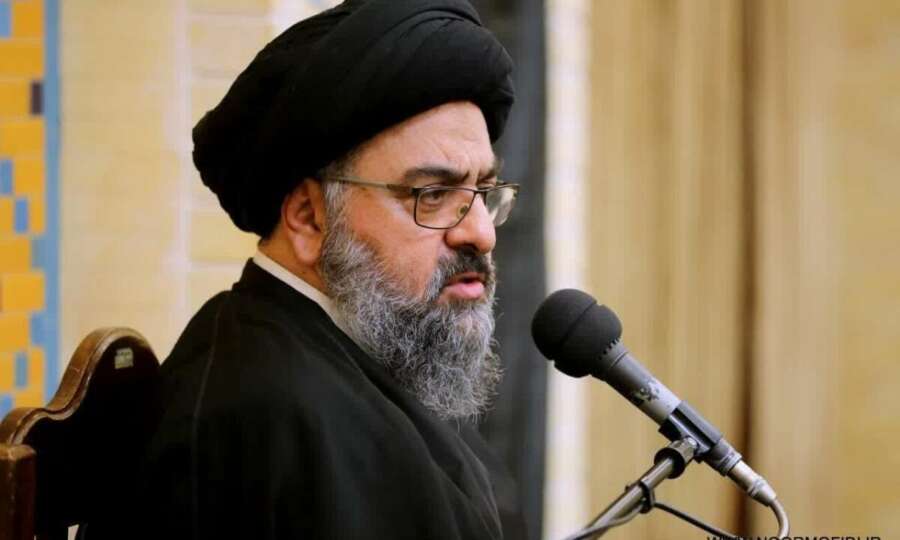
Ayatollah Seyyed Mojtaba Nourmifidi: “Insults and character assassination must not have immunity.”
On Sunday, in an interview with an IRNA reporter, referring to the recent insults directed at country officials, Professor Seyyed Mojtaba Nourmifidi added: “Parts of these issues must be prosecuted by the judiciary, and it should not be the case that whoever wants to say whatever they wish enjoys immunity, with no one intervening.”
He stated: “The general atmosphere of the country has been afflicted with this calamity wherein the boundary between critique and constructive criticism on one hand, and insults and defamation on the other, has been disrupted. This issue is not limited to this recent incident, nor is it restricted to a specific individual, faction, or group. Fundamentally, it is a moral disease that has enveloped many arenas in the political, cultural, and social environments of the country, and therefore a fundamental solution and remedy must be sought.”
He asserted: “If someone has a critique or criticism, they can raise it with reasons, evidence, and arguments based on the judgment of intellect, rational people, and the Shari’ah, and it will certainly be constructive and lead to the progress of affairs. However, insults and defamation are religiously condemned and are not approved of by rational people.”
Nourmifidi noted: “Experience has proven that insults produce the opposite effect and perhaps have destructive consequences in society; especially when coming from those who are expected to be moral teachers, models of desirable behavior, and educators of correct speech.”
He continued: “The very act of doing this is by no means acceptable, especially on the part of those whom the people recognize as figures, educators, and propagators of ethics and the Shari’ah.”
He said: “It seems that both the State Broadcasting (Seda-va-Sima) must be more careful in inviting experts, and those in charge of affairs must monitor this issue more closely. Insults and defamation are unacceptable, and I do not think anyone is willing to defend this manner of speaking.”
The Qom Seminary professor, emphasizing that the weakness of officials will certainly not be solved through insults and that it lacks any logic, said: “Insults lead to the concealment of weaknesses. Conversely, if someone expresses criticisms with logic, reason, and proof, the weaknesses are exposed, efforts will be made to resolve these shortcomings, and this issue can transform into a public demand.”
He added: “However, if insults, defamation, and disrespect take place, a form of controversy is created, and the core weaknesses and problems are ignored. Not only does this fail to help resolve the problems, but because the problems are overshadowed by this uproar, it ultimately leads to an accumulation of further issues.”
He stressed: “Our expectation is that everyone—especially those known by the name of the clergy, whom the people see in a position where their behavior and speech must be a lesson for others—exercises greater caution.”
Professor Nourmifidi added: “This group must possess greater tolerance, patience, and self-restraint. They should deal with the problems and issues of society through the same reformative approach, accompanied by compassion and empathy, with which the Prophet and the Pure Imams (peace be upon them) confronted the issues of society.”
Stating that our words and behavior must not smell of revenge, he said: “In domestic confrontations, matters must be raised with compassion, empathy, and goodwill. If it is done in this manner, it will certainly be more effective upon the very individuals who are the targets of criticism, and naturally, it will produce a better result.”
He emphasized: “Care must be taken so that we do not do or say anything that places us exposed to certain viewpoints or statements, or leads to misinterpretations, thereby damaging the attire and status of the clergy.”