Asr Iran: In our previous conversations, we examined the mutual impacts of modernity and Islamic seminaries (Hawzas) from various angles. We heard and read the views of experts regarding the influence of modernity on seminary curricula and sciences, the daily lives of seminary scholars, and the religious life of Iranians.
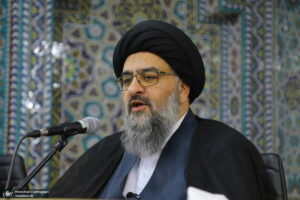
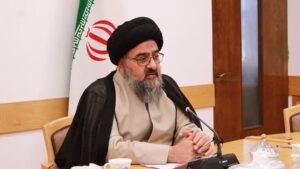
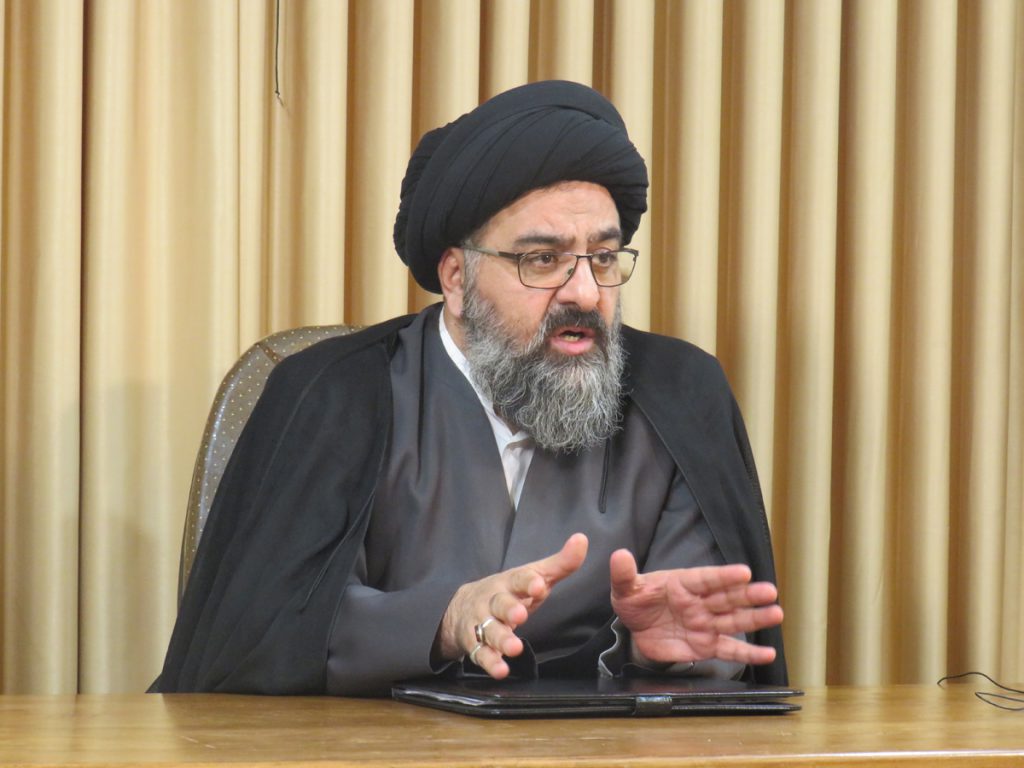
In this section, we interviewed Ayatullah Sayyid Mujtaba Nur Mufidi—Director and Founder of the Research Institute of Contemporary Fiqh, Professor of Advanced (Kharij) Jurisprudence and Principles of Fiqh at the Islamic Seminary of Qom, and an innovative seminary Mujtahid—to discuss the mutual impacts of modernity and jurisprudence (Fiqh) on one another and share his insights with the audience of Asr Iran.
Asr Iran: Since the entry of modernity into the country or the inception of this era in Iran, developments occurred that directly affected Islamic seminaries, influencing both the living conditions of seminary students and clerics and their intellectual environment. We covered part of this topic with other distinguished figures, but we now wish to approach it from this angle: What impacts has modernity fundamentally had on jurisprudence (Fiqh), and what impacts has jurisprudence had on modernity? What is the share and boundary of each? Please define both concepts and outline the primary topics.
Ayatullah Sayyid Mujtaba Nur Mufidi: To analyze the mutual impact of two phenomena, we must first understand and define them, taking into account any differing perceptions surrounding these two concepts or phenomena.
Regarding the discipline of jurisprudence (Fiqh), although all those who have attempted to define it generally present it as: “The science responsible for explaining the legal rulings (ahkam sharia) related to the conduct of duty-bound individuals (mukallafin) under various circumstances,” this represents merely the core, common definition of jurisprudence. We possess distinct orientations within jurisprudence and among jurisprudents (Fuqaha), which significantly influence our discussion and dictate the framework through which we form judgments and evaluations.
The Four Orientations in Jurisprudence Regarding Modernity and New Issues
1. The Rigid and Unyielding Orientation
One group maintains a rigid stance of absolute rejection toward anything new or emerging. Although their numbers may not be large, this orientation exists, and we have witnessed examples of it even in recent times, which you have certainly heard of. If we were to apply a term to this perspective, we could refer to it as a static view and rigid thinking (Tafakkur-e Jamid). According to this view, because jurisprudence, the Sharia, and religion as a whole are eternal, immutable, and fixed entities, they cannot accommodate or harmonize with variable matters. We observe this issue among both Sunni and Shia traditions. To evaluate this stance in a single sentence: the necessary consequence of this mindset is seclusion, isolation, detachment from society and the world, and ultimately the abandonment of religion. This means that under such a view, practical living becomes impossible, and religion truly becomes obsolete. Naturally, this rigid and ossified perspective cannot guide society toward religiosity.
2. The Minimalist Approach
A second group seeks to stabilize this eternal, fixed truth within varying temporal and spatial contexts. That is, they aim to reconcile the developments that occur across different times and places—which are essential to human life and have existed throughout history—with the fixed, immutable entity we know as religion. Those who hold this view comprise various spectrums:
A portion of them believes that religion possesses fixed, immutable elements that never change, but it does not concern itself with new matters arising from the progress of human life, treating them as purely conventional matters (Umur ‘Urfiyyah) outside the domain of religion. In this realm, religion has left humanity unconstrained and free. We term this position the “minimalist stance.” Some may contend that religion holds authority solely in the domain of devotional matters (Ta’abbudiyat), where human life must be aligned with religion, whereas all other domains consist of conventional matters through which humanity manages its existence under varying conditions.
While this perspective may enjoy support among many intellectuals or even within Islamic seminaries, in our view, this position is also incomplete. Just as the first group cannot foster genuine religiosity in society through its rigid outlook, the second group cannot adequately safeguard the sanctuary of religion, as its approach contradicts many of our religious teachings. Furthermore, an inherent danger in this approach is the gradual emergence of skepticism even within the domain of devotional acts, a boundary that some have indeed already begun to question.
I cite these viewpoints to clarify which specific approach is intended when we speak of the impact of modernity on jurisprudence and vice versa.
3. The Passive Adaptation Orientation
The third category consists of those who believe that religion and the Sharia must demonstrate adaptability to new phenomena and emerging issues, but that this adaptation must primarily originate from religion itself—meaning religion must alter itself. Consequently, this approach favors changes that occur over time. This constitutes a passive reaction, as its prerequisite is the abandonment of core principles and frameworks. Elaborating on the precise distinctions among these orientations would require an extended discussion; at present, I am primarily outlining the problem.
4. The Dynamic and Comprehensive Orientation
The fourth position maintains that while religion, the Sharia, and jurisprudence contain fixed and immutable elements that remain unchanged until the Day of Judgment, jurisprudence also possesses the capacity to confront emerging issues and new developments without violating its fundamental principles and frameworks. Therefore, how we define jurisprudence and Ijtihad (independent legal reasoning) is of paramount importance.
I recall that the late Martyr Motahhari noted somewhere that human beings bear two categories of responsibilities: one category consists of responsibilities that are not fundamentally result-oriented—to use his phrasing—meaning duties that an individual must perform under all circumstances, such as devotional acts (Ta’abbudiyat). Conversely, certain responsibilities are explicitly result-oriented.
While I do not fully align with this specific terminology, he cites the domain of Jihad as an example, where Jihad serves to preserve the integrity of Islam, the honor of Muslims, and Islamic lands. Here, the outcome—namely, preserving the integrity of Islam and the honor of Muslims—is paramount. At one time, this outcome is attained through the sword and armed conflict; at another time, it is achieved through alternative means. The honor and public interest (Maslahat) of the Islamic society and Muslims may even be secured through peace.
I wish to draw a conclusion from this statement: regarding the utilization of inventions and emerging subject matters, a Muslim must live in a manner that preserves their intellectual, doctrinal, and practical principles, as well as their dignity. This does not contradict benefiting from all the advancements and advantages of human progress.
In any case, according to this fourth perspective, Islam, as a comprehensive, perfect, and eternal religion until the Day of Judgment, provides the program for human life in this world. This program cannot ignore the various dimensions of human existence; rather, it addresses the relationship between man and God, the relationship between man and his fellow human beings, and the relationship between man and nature and his surrounding environment. That is, this three-dimensional relationship is fully encompassed within the Sharia and religion. To claim that religion lacks a program for any of these three dimensions would imply a shortcoming; even leaving these domains unguided would constitute a deficiency.
Indeed, we may state that in certain instances, religion and the Sharia endorse (Imda) prevailing customary practices among people. Nevertheless, this remains a defined stance—at times establishing a new rule (Ta’sis), and at times endorsing existing practice (Imda). At a minimum, we must establish that no opposition exists on the part of the Sharia regarding any component of these three dimensions.
Now, when we speak of jurisprudence and its impact on human life in the contemporary era, we must first clarify what we mean by jurisprudence. The jurist’s (Faqih) perspective on emerging issues is critical—whether they adopt a rigid view, a perspective inclined toward permissiveness, or a minimalist approach. This outlook is entirely decisive and requires detailed scholarly examination.
Naturally, certain presuppositions must also be taken into account here—for instance, whether governance fundamentally exists within religion or not. Whether we attribute the function of governance to religion significantly impacts the discussion. If we consider governance to be an inherent function of religion, many problems stemming from the aforementioned incompatibility between religion and modernity (or modernism) can be resolved through this institutional capacity.
The authority of the ruler and the authority of the Islamic government—which is grounded in several critical factors, including public interest (Maslahat)—can pave the way forward. Similarly, whether we consider religion fundamentally as a social phenomenon or not involves specific prerequisites that I will address in my concluding remarks. Therefore, when discussing the relationship between jurisprudence and modernism or modernity, our definition of jurisprudence and our normative stance must be precisely articulated so that the responsibilities assigned to jurisprudence remain clear.
Defining Modernity and Modernism
Regarding modernity, modernism, or what some term “modernizing development,” this concept likewise lacks a single, uniform definition. How we define modernity and modernism varies depending on the domain to which we apply it—whether we restrict our view solely to its economic origin or understand it as encompassing multiple dimensions.
Observe that the origin of modernity was predominantly rooted in economic issues and developments arising after the Industrial Revolution. Today, however, this concept has thoroughly entered the political, cultural, and social spheres. Sociologists and psychologists have addressed this issue, and the elements now considered constitutive of this phenomenon have expanded significantly beyond its initial origin.
Therefore, we must establish a shared definition of this phenomenon: what modernity, modernism, or modernization fundamentally are, what their constitutive elements are, and what primary factors form this phenomenon, as disagreements persist even regarding these basic components.
Thus, as a first step, comprehensive analytical work must be conducted on both phenomena. First, the concept and term Fiqh and the stance of jurists regarding contemporary issues must be clarified; alongside this, the concept of modernity and modernism must be articulated and its various dimensions thoroughly examined. Presenting a generalized image of this relationship without these steps would be overly simplistic, unless we accept these preliminaries as established axioms to be debated elsewhere and focus solely on the conclusions.
Asr Iran: Is the encounter of jurisprudence with emerging issues and new subjects a novel phenomenon, or does it have historical precedent?
Ayatullah Sayyid Mujtaba Nur Mufidi: This is not the first time that jurisprudence has confronted a new issue or the concept of development. The foundation of modernism is development; while this was once confined specifically to economics, it has now expanded to encompass culture, society, and politics. However, the core principle of development and new phenomena has existed throughout history, albeit in varying forms.
If we look back to the era of the Noble Prophet of Islam (PBUH), the Infallible Imams (AS), and subsequently the Minor and Major Occultations—during which jurists assumed responsibility for explaining the Sharia and religious rulings—we inevitably find that they confronted matters that did not exist previously.
Therefore, the encounter with the general reality of development has always existed; in fact, our jurisprudence has grown precisely through its confrontation with new issues. When we speak of development, we do not mean its narrow contemporary definition, but its broader sense: the expansion of human life, the inventions humans have introduced into existence, and evolving human needs have continuously generated new issues, rendering this confrontation unavoidable. Consequently, as we move forward through different historical eras, newer issues have entered jurisprudence, prompting jurists to debate and address them.
Thus, this issue has existed since ancient times. If we search for the four orientations I mentioned in the past, we will find them. Since early times, a group consistently resisted every new phenomenon—many of them out of a genuine concern that religion might fall prey to distortion (Tahrif) and unwarranted innovation (Bid’ah). Others lacked the capacity to answer new questions and consequently resorted to denial and rejection.
Conversely, we have always possessed capable and formidable jurists who confronted these issues with breadth of vision and provided answers. However, the modern world possesses specific requirements that make contemporary society fundamentally different from the past.
Asr Iran: Could you please elaborate on some of these structural differences?
Ayatullah Sayyid Mujtaba Nur Mufidi: Consider, for example, that while concepts such as the tribe, the ruler, or even the state existed in the past, the “state” today has assumed a modern definition. The modern state may be substantively different from the traditional state, and several responsibilities of the modern state were never raised in traditional governance.
In any case, modernism is a novel phenomenon. Therefore, if we wish to determine the position of religion toward it, certain aspects indisputably require theological (Kalami) and philosophical evaluations. For instance, consider what elements are defined as the constitutive components of modernism—regardless of their number: whether governance by human rationality, the intensification of individualism, a specific conception of absolute freedom, or the dominance of absolute material comfort alongside the neglect of spiritual and soul-centric needs.
These constitute the pillars of this concept. If we intend to evaluate these pillars, we must conclude our analysis in a domain outside of jurisprudence. For example, to what extent can rationality serve as the central axis? Can instrumental rationality serve as the sole criterion? The rationality prioritized in modernity is an instrumental rationality (Aqlaniyyat-e Abzari) that calculates purely in terms of material costs and benefits. Do we accept this rationality foundationalist-wise, or do we reject it? Or consider a situation where human attention is directed entirely toward satisfying material life, needs, entertainment, and recreation, while the remembrance of God is excluded from social or even individual life—to what extent is this acceptable? I mention this to emphasize that a series of matters requires theological and philosophical investigation.
This issue is critical. At this junction, some individuals attempt to reject modernism entirely by invalidating its underlying pillars, thereby opposing all phenomena associated with modernity. However, this does not appear to be the correct approach. We must conduct theological investigations in their proper place, pursue philosophical inquiries, and critique their epistemological foundations. Yet, regardless of our academic endeavors, we cannot evade the requirement that jurisprudence must adopt a defined stance toward the reality humanity currently faces and which manifests in various domains. We simply cannot avoid it.
Consider the fact that the modern world recognizes specific rights for various classes, professions, and groups of human beings. Should the Islamic state or governance—regardless of ideological or value-based perspectives—guarantee these rights? Some argue that such rights are not inherently established to begin with, so we need not seek to guarantee them. Or consider another characteristic of modernity: the assertion that the state must not be ideological—that an ideological framework should not govern the state. This is also expressed as the “separation of religious institutions from political institutions,” which is treated as a core component of modernity and warrants close examination: Can we accommodate such a separation?
When we speak of Islamic governance—setting aside practical realities, historical experiences, or whether implementation was flawed—I do not wish to enter those debates at present. However, if we state that Islamic governance possesses an ultimate objective aligned with the ultimate purpose of creation, it cannot declare that this matter does not concern it. Human salvation is the ultimate goal of governance; how it plans and manages affairs to achieve that purpose involves extensive debate, but the Islamic ruler cannot remain indifferent to that ultimate objective.
Governance also possesses intermediate goals (Ahdaf-e Miyani), such as the implementation of justice, enjoining the good and forbidding the wrong (Amr bil-Ma’ruf wa Nahy ‘an al-Munkar), and the establishment of prayer (Iqamat as-Salah), as referenced in Quranic verses:
“الَّذِينَ إِنْ مَكَّنَّاهُمْ فِي الْأَرْضِ أَقَامُوا الصَّلَاةَ وَآتَوُا الزَّكَاةَ”
“Those who, if We give them authority in the land, establish prayer and give Zakat…” [Surah Al-Hajj 22:41]
This explicitly articulates that those to whom We grant power and authority on earth establish prayer, pay the prescribed charity, and enjoin good and forbid evil; or as stated in another verse: “So that mankind may maintain justice” [Surah Al-Hadid 57:25]. These are matters to which religious governance cannot remain indifferent.
We refer to these as intermediate goals because they converge around the primary axis: human salvation. If we affirm that Islamic governance carries such duties and responsibilities, we can no longer maintain that the government should lack an ideological perspective. This in itself forms an extensive debate: whether it is possible to reconcile an ideological perspective and an ideology-based system with the standard duties and responsibilities of modern governments. For example, if national security and national interests are at stake, can we reconcile them within this framework? These issues must be addressed in their proper context.
The Methodological Tools of Jurisprudence in Confronting Modernity
Returning to the primary discussion regarding the relationship between jurisprudence and modernity, what tools does jurisprudence require to confront this phenomenon?
We have several major axes that must be addressed within theology (Kalam). However, we face numerous issues that have entered human life, and we must articulate the Islamic legal ruling (Hukm) regarding them from the perspective of the Sharia, as humanity encounters them daily. We believe the path forward lies neither in absolute rejection nor in absolute surrender. While critiquing the theological and philosophical foundations of modernism, we believe that through the internal tools embedded within jurisprudence, we can actively encounter and engage with this phenomenon.
What originates from this school of thought is neither entirely rejected nor entirely condemned. However, the crucial point—as emphasized by Imam Khomeini—is that conventional jurisprudence (Ijtihad-e Mostalah) is insufficient for addressing these modern issues.
Imam Khomeini repeatedly emphasized that our jurisprudence must remain Jawahiri Jurisprudence (Fiqh-e Jawahiri)—meaning the methodologies must remain those customary and prevalent in the seminaries, and the principles and methods through which we derive legal rulings must be pursued with equal rigor, with seminary students trained accordingly. Yet simultaneously, he maintained that conventional Ijtihad is not sufficient.
Imam Khomeini briefly explained his statement that conventional Ijtihad is insufficient: if an individual is a Mujtahid solely in the traditional sciences and legal branches of the seminary, but lacks political and social insight and does not understand the issues of the modern world, they cannot exercise correct and adequate Ijtihad.
The insufficiency of conventional Ijtihad means that we must incorporate the two elements of time and place into Ijtihad. The necessary consequence of integrating these two elements is a rational, proactive engagement with all components of modernism.
I will share an example with you: For some time now, a discipline termed “Contemporary Fiqh” (Fiqh-e Mu’asir) has been pursued in the seminary. At the Research Institute of Contemporary Fiqh, our primary mission is to prepare seminary students, the seminary institution, and jurisprudence itself to confront emerging issues. I believe Contemporary Fiqh means up-to-date jurisprudence (Fiqh-e Ruzamad), not jurisprudence belonging merely to a specific historical era.
Up-to-date jurisprudence is grounded in the elements of time and place, which serve as decisive factors within it. This requires introducing the necessary human sciences into the seminaries. This reflects the explicit directive of Imam Khomeini: without a thorough command over the human sciences and the contemporary issues facing humanity, we cannot achieve a correct and sufficient Ijtihad. Here, “human sciences” refers to secular and human disciplines as distinguished from divine and religious sciences.
Today, numerous methodological and value-oriented sciences exist globally. We can utilize these methodologies within jurisprudence; we can draw upon the methodological sciences currently employed across various human domains.
To make this concept concrete, at the Research Institute of Contemporary Fiqh, we have categorized 28 specialized branches under contemporary jurisprudence. If you examine these branches—such as the Jurisprudence of Security (Fiqh-e Amniyyat)—security is historically a foundational concept, but security under modern conditions and within the contemporary world has assumed a completely different form. When we discuss the Jurisprudence of Security, we cannot ignore the constituent parameters of security in this era.
Consider other branches, such as the Jurisprudence of Technology, the Jurisprudence of Management, the Jurisprudence of the Environment, the Jurisprudence of Economics, or the Jurisprudence of Citizenship Rights and Duties. Regarding citizenship, we possess both duties and rights. At our institute, we extracted the network of issues (Shabakeh-ye Masa’il) for this branch alone, which comprises approximately 400 to 500 distinct issues. Many of these issues simply did not exist in the past. Although certain rights and duties possess general precedents in our jurisprudence, many contemporary rights are direct products of this modern environment. Beyond the subject-matter identification (Mawdu’-shenasi) required for legal deduction, we require methodological sciences, a development that is currently taking place. Modern normative sciences can also assist us in certain respects.
Therefore, because we hold a specific definition of jurisprudence, recognize its extraordinary capabilities, and see its inherent capacity to answer many of these questions—and because we hold the presuppositions I outlined—we conclude that jurisprudence maintains neither a stance of total rejection nor one of total endorsement toward modernity. Jurisprudence possesses the capacity to ensure we are not deprived of the benefits of modern progress, while allowing us to set aside aspects that conflict with our principles and goals. Furthermore, both intellectually and methodologically, modern developments can assist jurisprudence, as is currently occurring. However, this requires examining its various dimensions, which I have outlined here in general terms.
Asr Iran: Could you cite additional practical examples of these modern methodological tools?
Ayatullah Sayyid Mujtaba Nur Mufidi: Research methodology (Ravash-e Tahqiq) is a prime example currently receiving significant attention within Islamic seminaries. Although research methodology varies across disciplines, modern standardized research methodologies have now entered the seminary. Advanced technological tools produced by modern developments are actively being utilized.
Artificial Intelligence (AI) is currently finding its way into the seminary and jurisprudence. Determining the extent to which its application is permissible and reliable constitutes an independent debate, but examples are abundant. The interdisciplinary and cross-disciplinary approaches that have emerged are now actively utilized; in the past, a single discipline followed its own trajectory around a specific subject matter, while another discipline pursued its own.
However, interdisciplinary and cross-disciplinary approaches—wherein we analyze a phenomenon by synthesizing disciplines and drawing simultaneously upon multiple fields to interconnect their issues—represent a novel methodology that has entered seminary research and studies.
Asr Iran: You noted a nuanced point: on the one hand, the modern world presents specific requirements; on the other hand, jurisprudence possesses the capacity to update itself, even if core elements remain immutable until the Day of Judgment. Why do many observers feel that jurisprudence fails to meet contemporary needs, viewing it as lagging behind modernity? What are the underlying challenges?
Ayatullah Sayyid Mujtaba Nur Mufidi: A portion of this issue stems from our own shortcomings. Both Imam Khomeini and the Supreme Leader have emphasized that in the past, our scholars—not only in jurisprudence, but also in theology (Kalam), philosophy, and Quranic exegesis (Tafsir)—progressed alongside their era and were occasionally ahead of their time.
Imam Khomeini stated that jurisprudence, the jurist, and the Mujtahid must not only understand the needs of their time but must also anticipate the future. Part of the problem is attributable to our own insufficient efforts. In certain eras, we possessed scholars who were genuinely ahead of their time, such as Shaykh Tusi. Although such figures were few, they not only kept pace with contemporary developments but transcended their era. Conversely, others did not. Naturally, a portion of this outcome is due to our own shortcomings.
A second factor is unfamiliarity with the modern world. Lacking familiarity with new phenomena and failing to correctly comprehend modern transformations leads an individual to adopt a simplistic view, fail to recognize a new phenomenon as a legitimate subject of inquiry, and consequently bypass it entirely.
We must perceptively process these developments as they truly are, rather than through surrounding sensationalism. This issue also has historical roots—such as the well-known historical debates surrounding the introduction of the loudspeaker. Often, new phenomena enter society amidst sensationalism that obscures their true nature. Independent of public clamor, we must conduct a rigorous, truth-seeking scientific inquiry into new phenomena to understand them accurately. Identifying these subjects correctly provides the foundation for active scholarly engagement.
A third factor is the critical flaw emphasized by Imam Khomeini and Martyr Motahhari: superficiality (Sath-negari), an issue we have continuously faced. We must move from the surface to the depth, set aside superficiality, and accord religion a higher standing. We must achieve a deeper understanding of the Prophet of God (PBUH) and the Infallible Imams (AS), examine societal issues more profoundly, and account for the higher objectives of religion (Maqasid ad-Din).
We must keep in mind the ultimate goal I referenced, as well as the intermediate goals, recognizing that religion is not intended solely for ultimate salvation in the Hereafter. Religion is a reality that guarantees both human worldly prosperity and eternal salvation. If it is to guarantee worldly prosperity, we must address these contemporary issues. We must refine our perspectives.
Asr Iran: Where specifically have we fallen behind? Could you mention areas where jurisprudence has yet to provide adequate answers?
Ayatullah Sayyid Mujtaba Nur Mufidi: That is an extensive topic best deferred to another occasion. Regarding specifically where we have fallen behind, I believe that significant, commendable scientific efforts have taken place in the seminary following the Islamic Revolution. To claim that the seminary has accomplished nothing would be an injustice to the institution.
If you examine the publications produced by research institutes, scholars, and individual authors in these fields, the Islamic Seminary has undeniably conducted substantial work. I do not claim it has reached the absolute pinnacle or that current output is fully sufficient, but serious scientific work has been undertaken.
Those who claim otherwise are often unfamiliar with these research efforts and investigations. Today, valuable work is underway, characterized by serious scientific vitality. Nevertheless, across various domains—whether theology, philosophy, or jurisprudence—we maintain undeniable backlogs. Certain foundational issues must be resolved at their root.
You asked for an example: consider Citizenship Rights and Duties, which I cited earlier. We can place a network of 500 distinct issues before you that a research group has been investigating for three years. Thus far, only a limited number of topics have been fully evaluated to determine the extent of existing jurisprudential research. While some studies have been completed and others are underway, the majority remain unaddressed.
The most critical task—serving as the foundation for future movement—is the compilation of the Network of Issues (Shabakeh-ye Masa’il). Systematizing the network of issues within contemporary branches of jurisprudence enables us to determine the total volume of existing questions, how much work has been accomplished, and what remains unaddressed.
Across these 28 jurisprudential branches—including the Jurisprudence of Art, the Jurisprudence of Media, and the Jurisprudence of Ethics—I am aware that valuable work has been conducted, yet the volume of uncompleted work remains vast. In citizenship jurisprudence and urban affairs—encompassing both rights and duties—the majority of issues remain unresearched. The path ahead is long, and time is limited.
I offer one final recommendation and earnest request: let all individuals and institutions who share this concern, care deeply for these objectives, and possess capacity in this domain join hands in synergy and empathy to compensate for these backlogs. This will allow the commendable work accomplished thus far to gain greater momentum. Even if we pool all our capacities, available time remains scarce. Therefore, setting aside peripheral distractions and unhealthy rivalries, we should assist one another, with each participant shouldering a portion of this responsibility to advance the cause.