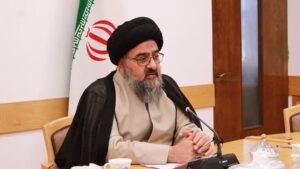
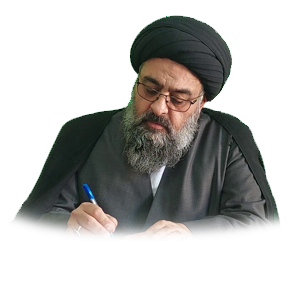
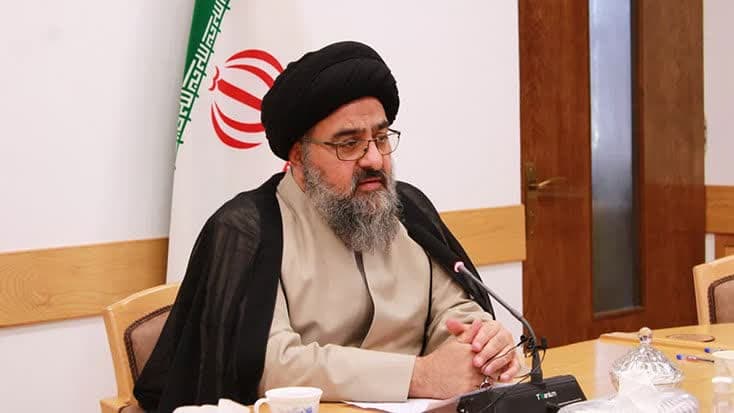
According to the AhlulBayt International News Agency (ABNA), Ayatullah Sayyid Mujtaba Nur Mufidi, Professor of Advanced Classes at the Islamic Seminary of Qom, President of the Research Institute for Contemporary Jurisprudence, and Director of the Dar al-Ma’rifah Institute, in an interview pointing to the messages of the funeral procession for the pure body of the martyred Leader of the Islamic Revolution, stated: This ceremony is not merely a mourning ritual, but a historical event whose audience encompasses the Iranian nation, regional nations, global public opinion, and future generations. Emphasizing that the massive public participation represents a renewal of the covenant with Revolution ideals and the school of Ashura, he added: Martyrdom in Quranic logic and Islamic teachings is not the end of the path, but the beginning of the impactful life of divine human beings and the continuation of their trajectory.
Stating that this widespread presence represents the nation’s appreciation for the martyred Leader’s years of striving and service to Islam and Iran, he noted: This ceremony also displays national cohesion and social capital of the Islamic Republic, transmitting a clear message to enemies that the strategy of eliminating personalities will never lead to eliminating a school of thought and an ideal. According to Ayatullah Nur Mufidi, just as the Ashura movement became eternal through the martyrdom of Sayyid al-Shuhada (peace be upon him), the martyrdom of great figures can likewise pave the ground for reviving ideals and reinforcing the spirit of resistance.
In another section of his remarks, pointing to characteristics of a ceremony capable of manifesting the authority of the Islamic Republic, the President of the Research Institute for Contemporary Jurisprudence noted: Massive and conscious public participation, preserving national unity and cohesion, observing order, dignity, and Islamic ethics, and accurately explaining the personality and ideals of the martyred Leader form the paramount components of such a ceremony. He emphasized that genuine commemoration of martyrs lies in continuing their path along service, justice, resistance, scientific progress, and resolving people’s problems; and if this ceremony results in reinforcing hope, responsibility, and empathy in society, it will transform into a strategic asset for the country.
Ayatullah Nur Mufidi also considered the mission of religious preachers and seminary scholars at this juncture vital, stating: Islamic seminaries must transform this massive gathering into an arena for the “Jihad of Explanation” (Jihad-e Tabyin). He listed documented, rational explanation of the martyred Leader’s personality, logical responses to young generation questions, linking emotions with cognition, instilling hope based on religious teachings, and honest dialogue with audiences among the primary duties of preachers, emphasizing that Jihad of Explanation means illuminating truths using the language of reasoning and ethics, not merely repeating slogans.
Concluding, he stated: If the funeral ceremony converts from a purely emotional gathering into a school for deepening cognition, reinforcing national unity, promoting ethics, enhancing resilience, and breathing hope into society, the mission of the Jihad of Explanation will be properly realized. Ayatullah Nur Mufidi emphasized that such a ceremony, in addition to bringing tranquility to society, conveys the clear message to the region and the world that the Iranian nation, relying upon faith, social capital, and divine ideals, will continue the Revolution path with firmness and unshakeable resolve.