
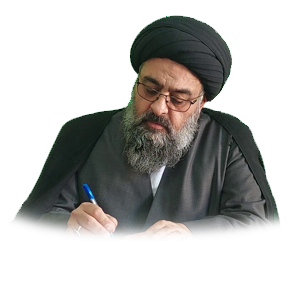
Session Forty-Nine
The Principle of Exemption from Obligation (Bara’ah), The Proofs of Exemption, The First Proof: The Book, The Second Verse, Analysis of the Second Verse, Objection, The First, Second, and Third Interpretations, Commentary on the Treatise on Rights, Two Fruits of Hajj
December 3, 2025
Summary of the Previous Session
The discussion concerned the argumentation based on certain Quranic verses to establish the Principle of Exemption from Obligation (Bara’ah). First, the first verse was examined, and some objections raised against the argument based on this verse were answered. The conclusion was that this verse can establish exemption in cases of doubt regarding the obligation. This, of course, is conditional upon answering the proofs relied upon by the traditionalists (akhbāriyyīn) and their arguments concerning the obligatoriness of precaution; because according to this verse, as long as no clarification regarding the obligation is established, the Principle of Exemption from Obligation (Bara’ah) runs.
However, if in cases of doubt—encompassing both ruling-based and subject-based doubts—precaution is obligatory by the instruction of the Lawgiver, then this obligatory precaution itself constitutes “clarification” (bayan), in which case one cannot rely upon this verse to establish exemption. Therefore, the completeness of the argument based on this verse to establish exemption is conditional upon the refutation of the traditionalists’ proofs, and this point must be attended to.
The Second Verse
“Let a man of wealth spend from his wealth, and he whose provision is restricted – let him spend from what Allah has given him. Allah does not charge a soul except [according to] what He has given it. Allah will bring about, after hardship, ease [i.e., relief].” [Sura al-Talaq, Verse 7]
The argument is based on this phrase: “Allah does not charge a soul except [according to] what He has given it” (la yukallifu Allahu nafsan illa ma ataha). In this phrase, the relative pronoun “ma” (ma al-mawsulah) after “illa” means “obligation” (taklif) and is the absolute object (maf’ul mutlaq) of “la yukallifu”; meaning that Almighty God does not obligate anyone except with the obligation He has bestowed (ata) upon them. The “bestowal” (ita’) of the obligation here means the announcement and communication of the obligation.
Therefore, the argument is built upon the premise that if an obligation has not been announced or if no knowledge has been acquired of it, that obligation (in its binding sense) has fundamentally not been realized. In other words, God does not obligate anyone except with what has been announced to them and of which they have acquired knowledge. Thus, if an obligation does not reach the people or is not announced, it is negated.
Therefore, the apparent meaning of the verse indicates that no bindingness exists except after announcement and communication to the mukallaf. This is the very concept of exemption; because exemption means the absence of obligation in the case of its non-communication, and this verse also indicates this very meaning.
Analysis of the Second Verse
Regarding this argument, objections have been raised on the ground that other interpretations exist for the verse. Aside from the interpretation mentioned, at least three other possibilities exist regarding the verse, under some of which the verse is fundamentally unrelated to the issue of exemption, while other possibilities are mummified at the level of reality (maqam al-thubut). Therefore, they have objected to the argument based on this verse.
The possibilities raised at the level of reality in interpreting the verse, alongside the possibility outlined by the arguer, are:
The relative pronoun “ma” means “wealth” (mal), and “ataha” means “He has given her” (a’taha). On this basis, the meaning of the verse is: “Allah does not charge a soul except with the wealth He has given it” (la yukallifu Allahu nafsan illa bi-malin a’taha). Therefore, Almighty God does not obligate His servants to procure wealth from elsewhere with difficulty and spend it, but rather He states: spend from that very property that God has bestowed upon you.
According to this interpretation, the verse has absolutely no connection to the discussion of exemption. This interpretation is supported by the preceding and subsequent phrases. In the preceding phrase, He states: “Let a man of wealth spend from his wealth…” and subsequently, to dispel doubt, He adds: “and he whose provision is restricted…”
Thus, He emphasizes that the spending under discussion does not mean procuring wealth from elsewhere, but rather everyone must spend from what God has given them. These two opening phrases of the verse support the possibility that the discussion is solely concerning monetary spending and has no connection to the issue of exemption. Therefore, under this interpretation, “ma” is no longer interpreted as “obligation”—in contrast to the arguer’s interpretation, where the relative “ma” was the absolute object, but here is the direct object (maf’ul bih).
The relative pronoun “ma” means “the obligated duty” (al-mukallaf bih), encompassing both performance and abandonment. On this basis, the meaning of the verse is: “Allah does not obligate a soul except with an action He has enabled it [to perform]” (la yukallifu Allahu nafsan illa fi’lan ataha); meaning, He has granted it the capability to perform it. In this case, “itaha” means capability and power, and “illa ma ataha” means: except that action and deed which it has the power to perform.
Here, “ma” is certainly the direct object, and the meaning of the verse is directed at the impermissibility of enjoining what is impossible (taklif ma la yutaq). Therefore, the verse in reality expresses the rational ruling of the ugliness of enjoining what is beyond one’s capability, and its meaning is that God does not obligate anyone to an action except one which He has enabled them to perform. According to this interpretation as well, the verse has no connection to exemption, but merely seeks to express the ugliness of enjoining what is impossible or the impermissibility of enjoining what is beyond one’s capability.
The relative pronoun “ma” in this verse represents a common denominator (qadr-e-jami’) that encompasses all preceding meanings (wealth, action, and obligation). That is, a general meaning that encompasses wealth, the action/deed, and the obligation alike. Under this interpretation, it is stated that “ma” is employed in that common denominator, and “ataha” also acquires its appropriate meaning according to each case: if “ma” is understood to mean wealth, “ataha” means “granting”; if it is understood to mean obligation, “ataha” means “announcement and clarification of the obligation”; and if it is understood to mean action, “ataha” means “enabling” that action. Therefore, according to this interpretation, the relative “ma” is used in a comprehensive meaning, and “ataha” is interpreted and understood depending on the case to which “ma” applies.
Among the three interpretations proposed by the objector, this interpretation can be considered a proof of the Principle of Exemption from Obligation (Bara’ah). However, the first two interpretations have absolutely no connection to the discussion of exemption, and the other interpretation (the third interpretation as a common denominator), although related, faces a serious difficulty. The main difficulty is that we cannot conceptualize a common denominator among these multiple meanings and claim that the relative “ma” is used in that common denominator.
According to one interpretation outlined by the arguer, “ma” means “obligation”; in another interpretation, it means “action and deed”; and in another, it means “wealth.” These three meanings are: wealth, the obligated duty, and the obligation. Yet, no conceptual common denominator exists among these concepts.
Another objection is that under one interpretation, “ma” must function as the direct object, and under another, as the absolute object. Lexically, if we wish to assume a common denominator for “ma” here, how can we conceptualize a role that is simultaneously both the direct object and the absolute object? These two roles are fundamentally mutually exclusive (tabayun) and cannot be reconciled. Therefore, the fourth meaning (or the third interpretation as a common denominator) is fundamentally negated.
On the other hand, the first and second interpretations have no connection to exemption.
The first interpretation, although possible at the level of reality, nevertheless, considering the existence of the other two conflicting interpretations, and also taking into account the interpretation proposed by the arguer, causes the verse to become ambiguous (mujmal) in the end, and it can no longer be relied upon; because according to some interpretations it indicates exemption, and according to others it does not. Consequently, we do not know with certainty which of these three interpretations we must accept. In this context, the late al-Muhaqqiq al-Na’ini and al-Muhaqqiq al-Iraqi also possess views.
Commentary on the Treatise on Rights
Imam Sajjad (peace be upon him) states in a narration: “…and in it is the acceptance of repentance and the fulfillment of the obligation which Allah has made obligatory upon you.” Two rights of Hajj were explained; now, two of its fruits are referred to. In this, there is a specific subtlety: on one hand, Hajj is an action that God has made obligatory upon His servants and which they must perform, but within the performance of this action, another benefit also exists for them, which is the acceptance of repentance.
Regarding many other acts of worship, such a specific expression is not observed. For instance, in prayer itself—which is highly fruitful, prevents indecency and evil, is the ascension of the believer, and is the cause of proximity—I do not recall this specific expression, where prayer itself is equivalent to the acceptance of repentance, being mentioned. Of course, they have stated that after prayer, you must seek forgiveness and repentance. Prayer has been compared to a river in which a person washes themselves five times a day to cleanse themselves of impurities, but this is different from the expression “the acceptance of repentance in the light of performing the act of worship itself.” This expression indicates the prominence of Hajj among other acts of worship and its specific significance.
Therefore, the pilgrim, while acting upon the divine obligation and performing what God has placed upon him, also has his repentance accepted (conditional upon the existence of prior readiness and preparations which we have referred to).
In this regard, important narrations have been transmitted. As I noted in the previous session, according to a narration, God forgives the pilgrim, the family of the pilgrim, the clan of the pilgrim, and whoever the pilgrim seeks forgiveness for.
Another narration is also transmitted in Man La Yahduruhu al-Faqih of the late Sheikh Saduq: whoever stands at Arafah, God forgives the residents of his locality, from whichever village or city they may be. In this narration, he does not limit it solely to the pilgrim himself, his family, and his clan; rather, if a person performs a worthy Hajj, they can be the cause of forgiveness for the residents of their locality, even if they are not from their clan, family, or relatives.
He states: “There is no believer from among the residents of a locality who stands at Arafah except that Allah forgives the believers of that locality, and there is no believer from a household who stands at Arafah except that Allah forgives the believers of that household.” No believer from the residents of a locality (city or village) stands at Arafah except that God forgives the believers of that locality. Likewise, no believer from a believing household stands at Arafat except that God forgives the believers of that household. This narration speaks first of the residents of a city or village, and subsequently of the pilgrim’s household. Therefore, Hajj possesses such a unique position among acts of worship.
If we comprehend the reality of Hajj—which is “and the right of Hajj is that you know it is an arrival before Allah, and a flight to Him from your sins…”; meaning, the right of Hajj is that you know it is your entry into the presence of God and a vessel with which you soar toward your Lord and flee from your sins—it has two important fruits. It can be said to have two levels: the first level is the action which the person is obligated to perform (obligatory), and if it is abandoned, it results in sin and punishment. But the second and higher level, and the more valuable result, is “the acceptance of repentance” in the light of performing Hajj.
Therefore, the two great fruits are: “and in it is the acceptance of repentance and the fulfillment of the obligation which Allah has made obligatory upon you.” By means of Hajj, both your repentance is accepted, and that obligation which God made obligatory upon you is performed.
As you observe, in the level of the acceptance of repentance, there is such a virtue that it is as if the pilgrim, like a newborn child, becomes pure and sinless, and no sin remains for him—of course, taking into account all the necessary conditions and backgrounds, not that the person merely thinks of the outward form of Hajj and is heedless of its content.
However, “the fulfillment of the obligation” is directed at the obligatory Hajj—namely, Hajjat al-Islam. Just as is the case regarding prayer, what is stated regarding the effects of prayer is directed in the first instance at the obligatory prayer, although recommended prayers also possess levels of these effects in their own turn. In the case of Hajj, the situation is identical, with the difference that the expression “the fulfillment of the obligation” in this narration refers specifically to Hajjat al-Islam.