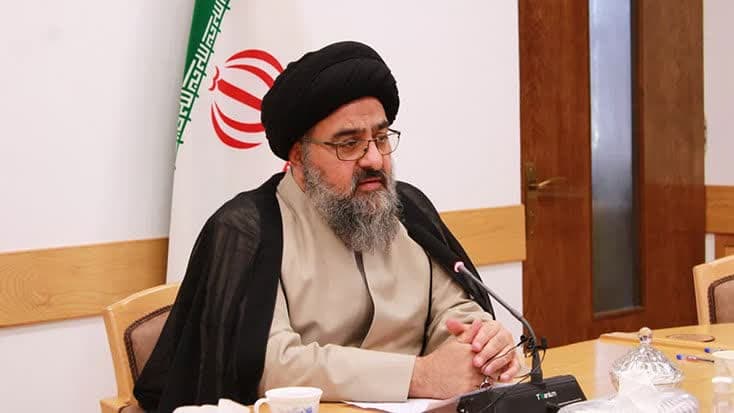
In an Interview with Jamaran:
Ayatollah Sayyid Mojtaba Nourmofidi: Polarization over the Hijab Is Contrary to Religious Teachings, National Security, and the Supreme Leader’s Position / Polarization Between Football and Religion, Art and Religion, and Religion and Homeland Is Dangerous
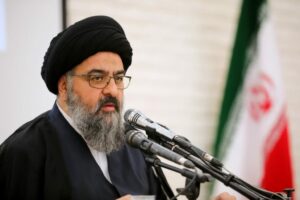
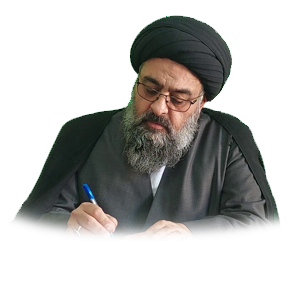
Ayatollah Sayyid Mojtaba Nourmofidi, a professor of advanced jurisprudence and legal theory at the Qom Seminary, told a Jamaran reporter: “We do not mean that we should remain indifferent to the issue of women not observing the hijab. However, regarding an establishment that has been penalized over this issue, we must determine whether it is capable of preventing women without hijab from entering. When that establishment is unable to do so, it must either close down, leaving a number of people unemployed, or face this problem because it lacks the ability to control the situation. Is it right to act this way in one place while completely disregarding the issue of hijab at airports and on domestic flights?”
Jamaran News Website: Ayatollah Sayyid Mojtaba Nourmofidi, a professor of advanced jurisprudence and legal theory at the Qom Seminary, condemned the polarization of society and said: “Polarization over any issue, particularly the hijab, is contrary to religious teachings, national security, and the Supreme Leader’s position. It wastes energy and creates opportunities for enemies to exploit.”
The full text of Jamaran’s interview with Ayatollah Sayyid Mojtaba Nourmofidi follows:
From your perspective, what negative consequences does the polarization of society over various issues have?
Polarization over various political, social, economic, and cultural issues is contrary to religious teachings, national security, national interests, and the Supreme Leader’s position, and it creates division among members of society. Polarization runs counter to unity, whereas unity is a fundamental pillar of an Islamic society. Moreover, this practice creates opportunities for enemies to exploit.
One of the enemies’ tactics, from the advent of Islam to the present day, has been to trap Islamic and religious society in various forms of polarization. In addition to eliminating energy and human resources and promoting disappointment and despair, the polarization of society causes people to become distracted from the principal enemy and neutralizes all intellectual and cultural efforts. If polarization becomes widespread across different issues, it will cause the disintegration of society to the point that even the family, as society’s smallest institution, becomes affected and conflicts and confrontations penetrate deep into families.
Polarization, of course, does not mean differences of opinion, thought, or preference. Differences of opinion, thought, and preference exist everywhere and have also been recognized by God, Blessed and Exalted: “O mankind! We created you from a male and a female and made you into peoples and tribes so that you may know one another. Indeed, the most honored of you in the sight of God is the most God-conscious among you.” When differences in preferences lead to confrontation, conflict, and clashes, they produce extremely harmful moral and social consequences, particularly in the sphere of religious affairs and rulings. If religious polarization becomes widespread, it can lead people to turn away from religion and religious observance. This is because, instead of winning people’s hearts—even the hearts of those who may hold opposing views—it provokes obstinacy.
If I were to point to historical roots and cite what occurred during the early history of Islam, there would be many examples. We can say that the Umayyads were among the principal agents of polarization in society, because polarization caused people to become distanced from the truth and distracted from the principal enemy. Today, foreign and affiliated media outlets do not care about the fate of the people or the future of this country, and perhaps nothing serves them better than polarization, particularly over cultural and religious issues. Unfortunately, opportunities for exploitation by enemies are sometimes created inside the country by certain poorly informed individuals, and false polarizations emerge: polarization between football and religion, between art and religion, between religion and homeland, and so forth. These are dangerous and, in the words of the Supreme Leader, they exhaust the people and make the social environment fragile.
In this context, what harmful effects does promoting a polarization between “women with hijab and women without hijab” have on society?
One of the issues we face in relation to polarization is the division between women without hijab and women with hijab. In my view, this is in no way compatible with the method employed by the Messenger of God—peace be upon him and his family—and by God, Blessed and Exalted, in legislating and promulgating religious rulings. In the Supreme Leader’s words, it is not in society’s interest.
Muhammad Iqbal Lahori made a highly noteworthy statement. He said, “Muslims commonly squander their capital for meager gains.” It seems that we are accustomed to sacrificing our principal religious and national assets for certain short-term interests, even though doing so has harmful long-term consequences.
I believe there is absolutely no room for debate over the fact that the hijab is a definitive and indisputable ruling in Islam. The principle of hijab is essential, although its form and type may differ depending on different cultures. In the past, I even discussed whether the government may make the hijab mandatory. I examined the issue in detail and concluded that the basic legitimacy of the government making the hijab mandatory can be established and that we have multiple proofs for it. As a “primary” ruling, the obligation can be established. Under “secondary” considerations, however, the obligation may be lifted, and legitimacy and permissibility may turn into prohibition. Ultimately, various secondary considerations may arise that require us, under certain circumstances, to relinquish this obligation. Under no circumstances, however, is it advisable to fuel polarization in society. Today, even in very small gatherings and family settings, such divisions may arise over the hijab. Instead of engaging in dialogue and allowing religious people to promote God’s ruling through logic, reasoned argument, and gentleness, people enter into confrontations that cause others to turn away from and become more distant from the hijab.
My understanding is that a large proportion of the behavior we are witnessing, rather than being anti-religious in nature, stems from the obstinacy that some people display over various issues. The roots of this obstinacy must therefore be weakened. If these roots are weakened, gentle and tolerant methods of promoting this religious ruling will also be able to have an effect.
I recall that the Supreme Leader made remarks in Bojnord that stand in contrast to some of the statements and comments made these days that fuel confrontation. He said that these issues must be approached very logically and soberly, without inappropriate emotionalism. Yet we sometimes encounter decisions or conduct that, rather than helping to resolve the issue, unfortunately fuel obstinacy.
News reports stated that the Mehr-o-Mah Tourism Complex on the Tehran–Qom highway was sealed because of women not observing the hijab, leaving seven hundred people unemployed. On the other hand, there are businesses and other sectors, such as airlines, that are not treated in the same way or where such treatment is fundamentally impossible. From your perspective, is discrimination in enforcement appropriate?
Regarding the cases you mentioned, the country must ultimately adopt a uniform approach based on expert analysis, in-depth studies, and effective methods. Today, inconsistencies in conduct can be seen in different places, even at official institutions. It sometimes appears that no enforcement whatsoever is taking place, while elsewhere, such as in the environment you mentioned, a strict approach is adopted.
We do not mean that we should remain indifferent to the issue of women not observing the hijab. However, regarding an establishment that has been penalized over this issue, we must determine whether it is capable of preventing women without hijab from entering. When that establishment is unable to do so, it must either close down, leaving a number of people unemployed, or face this problem because it lacks the ability to control the situation. Is it right to act this way in one place while completely disregarding the issue of hijab at airports and on domestic flights?
Therefore, inconsistent and uneven conduct and enforcement toward various establishments and places concerning the hijab are not appropriate. This issue must be seriously reconsidered, precise assessments must be conducted, and effective cultural measures must be undertaken. Moreover, legal methods should be implemented in an expert manner, taking all considerations into account and examining every dimension of the issue.
I therefore regard polarization as extremely dangerous. As I indicated at the outset, polarization over any issue, particularly the hijab, is contrary to religious teachings, national security, and the Supreme Leader’s position. It wastes energy and creates opportunities for enemies to exploit.