The auspicious Eid al-Ghadir Khumm, marking the perfection of the prophetic mission by the Noble Prophet of Islam and the official, public declaration of the guardianship (wilayah) and leadership of the Commander of the Faithful, Ali (peace be upon him), over the Islamic society, serves as an occasion to once again review what the Prophet repeatedly emphasized throughout his life.
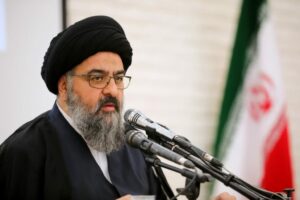
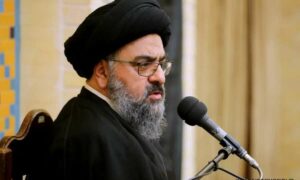
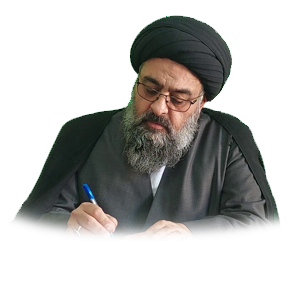
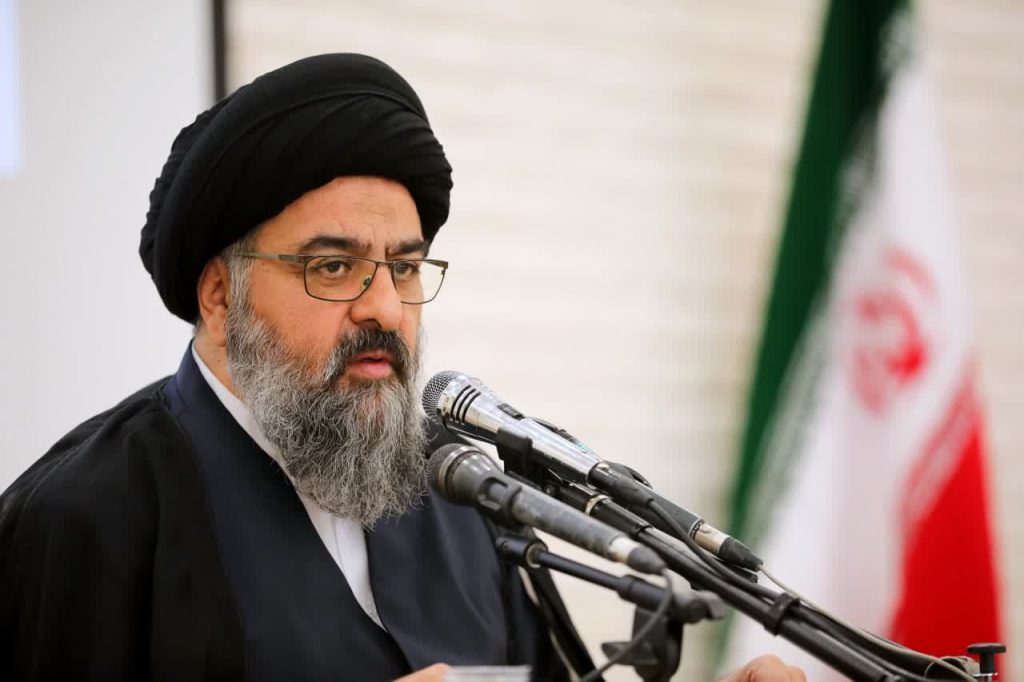
In this regard, Ayatullah Sayyid Mujtaba Nur Mufidi states: “In the words of the late Imam Khomeini, the appointment of Ali (peace be upon him) is not among his spiritual stations; rather, it was his spiritual stations that led to his appointment to the caliphate.”
He emphasizes that “fundamentally, it was the personality of the Commander of the Faithful that gave identity to Ghadir, transforming it into a turning point in Islamic history, rather than him gaining value through Ghadir. Of course, the very appointment of the Commander of the Faithful—and that too from God, the Blessed and Exalted, and the Noble Prophet of Islam (peace be upon him and his progeny)—is a virtue and distinction. However, at a prior level, those competencies caused this distinction to be granted to him and for him to be appointed to this position.”
Ayatullah Sayyid Mujtaba Nur Mufidi also states: “If we examine the entire period of the Prophet’s mission, from the Bi’thah (commencement of revelation) to his demise, we realize that throughout this era, the issue of the caliphate and succession of Ali (peace be upon him) was raised repeatedly. If we claim that the succession line of Ali (peace be upon him) was pursued as a strategy by the Seal of the Prophets throughout this entire period, we have not made an exaggerated claim.”
The full text of the interview is as follows:
What Is the Reality and Content of Ghadir?
While offering my congratulations to you and your esteemed audience, I believe that to comprehend the reality and content of Ghadir, it is necessary to carefully consider several points. In this brief opportunity, I will attempt to rely on these points to clarify, to some extent, facets of this great reality.
The first point is that in the teachings of the Ahl al-Bayt, the issue of Imamate and wilayah (guardianship) is among the most important pillars of religion. Just as the sending of messengers and the revealing of scriptures are necessary based on solid, conclusive proofs, the issue of wilayah and Imamate is equally necessary and essential according to those same proofs. Furthermore, according to certain narrations, wilayah and Imamate constitute the highest spiritual and divine blessings. It has also been established in its proper place that appointing an Imam and leader after the Prophet is a necessary duty.
Of course, wilayah has an exceptionally broad and comprehensive meaning, of which governance is merely one branch; therefore, even if the Imams of Guidance did not possess outward governance, it would not affect their wilayah. In any case, the Infallible Imams (peace be upon them) have consistently emphasized the centrality of the principle of Imamate and wilayah, and I can claim that the principle of Imamate is among the most progressive principles of religion and faith.
In the well-known Hadith “Islam is built on five [pillars],” Zurarah narrates that after Imam al-Baqir (peace be upon him) explained the five pillars of Islam, he asked him which of these pillars is the most virtuous. The Imam replied: “Wilayah is the most virtuous foundation, because it is the key to the other pillars, and the ruler (wali) is the guide to them” (Al-wilayatu afdalu li-annaha miftahuhunna wa al-waliyyu huwa al-dalilu ‘alayhin). The Imam then continues in this Hadith, stating: “The pinnacle of the matter, its peak, its key, the gate to all things, and the pleasure of the All-Merciful is obedience to the Imam after knowing him” (Dhurwat al-amr wa sanamuhu wa miftahuhu wa bab al-ashya’ wa rida al-Rahman al-ta’atu lil-Imam ba’da ma’rifatih).
It is obvious that a matter of such importance—which represents the height and pinnacle of religion, the key and gate to all things, and most importantly, the pleasure of the Lord, meaning the recognition of the Imam and obedience to him—must be emphasized. I merely wish to briefly direct attention to the point that Imamate is the continuation of the prophetic mission and its guardian until the Day of Resurrection, and as mentioned, it is the key and guide to religion and its most virtuous foundation.
The second point is that given the significance of the trust of Imamate and the central role of wilayah in advancing the objectives of the prophetic mission and leading humanity to true salvation and perfect completion, naturally, not everyone can bear the weight of this trust. Ali (peace be upon him) is a personality whose existential dimensions human understanding is incapable of fully grasping. Human virtues reached the pinnacle of perfection in his being, and he is paramount in every domain: in knowledge, courage, sincerity, servitude to God, administrative capability and management, detachment from the world, asceticism, and love and compassion for the people—especially the oppressed, the needy, and the deprived.
With these attributes, he is the only one who could assume the pivotal responsibility of Imamate and caliphate, and this very aspect led to his appointment to the caliphate on the day of Ghadir. In the words of the late Imam Khomeini, the appointment of Ali (peace be upon him) is not among his spiritual stations; rather, it was his spiritual stations that led to his appointment to the caliphate. Therefore, fundamentally, the personality of the Commander of the Faithful gave identity to Ghadir, transforming it into a turning point in Islamic history, rather than him gaining value through Ghadir.
Of course, the appointment of the Commander of the Faithful—especially from God, the Blessed and Exalted, and the Noble Prophet of Islam (peace be upon him and his progeny)—is a virtue and distinction. However, at a prior level, those competencies caused this distinction to be granted to him and for him to be appointed to this position. In fact, this distinction was a boon for the Prophet’s nation (ummah), as such a personality was designated as the ruler of the nation. Thus, the value and credibility of Ghadir belong primarily to the standing of the person who was introduced on this day as the immediate successor to the Prophet. Furthermore, this appointment was made by God and the Prophet, meaning both the appointer (nasib) and the appointed (mansub) were outstanding (See Sahifeh-ye Imam, Vol. 20, p. 112).
The third point is that if we examine the entire period of the Prophet’s mission, from the Bi’thah (commencement of revelation) to his demise, we realize that throughout this era, the issue of the caliphate and succession of Ali (peace be upon him) was raised repeatedly. If we claim that the succession line of Ali (peace be upon him) was pursued as a strategy by the Seal of the Prophets throughout this entire period, we have not made an exaggerated claim. Numerous instances can be cited in this regard.
For example, when the verse “And warn your closest relatives” (Quran 26:214) was revealed, the Prophet addressed the gathering of the descendants of Abdul-Muttalib, saying: “Which of you will aid me so that he may be my brother, successor, and legatee after me?” Ali (peace be upon him) said: “I will pledge allegiance to you and assist you.” The Prophet then said: “This is my brother, my legatee, my minister, and my successor after me, and my heir; so listen to him and obey him” (Hadha akhi wa wasiyyi wa waziri wa khalifati min ba’di wa warithi, fasma’u lahu wa ati’uh). As you can see, at the very beginning of the prophetic mission, Ali (peace be upon him) was introduced as the minister and successor, and the command to obey him was issued.
During the pact of brotherhood (aqd al-ukhuwwah), we find similar expressions from the Prophet (peace be upon him and his progeny) concerning Ali (peace be upon him), along with the statement: “You are to me as Aaron was to Moses, except that there is no prophet after me” (Anta minni bi-manzilati Haruna min Musa illa annahu la nabiyya ba’di). According to some narrations, the title “Amir al-Mu’minin” (Commander of the Faithful) was bestowed upon Ali (peace be upon him) by the Prophet himself. During a visit to Ali (peace be upon him) accompanied by several companions, the Prophet told them: “Greet him as the Commander of the Faithful” (Sallimu ‘alayhi bi-imrat al-mu’minin). Abu Bakr and Umar asked: “Are we commanded to do so by God and His Messenger?” The Messenger of God replied: “Yes,” and subsequently, they all greeted him by this title.
Such instances are numerous. Verses of the Quran were revealed concerning the status of the Ahl al-Bayt and the Commander of the Faithful (peace be upon him), such as the verses of Wilayah (5:55), Tathir (33:33), and Mubahalah (3:61). Likewise, many Hadiths have reached us from the Prophet (peace be upon him and his progeny), and Imam Ali (peace be upon him) himself cited these verses and narrations when facing contenders for the caliphate and in his encounters with the Muhajirun and Ansar.
In any case, the same message was conveyed in the event of Ghadir, which has been narrated by both main schools of thought (fariqayn) and is mutawatir (frequently narrated). However, the difference between Ghadir and other occasions is that until then, the Prophet (peace be upon him and his progeny) had expressed this point on various occasions and locations where the observers and witnesses were mostly limited. But on that day, this matter was declared with a resounding voice in the largest gathering of Muslims and during the final months of the Prophet’s life.
As you mentioned, the succession of the Commander of the Faithful (peace be upon him) had been raised by the blessed tongue of the Messenger (peace be upon him and his progeny) in various forms and on different occasions. Why, then, did this matter take place in such a manner at Ghadir?
What occurred on that day was a public proclamation so that no excuse would remain for anyone. As Lady Fatima (peace be upon her) stated in response to the excuses of the Ansar: “Did my father leave any excuse for anyone after the day of Ghadir?” (Wa hal taraka abi yawma Ghadirin li-ahadin ‘udhra?). Although the Prophet (peace be upon him and his progeny) utilized every opportunity to state this critical matter, as he himself mentioned on that day, he was approaching the end of his life and needed to declare this issue in this particular manner. In any case, the action of the Noble Prophet of Islam on the day of Ghadir was, in fact, the official announcement of his stance, thereby fulfilling the divine will.
Everyone is aware that the event of Ghadir possesses unique characteristics and differences compared to other events in Islamic history. We even observe this difference in the internal state of the Noble Prophet of Islam, as the Quran implicitly refers to it. Specifically, regarding the event of Ghadir, according to what has been reported, there was a concern, apprehension, and fear in the blessed heart of the Messenger of God (peace be upon him and his progeny).
Since such apprehension seems incompatible with the infallibility (ismah) of the Messenger of God, what was the cause of this concern that prompted God to reassure him by saying, “And Allah will protect you from the people” (Quran 5:67)?
The reason was that the Prophet was concerned about the reactions that might occur following this public declaration. He was not fearful or anxious about himself; indeed, throughout his mission, despite all pressures and constraints, he never harbored the slightest fear. His concern was that the people might fail to realize that the wilayah of Ali (peace be upon him) was a divine decree and appointment. His fear was that people, out of ignorance and lack of knowledge, would reject this matter—especially since certain individuals, whose intentions the Prophet was fully aware of, might instigate sedition (fitnah). This was because the countless virtues of Ali (peace be upon him) and his exceptional position had aroused the jealousy of many; thus, the Prophet feared they would exploit the people’s ignorance. He was not yet certain whether the people had attained the level of awareness necessary to comprehend such a momentous matter.
This concern was essentially of the same nature as the concern of Moses in the face of the magicians, fearing that their fabricated serpents would deceive the people and keep them on the path of deviation. In reality, Moses feared that the people would lack the capacity to distinguish between a miracle and magic, thus remaining in ignorance and misguidance. As Ali (peace be upon him) states in the Nahj al-Balaghah: “Moses did not harbor fear for himself, but rather feared the dominance of the ignorant and the states of misguidance” (Lam yawjas Musa khifatan ‘ala nafsihi bal ashfaqa min ghalabat al-juhhali wa duwal al-dalal). Otherwise, personal fear had no place in his being. If there was any fear or concern, it was for the sake of religion and due to the ignorance of the people, lest they fail to realize that Ali (peace be upon him) was appointed by God, not by the Prophet of his own accord.
To put it more clearly, both Moses (peace be upon him) and the Noble Prophet of Islam (peace be upon him and his progeny) feared the cultural weakness among the people, and nothing else. Ultimately, despite this concern, and with the divine promise “And Allah will protect you from the people,” the Prophet executed God’s message. The expression “His message” (risalatahu) in the verse is also highly significant. It implies that if you do not convey the message of appointing the successor, you have not fulfilled the divine mission at all.
What, then, is the reality of Ghadir?
By considering the points I have mentioned, it becomes clear that the reality and content of Ghadir—namely the governance of infallibility and justice, the rule of the righteous, and the continuation of the prophetic line—depend on Imamate. It is the Infallible Imams who, in continuing the path of the prophets, can secure eternal human salvation and realize the purpose of creation.
Naturally, directing and leading society to attain the heights of perfection, to unlock innate potentials, and to manifest human virtues must be in the hands of one who is himself at the pinnacle of perfection. The perfect human, who is paramount in all dimensions, is the one who can assume this responsibility. For this reason, the designation of Ali (peace be upon him) was deemed a blessing and the perfection of religion.
In your opinion, what is the primary orientation of Ghadir? Is its focus directed toward the establishment of governance?
Based on what has been discussed, this question is answered as follows: the primary orientation of Ghadir is the guidance and leadership of society by the perfect human. If we accept that the Sharia was not revealed to be confined within books but rather to be manifested in society, integrated into the life of the people, and to secure true human happiness, then without its execution, such an objective cannot be achieved. The most central path and tool for realizing this crucial goal is governance and the empowerment (bast al-yad) of the guardian (wali) of God. At Ghadir, the authority responsible for executing and realizing the objectives of religion was designated.
Governance in itself holds no intrinsic value, and as the Commander of the Faithful himself stated to Ibn Abbas, it is worth less to him than a worthless old shoe. What matters are the lofty goals of governance, specifically the establishment of justice. Ghadir was not merely a historical event, but an opportunity for humanity to establish a government under whose shadow lofty human values, servitude to God, human dignity, security, justice, prosperity, peace, brotherhood, and compassion would encompass the entire world. Had Ali (peace be upon him) and his descendants been granted the opportunity, they would have actualized this. Those who deprived Ali and his pure descendants of this opportunity after the demise of the Prophet did an injustice not only to the Prophet’s household (itrah) but also to all humanity until the Day of Resurrection, and even to themselves, thereby preparing the ground for the transformation of the caliphate into hereditary monarchy.
You pointed out a very fascinating aspect: that the reality of Ghadir is the establishment of a government of justice. In this case, what are the characteristics of such a government from the perspective of Ghadir?
Although I believe the previous explanations have already outlined the answer to this question, I will state briefly: when the perfect human—the most virtuous, devout, courageous, knowledgeable, ascetic, just, compassionate, loving toward the people, caring toward the weak, and oppressive-resisting of individuals—is designated as the ruler, it is obvious what the characteristics of an ideal government are, the direction in which it will proceed, and the qualifications its ruler must possess. This is what makes Ghadir belong to all eras.
In different periods and times, the forms of governments may change, but the duties of governments, the qualifications of rulers, and the principles of governance remain constant. One day, elections may be the means to designate rulers, and another day it may be done through a different method. What matters are the values for which the government and political system are established to realize, the methods the government employs to assert those values, and the attributes of those who strive to achieve these goals.
Certainly, in the Alawid system, the ruler is neither a hoarder of wealth, nor a practitioner of oppression, falsehood, and arrogance, nor prone to hypocrisy and flattery; not an atom of self-desire (hawa al-nafs) exists within him. The message of Ghadir is the establishment of a society whose members—centered around the guardian (wali) of God—are engaged in the perfection of their souls based on servitude to God, sincerity, diligence, high aspiration, and the struggle against oppression, injustice, and discrimination. Concurrently, they utilize natural resources and God-given blessings to the utmost, rendering the tree of knowledge and science increasingly fruitful day by day.
Alas, such an opportunity was taken away not only from Muslims but from human society at large, and unfortunately, power-seeking, self-interest, worldliness, aristocracy, and the humiliation of human beings replaced it. We all witnessed what the Umayyads did to the religion and beliefs of the people and the state to which they reduced them.
What role do the Islamic seminaries (hawzah) play in explaining the culture of Ghadir?
Throughout history, the Islamic seminaries (hawzahs) have been the epicenter of explaining the reality and culture of Ghadir, and indeed, the noble scholars and thinkers nurtured by the teachings of the Ahl al-Bayt have taken significant steps in this direction. Thousands of books, treatises, and articles have been written on Ghadir in its various dimensions, and some of these works are outstanding. It can be rightly said that some of these publications, as they corresponded to the specific conditions of their times and addressed the doubts and objections of biased, prejudiced, and unaware individuals of those periods, played an effective role in consolidating the foundations of the Ghadir culture.
One of the most important works is the noble book Al-Ghadir, which is truly considered one of the divine successes granted to the late Allamah Amini. Through immense effort, he left behind a work that was fruitful not only for Shiites but also for other Islamic schools of thought and even followers of other religions. This is easily discerned from the letters written to Allamah Amini.
However, in my view, the most important task that needs to be pursued in the Islamic seminaries is deepening the understanding of this event and its culture. The personality of the Commander of the Faithful, like that of the Noble Prophet (peace be upon him and his progeny) and the Quran, possesses deep layers and inner dimensions (butun) that must be explained to the greatest extent possible by qualified scholars. Unfortunately, most cultural activities today have fallen prey to the plague of superficiality, sometimes sufficing with purely outward and promotional activities.
Why has such a phenomenon occurred in the cultural sphere?
Naturally, there may be various reasons, but at times, it feels as though certain cultural activities are designed primarily to satisfy administrative superiors and generate reports. It is appropriate here to mention that the cultural problems facing society today have reached a worrying stage, and of course, this is not a matter of today or yesterday. The Supreme Leader has repeatedly warned about this issue, yet in practice, the officials of cultural and religious institutions, both governmental and non-governmental, rather than formulating a comprehensive solution and striving to resolve cultural problems through precise and coordinated planning, have reduced this duty to holding a few conferences and printing posters and brochures, attempting to solve it with a few promotional activities.
So much budget and resources are spent on cultural affairs, and numerous institutions bear responsibility for this, but what is the output? Parallel, arbitrary works, lacking a long-term vision, and the spending of huge budgets are all detrimental. In short, a coordinated strategic program is not observed in this matter. Be that as it may.
In any case, the seminary must explain the issue of Ghadir through precise needs assessment and in accordance with cultures and subcultures—not only for the people of Iran but for the entire world. The event of Ghadir is not merely a historical incident for all efforts to be focused solely on investigating its historical details. Ghadir does not belong to a single era, but to all eras. Comprehensiveness, a strategic perspective, and adaptation to the conditions and requirements of a given time, and even within a specific society and country, must govern studies related to Ghadir. Currently, most activities in this regard are promotional and superficial. The seminary must rescue Ghadir from this detriment. The seminary must deepen the perspective toward Ghadir, and this is a heavy responsibility.
Another important matter in this regard, which goes beyond the realm of thought, opinion, and intellect, concerns the actions of the clergy as a whole. Throughout the history of the seminary and the clergy, it has always been the godly scholars (ulama-ye rabbani)—who combined knowledge with action and demonstrated manifestations of morality, courtesy, courage, truth-seeking, resistance against oppression, and justice-seeking alongside broad-mindedness—who exerted the greatest influence on social and political developments and attracted people to the school of the Ahl al-Bayt.
This issue has become more important today than ever before, because the system of the Islamic Republic has been established with the clergy at its center. This is a historic test for the clergy to translate into action, to the best of their ability, what they have declared in speeches and writings for years. The attributes that used to attract and influence the hearts of the people must be preserved. Today, our actions are subjected to judgment far more than our words because we have obtained the opportunity of governance. Governance and action within the framework of an institution and political system go far beyond personal or even professional conduct; consequently, their impact is incomparable, necessitating far greater precision.
Granted, not all elements and organs of the government are in the hands of the clergy, yet the centrality of the clergy as the originator and supporter of the system is beyond doubt. Therefore, great care must be exercised in fields directly related to the clergy, and in fields not directly related to them, the clergy must—like their predecessors—offer sincere and compassionate advice regarding deviations and seek reform. They must not act selectively in the face of deviation and oppression.
You may ask what this has to do with Ghadir and the Ghadir culture? In my view, it is entirely connected. If Ghadir is the symbol of the governance of infallibility and justice, if Ghadir does not belong to a single era but to all eras, if the Shiite clergy is the herald of Ghadir and the deputy of the Infallibles, and if the clergy has established a political system in Iran with the support of the people and divine grace, then their actions, behavior, and methods in governance are highly significant and certainly play a fundamental role in attracting the people of the world to the culture of Ghadir.
Just as Islam initially spread through the morality and practical methods of the Prophet (peace be upon him and his progeny) and subsequently became deeper and more deep-rooted through the biography (sirah) of the Infallible Imams (peace be upon them) and their interaction with the people, today, the preservation of religion and the school of the Ahl al-Bayt (peace be upon them) depends on this matter. Praise be to God, the clergy as a whole has been successful in this direction, ruling over hearts through this very method throughout its existence and initiating major transformations in Islamic society. However, a concern exists today that they might gradually distance themselves from the path of their predecessors.
What solutions exist to explain Ghadir among Muslim thinkers without tension and prejudice?
Before taking any action, it is necessary for everyone to reach a shared understanding and realize the necessity of reducing tensions and differences. Comprehending this necessity is the first and most crucial step. Many disputes and conflicts persist at this very stage. Some individuals simply do not believe in this matter; both among Shiites and Sunnis, there are those who think the banner of these clashes and disputes must remain hoisted and made loftier day by day. Fortunately, however, because this view is contrary to reason, logic, and interests, and damages the foundation of religion, it is not accepted by the leaders of both Shiites and Sunnis.
Of course, reducing tensions and conflicts does not mean abandoning beliefs. When discussing the unity and convergence of Islamic schools of thought, and Shiites and Sunnis, it does not mean that realities and facts should not be recounted or that holders of different beliefs cannot express them. Rather, while observing moral principles, maintaining respect, and considering general interests, threats, and dangers, scholarly dialogues must continue, and each side should present their thoughts. Subsequently, proofs, arguments, and documentation will be evaluated in the balance of conscience, intellect, and logic, helping to discover the truth.
This is similar to how these debates occur among Shiites themselves and among Sunnis themselves. Exegetes, theologians, philosophers, and jurists from a single school of thought, despite agreeing on the fundamentals of their school, nevertheless hold severe differences of opinion on many issues. Yet, these differences do not disrupt their consensus on commonalities.
Regarding differences among Islamic schools of thought, one can continue scholarly dialogues and debates while emphasizing commonalities, but these discussions must not transcend the boundaries of morality and logic. Furthermore, considering the threats posed by the common, foreign enemy is necessary. This approach must become the dominant and prevailing view, which is indeed achievable. Of course, some will under no circumstances accept this view, which is natural. The important thing is which of the two viewpoints gains official recognition on both sides.
In any case, while preserving this important point, Ghadir—despite being one of the most important, if not the most important, subjects of disagreement—can be approached in the same manner. The dimensions of the Ghadir event are so vast that they provide the necessary framework for this purpose. This is not the place to list these dimensions, let alone analyze them. For instance, if this subject can be utilized effectively to introduce the personality of the Commander of the Faithful and to properly explain his advantages over others, a significant step will be taken to explain Ghadir. Attracting others does not need to be absolute and accomplished in a single stage. To whatever extent the hearts of Muslims are drawn closer to the Ahl al-Bayt (peace be upon them), the ground becomes more fertile for accepting the school of the Ahl al-Bayt.
Some assume that propagating Shiism is only possible by mentioning and publishing criticisms (mata’in) of others. That is, they focus on the negative aspects rather than the positive aspects, whereas provoking the emotions and feelings of Sunni masses and insulting their sanctities produces the opposite effect. Generally, preparing the grounds for accepting the truth, and the method of propagation and defending the right, are highly important. A matter might indeed be true, but if it is expressed in an incorrect manner, it will appear false.
Unfortunately, despite the advisories of the Grand Maraji’ (sources of emulation) and the Supreme Leader, certain individuals and groups under the banner of Shiism, on a large scale—especially in cyberspace and satellite channels—have created many problems using this incorrect method, leading to exploitation by enemies.
Therefore, to summarize my response, I can say that to explain the event of Ghadir to Muslims in general, and to thinkers in particular, the angle of presenting the subject, the method employed, the prioritization of the event’s dimensions, and the consideration of temporal and spatial compatibility and the audience’s conditions are extremely important, requiring comprehensive and precise study. In my view, institutions and foundations active in this field must take these matters into account and utilize experts and specialists for this purpose. Outward promotions, holding celebratory gatherings, eulogies, and printing posters are good, but they are only the beginning of the work, which has unfortunately become the end of the work.
How was the personal approach of the Commander of the Faithful (peace be upon him) regarding the event of Ghadir after the demise of the Prophet (peace be upon him and his progeny)?
This is an important question and one of the issues that, while revealing his elevated personality and demonstrating the correctness of his appointment as the Prophet’s successor, proves to everyone that no one except Ali (peace be upon him) possessed the capacity and ability for such conduct—conduct that appears seemingly contradictory but is, in reality, oriented in a single direction.
On one hand, in facing the event of Saqifah regarding the selection of the Prophet’s successor, the Commander of the Faithful considered the caliphate his definitive right based on the Prophet’s declarations, defending it in a well-reasoned, documented, and logical manner. He both recalled the Prophet’s explicit statement on the day of Ghadir and spoke of his own merits and superiority over others, while also referencing the verses revealed in his honor. If you observe him introducing himself, it was not out of self-praise but to raise awareness among the people and to counter the deviant line of distorting realities.
For instance, he explicitly stated: “I am the first person to have believed in the Messenger of God, and in prayer, no one preceded me except the Messenger of God,” openly stating that his conversion to Islam preceded that of Abu Bakr. Or when he spoke of his knowledge, he said: “If I sat on the seat of judgment, I would judge among the followers of the Torah according to their Torah, among the followers of the Gospel according to their Gospel, among the followers of the Psalms according to their Psalms, and among Muslims according to the Quran.” At times, he referred to the injunctions of the Prophet (peace be upon him and his progeny) designating him as his successor and legatee.
A brief look at the Nahj al-Balaghah and historical sources shows that he clearly expressed his views on the caliphate and exerted every effort to educate the people and clarify minds. He would even challenge incorrect statements made in this regard, sometimes obtain admissions from people regarding the Hadith of Ghadir, and occasionally invoke curses upon those who had been present on the day of Ghadir but denied it. Al-Baladhuri in Ansab al-Ashraf narrates instances of individuals who fell ill due to the Imam’s invocation. It was the firm belief of Ali (peace be upon him) that the caliphate was his right. Ibn Abi al-Hadid narrates that once, Umar asked Ibn Abbas: “Does Ali still hold the belief that the Messenger of God designated him for the caliphate?” Ibn Abbas replied: “Yes, and I asked my father about this, and he said: ‘Ali speaks the truth.'” In any case, he consistently declared this reality.
On the other hand, we observe that the Commander of the Faithful (peace be upon him) was concerned about division and the fracturing of Muslim ranks, and he spared no effort in unifying the nascent Islamic society, which faced various threats. It is highly significant that despite his conviction, his behavior was such that it prevented division, and along this path, he maintained effective and sincere cooperation with the caliphs. For example, during the Ridda (apostasy) wars, though he did not consider everyone to be apostates like others did—believing that those who accepted the principle of zakat but refused to pay it were not apostates—he cooperated with the first caliph in suppressing this rebellion.
The Imam himself explicitly states this in a letter to the people of Egypt, saying: “I feared that if I did not aid Islam and the Muslims, and if I saw a breach or ruin in it, the tragedy of that would be more severe to me than being deprived of governing you, which is temporary. Thus, I rose amidst that chaos until the falsehood vanished and was destroyed, and religion became firm.”
In another sermon, the Imam describes religion as a skin container full of milk, where the slightest negligence spoils it and the minimum violation overturns it. Therefore, he states: “I saw that patience in that matter was better than dividing the Muslims and shedding their blood, while the people had only recently embraced Islam.”
Ali (peace be upon him) not only acted this way himself but also encouraged others to follow this method. For instance, in an advice to Buraydah, he states: “Enter into what the people have entered; today, the gathering of the people is more desirable than their division.” Truly, such conduct from one who claimed the caliphate is astonishing.
Above all, the Commander of the Faithful did not welcome opposition to the caliphs, but rather countered it. He was deeply concerned about religion and the Muslim society, and consequently, he was not pleased with such acts of opposition, confronting those who broke unity. While Ali (peace be upon him) did not accept any administrative office during that period, he provided counsel to them and occasionally prevented their mistakes and errors.
So the Imam both clarified his stance and defended his right—not for his own sake but for the salvation of the Islamic nation (ummah), which deserved a ruler like him—and was strongly opposed to division and the fracturing of the Islamic nation’s cohesion. To preserve unity against external enemies, foreign threats, hypocrites, and domestic opportunists, he maintained companionship and cooperation with the caliphs.
What is the duty of those who bear the banner of Ghadir in the contemporary era?
This duty and responsibility is completely clear. The very behavior that Ali (peace be upon him) displayed after the demise of the Prophet must serve as the behavioral model for his followers and the banner-bearers of Ghadir. That is, it is necessary to explain the truth to consolidate the stances of rightfulness; however, the manner of expressing the truth and the method of confronting doubts and objections—which may even be raised by biased individuals—is equally important. As mentioned, the focus should be on positive rather than negative aspects.
The vast majority of Sunnis harbor love for the Ahl al-Bayt (peace be upon them). This element is a major asset in promoting the culture of Ghadir. This potential must be utilized. Sometimes, certain behaviors transform this opportunity into a threat. Action must be taken in a manner that does not scatter the ranks of the Islamic nation.
The grave conditions of today must be considered by all Muslims, especially Shiites. Today, all Muslims face common and dangerous enemies who, if given the opportunity, will spare no one. Israel, like a cancerous tumor in the heart of Islamic countries, seeks to expand its influence. Takfiris and Salafis are looking for excuses and seeking revenge. They want to create and expand Shiaphobia among Muslims. One of the major factors that can contribute to their success in this regard is the behavior that, unfortunately, occurs among some Shiites. These behaviors provide the necessary excuses for their sinister intentions and malicious purposes.
Today, the group spawned by global arrogance, namely Daesh (ISIS), has exerted all its efforts to establish a government in the name of Islam and to eradicate the school of the Ahl al-Bayt (peace be upon them) according to their own assumption. They have launched their assault against all religious manifestations and Shiite landmarks. Under these conditions, the true followers of Ali (peace be upon him) and the compassionate banner-bearers of Ghadir must remain vigilant.
No one suggests that we abandon Shiite beliefs or refrain from expressing facts and realities. Like Ali (peace be upon him), the truth must be declared, and naturally, like him, one must remain sensitive to the foundations of Islam and religion, and cautious of the conspiracies of unity-breakers. Today, all of us—like our master Ali (peace be upon him)—must align our slogans and actions toward preserving the unity of the Islamic nation. This is precisely what Imam Khomeini and the Supreme Leader have consistently emphasized. With wisdom and foresight over these years, the Supreme Leader has drawn the attention of the Islamic nation to the danger of dispersion and division, warning against foreign plots. Today, any action that disrupts the unity and integrity of Muslims is certainly not pleasing to the Commander of the Faithful and the Imam of the Time (may Allah hasten his reappearance).